Administration tightens water management as crop reaches critical stage
NELLORE: With the second paddy crop in SPSR Nellore district entering the vital grain-formation stage, the district administration has directed intensified water-management efforts to protect yields and ensure irrigation reaches tail-end farmers, officials said.
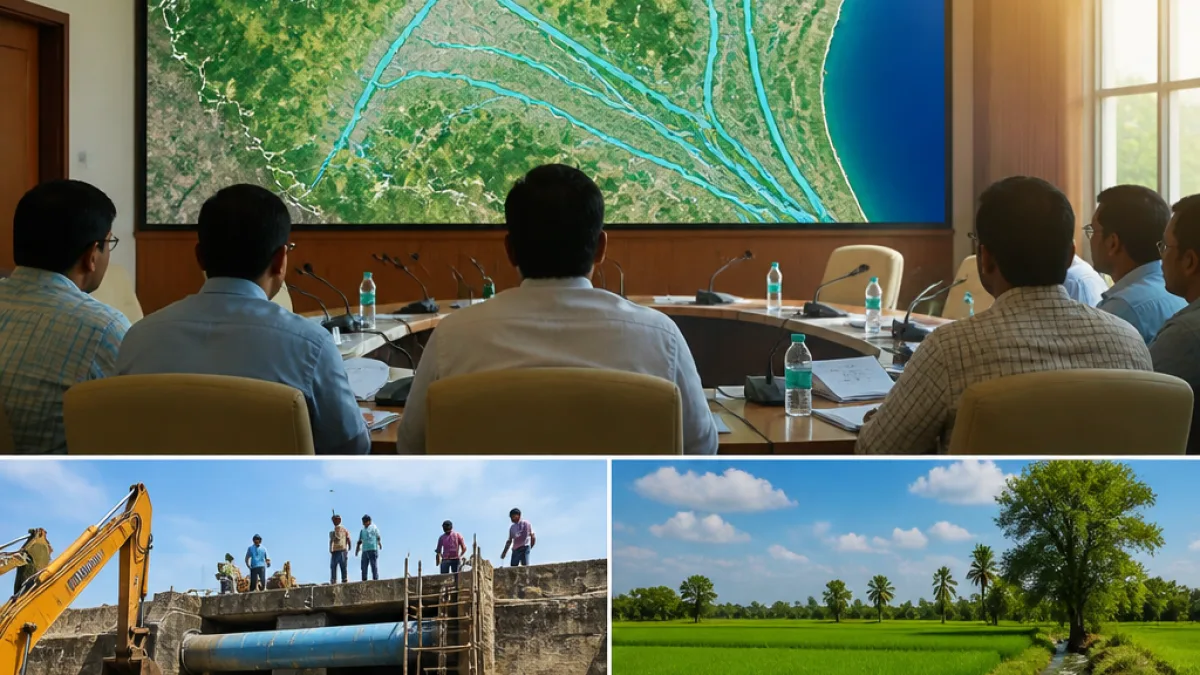
At a meeting of the Irrigation Advisory Board (IAB) held at the Nellore collectorate, Endowments Minister Anam Ramanarayana Reddy warned that the next 30 days would be decisive for the standing crop and instructed officials to ensure water is delivered without wastage. The administration has set a target to irrigate 3.22 lakh acres of the second crop using water from the Somasila project.
- Target area: 3.22 lakh acres for the second paddy crop.
- Key reservoirs reviewed: Somasila and Kandaleru.
- Deadline for supply coordination: ensure required water by September 30.
Officials reviewed storage levels in the Somasila and Kandaleru reservoirs and assessed water requirements and supply arrangements for both delta and non-delta areas. The minister called for close coordination between the agriculture and irrigation departments to ensure the crop's water needs are met through to the end of the season.
"The next 30 days would be critical," said Endowments Minister Anam Ramanarayana Reddy, directing irrigation officials to ensure that water reaches tail-end fields without wastage.
Special teams, monitoring and repairs ordered
The administration has directed formation of special teams comprising personnel from irrigation, revenue, agriculture, horticulture and the police, alongside project and water-user committees and local MLAs. These teams are to continuously monitor canals and field channels and address operational bottlenecks, the meeting was told.
Collector Himanshu Shukla emphasised the immediacy of the situation, describing the coming 30 days as crucial and the next 15 days as particularly important. He asked agriculture officials to provide precise, canal-wise crop maturity details, and instructed irrigation officers to report clearly on existing bottlenecks along with proposed remedies.
Officials were specifically asked to undertake corrective measures at a damaged siphon located at the 12-km point of the Kavali canal, which has affected flow and could threaten crops in the impacted command area if not restored promptly.
Local legislators flag concerns and risks
Several MLAs who attended the meeting highlighted local irrigation issues and urged authorities to ensure water reaches tail-end farmers. MLAs named in the proceedings included Kakarla Suresh, Dagumati Venkata Krishna Reddy, Somireddy Chandramohan Reddy and Vemireddy Prashanthi Reddy.
"El Nino-related water stress could worsen the situation," said Somireddy Chandramohan Reddy, urging authorities to prevent water wastage.
MLA Vemireddy Prashanthi Reddy pointed to examples of judicious water use enabling irrigation to reach tail-end areas in Kovur and urged continuous monitoring until harvest to sustain gains.
| Item | Detail |
|---|---|
| Target irrigated area | 3.22 lakh acres |
| Major water sources | Somasila and Kandaleru reservoirs |
| Critical period | Next 30 days (next 15 days especially important) |
| Key concern | Damaged siphon at 12-km point of Kavali canal affecting flow |
Officials were instructed to coordinate delivery schedules, prevent wastage and prioritise tail-end reaches in the distribution plan. The formation of multi-departmental teams, involving local representatives and water-user committees, is intended to speed up on-the-ground responses to leaks, breaches, or operational constraints in canals and field channels.
While no numerical estimates of current reservoir storage were shared at the meeting, the focus on frontline monitoring and immediate repair work reflects concern that any disruption during the grain-formation stage could materially affect yields. The explicit deadline to ensure required water supply by September 30 sets the administrative timeline for the cropping season's critical window.
The measures announced aim to limit losses from both infrastructure defects and potential climatic stressors. Authorities have been asked to report problems and solutions promptly so corrective action can be taken before maturity and harvest.