Live trial of voice-based AI system under way at Visakhapatnam Railway Station
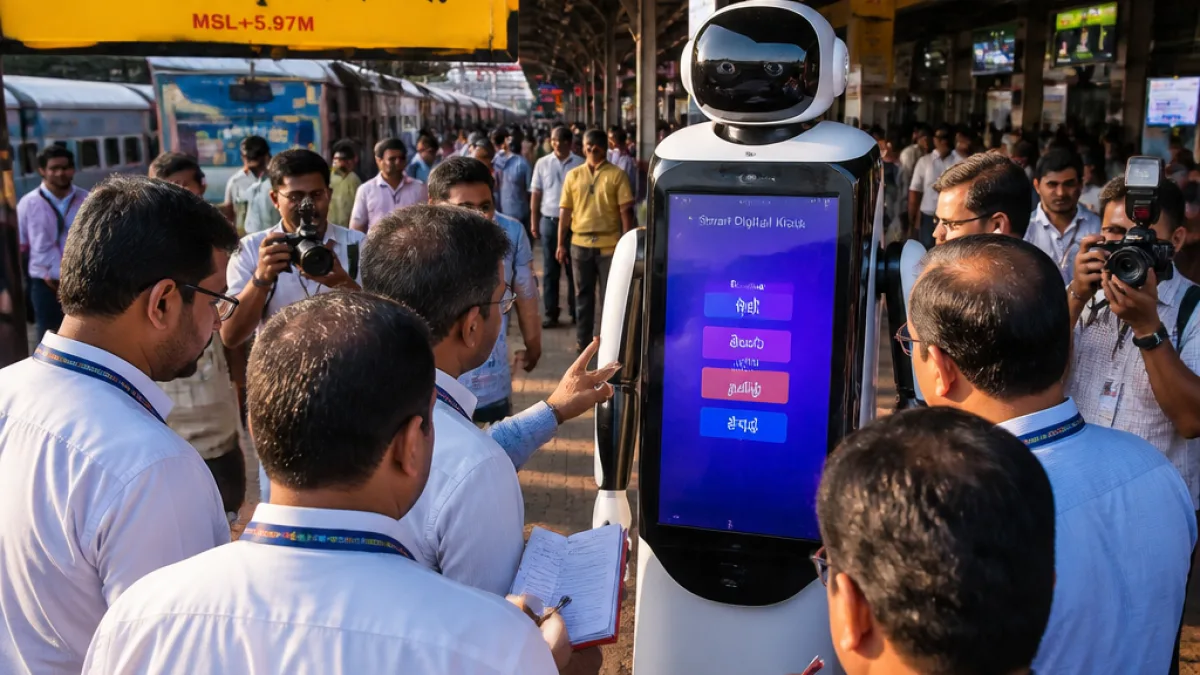
Visakhapatnam Railway Station is hosting a field demonstration of the prototype Sarika AI passenger-assistance system, South Coast Railway (SCoR) officials said after an inspection on August 17, 2026. The live review was led by SCoR General Manager Sandeep Mathur along with Divisional Railway Manager Lalit Bohra and senior zonal officers, who evaluated the deployment and offered usability suggestions.
What Sarika AI does and who built it
The pilot system, developed jointly by the Centre for Railway Information Systems (CRIS), Ninja Media AI Ad Tech Pvt. Ltd. and the Commercial Department of the Visakhapatnam Division, is a voice-based interface designed to provide natural-language assistance to passengers in nine languages. According to the project description, the system delivers real-time information on:
- train schedules and delay updates;
- platform allocations and coach positions;
- directions to station facilities such as booking counters, waiting halls, cloakrooms, food courts, drinking water taps, lifts and medical help.
The deployment at Visakhapatnam uses both humanoid units and kiosk terminals placed at strategic points across the station complex for easier commuter access.
Field-testing, feedback and next steps
Officials described the current phase as Phase-I, focused on on-site demonstrations and system testing. After observing the live demo, GM Mathur suggested specific user-friendly tweaks to streamline passenger interactions, the report said. Phase-II will aim to integrate the Sarika AI tool into the official RailOne mobile application, enabling broader access to the service through smartphones once testing is complete.
| Feature | Current Deployment |
|---|---|
| Languages supported | Nine |
| Form factors | Humanoid units; Kiosk terminals |
| Information provided | Schedules, platforms, coach positions, facility directions |
| Integration plan | Phase-II: RailOne app integration |
How this could affect commuters in Visakhapatnam
For regular travellers and occasional passengers at Visakhapatnam, a reliable voice-based assistant could reduce time spent searching for platform or coach information, and help non-English speakers access services more easily. The kiosk and humanoid formats are intended to serve different situational needs—fixed help points and more interactive face-to-face guidance respectively.
However, the real-world usefulness will depend on a few practical factors that the trial is meant to assess:
- accuracy of voice recognition across accents and crowded station noise;
- response time for real-time updates such as late-running trains;
- clarity of multi-language prompts and ease of escalation to human staff when the system cannot resolve a query.
Benefits and caveats — a balanced view
From a technology perspective, voice interfaces can lower the barrier for users who are unfamiliar with smartphone apps or digital ticketing. Integration with the RailOne app in Phase-II could offer a blended channel strategy: on-site kiosks for immediate guidance and the app for personalised, journey-specific updates.
At the same time, public deployments of conversational AI in busy transport hubs must manage expectations. Trials typically reveal gaps in ambient-noise handling, language-model coverage and the need for regular content updates to reflect timetable changes. The SCoR-led pilot appears designed to surface such issues before larger-scale rollout.
Officials said the inspection was part of routine efforts to enhance passenger convenience while testing new technologies for Indian Railways. The demonstration at Visakhapatnam will continue under Phase-I evaluation, with plans to move to mobile-app integration in the next phase.