
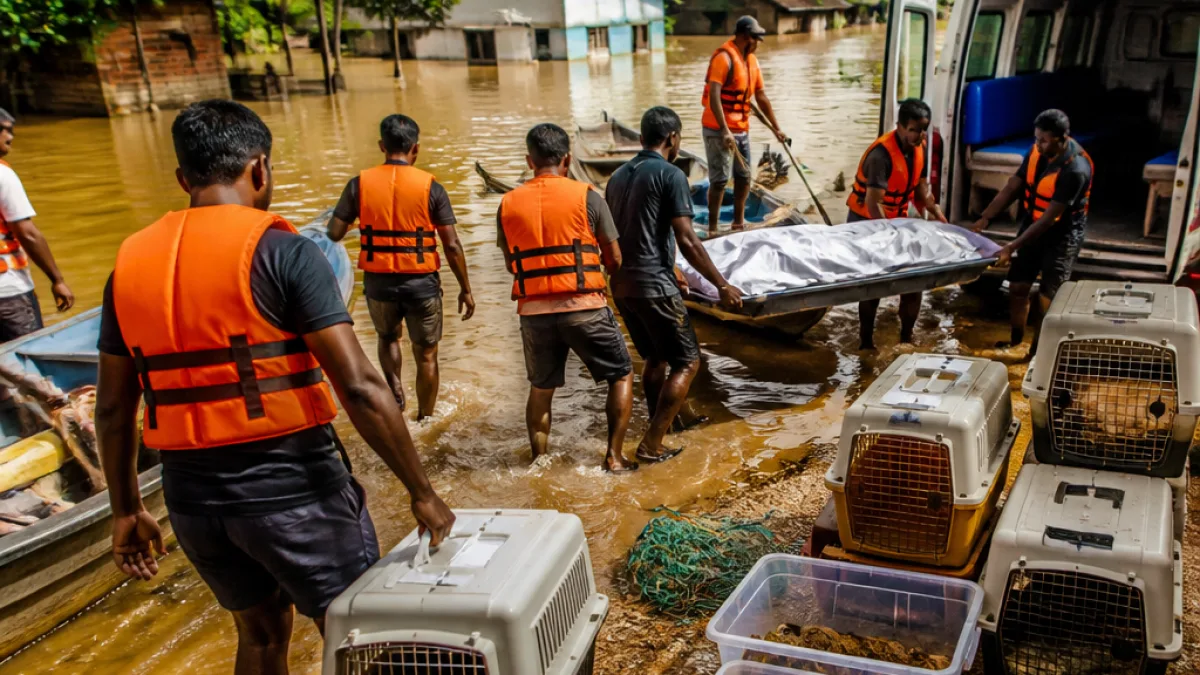
Rescue mission mounted as waters rise around Veligonda project
VIJAYAWADA: Volunteer groups and animal‑welfare organisations conducted a week‑long rescue operation and saved around 200 animals from villages facing submergence in the Veligonda project area, officials and relief workers reported. The effort was launched after residents were evacuated and several settlements were gradually cut off by rising water levels.
Teams from Sangamitra Animal Foundation and Jeevaradya Animal Rescue, Vijayawada responded to initial distress calls during the first three days, rescuing animals stranded in partially submerged habitations. As access to many locations worsened, the Animal Warriors Conservation Society (AWCS), Hyderabad, deployed a four‑member team to support the high‑risk operation, bringing experience in disaster response and rescues in difficult terrain.
Rescuers said they used boats and makeshift craft to reach animals marooned in low‑lying pockets. During the extended operation, the AWCS team recovered more than 25 dogs and multiple reptiles, with specific mentions of eight scorpions, as well as turtles, chameleons and snakes. Many animals were trapped on raised patches of land or rooftops as water encroached on settlements.
Logistical challenges and local support
The teams faced increasingly constrained road access and rapidly changing ground conditions. In several villages, roads were reported to be completely cut off, forcing rescuers to seek alternate routes and rely on boats provided by a nearby fishing village. Authorities supplied necessary permissions and an ambulance to transport rescued animals to temporary care locations.
Volunteers described some rescues as technically difficult and time‑sensitive, with rising water complicating both search efforts and the safe retrieval of frightened or injured animals. The operation also required co‑ordination among multiple non‑governmental organisations and local officials to identify hotspots and prioritise rescues.
Species helped and immediate care
Rescue teams recovered a mix of domestic and wild fauna abandoned or left behind during human evacuations. While the exact species list varied by village, the groups specifically noted the presence of dogs and several reptile species, including scorpions and turtles.
| Category | Reported number or note |
|---|---|
| Total animals rescued | ~200 |
| Dogs | More than 25 rescued by AWCS team |
| Reptiles | Included scorpions (8), turtles, chameleons, snakes |
Rescued animals were taken to temporary care centres or veterinary facilities for triage, first aid and rehabilitation. Organisations involved arranged for transport and medical attention where needed, while longer‑term plans for sheltering, adoption or release depend on post‑rescue assessments.
What this signals for disaster planning
The operation highlighted gaps that often arise during human evacuations: animals left behind—stray, semi‑owned or wild—face severe risks when settlements are inundated. Rescue groups called for pre‑emptive animal evacuation protocols to be integrated into disaster response plans, including clearer roles for local authorities and faster access to boats and ambulances.
- Rapid coordination: Multiple NGOs and local bodies must be mobilised early to locate and rescue animals in flooded zones.
- Transport and medical support: Access to ambulances, boats and veterinary care is critical for post‑rescue survival.
- Community awareness: Evacuation advisories should include guidance on leaving companion and domestic animals.
Government support during the Veligonda operation—permissions, an ambulance and a boat—was reported as instrumental in enabling teams to reach otherwise inaccessible locations. Volunteers said that without that assistance, many rescues would have been impossible once roads were cut off.
The week‑long effort concludes a phase of intensive search and rescue. Follow‑up work will focus on rehabilitation of rescued animals and liaising with local administrations to ensure improved preparedness for future inundation events affecting both residents and animals.












