Policy aims to balance growth with resource sustainability
Andhra Pradesh has announced a sustainability-oriented framework for its planned data-centre expansion, setting a minimum threshold of 70 per cent renewable energy usage and outlining measures to secure water supply for the facilities, IT Minister Nara Lokesh said on Thursday.
Speaking at a fireside discussion organised by the Public Affairs Forum of India (PAFI) in New Delhi, Lokesh identified energy and water as the two primary resource challenges for large-scale data-centre development. The state is positioning Visakhapatnam as its principal data-centre cluster and is designing incentives and infrastructure to make that possible while attempting to limit environmental impacts.
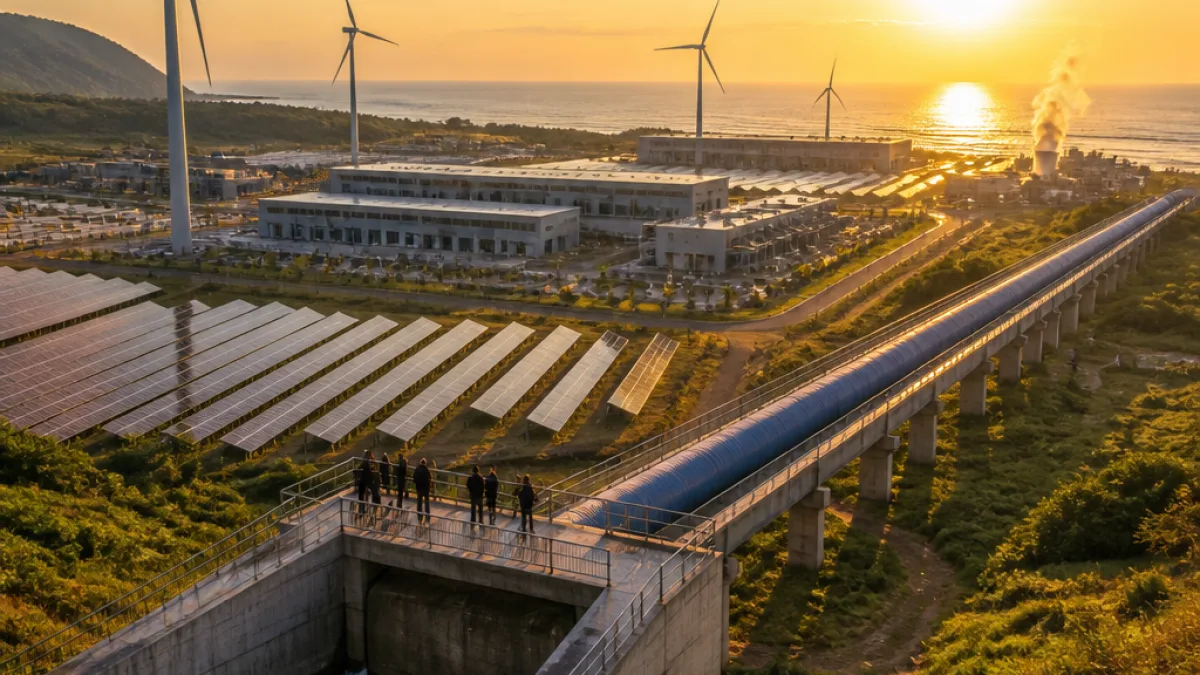
"The first thumb rule is that a minimum 70 per cent of the energy used by data centres must come from renewable sources," Lokesh said, listing solar, wind, pumped storage and battery-based options.
The ministry-level statement did not set out detailed regulatory text at the event but laid out the broad policy direction. According to Lokesh, the 70 per cent target may be achieved through a mix of on-site generation, power purchase agreements with renewable generators, battery storage and integration with pumped-storage projects.
On the water front, the state plans to tap the Polavaram Left Bank Canal to transfer water that would otherwise discharge into the Bay of Bengal to Visakhapatnam, to meet cooling and other needs of hyperscale and co-location data centres. The government is also promoting desalination plants as an alternative local source and said one firm has already begun preparations to build such a facility.
What the policy signals for industry and local communities
By setting a high renewable-energy floor, Andhra is seeking to attract technology investment without repeating patterns of excessive fossil-fuel use seen in some other regions. For operators, the rule will have implications for capital expenditure, long-term power procurement and site selection.
Smaller colocation players and new entrants may have to rely on third-party renewable supply or renewable energy certificates if on-site generation is not feasible. Larger hyperscalers may pursue dedicated renewable capacity or battery-backed systems to meet the threshold and ensure reliability.
For communities around Visakhapatnam, the water plan is critical. Data centres can be significant consumers of water for evaporative cooling systems and other site services. The Polavaram-linked canal project — already part of broader irrigation and regional water management plans — is being presented as a means to channel otherwise unutilised flows to industrial and municipal demand centres.
Practical measures the state is promoting
- Energy mix: Minimum 70% from renewables (solar, wind, pumped storage, batteries).
- Water security: Use of Polavaram Left Bank Canal to divert water towards Visakhapatnam.
- Alternative supply: Incentives for desalination plants; at least one company reportedly moving to set up such a plant.
Lokesh framed these elements as part of a "holistic approach" that addresses power, water and other environmental concerns together rather than in isolation. He did not provide a timeline for implementation or specific tariff arrangements for renewables and canal water supply at the PAFI event.
Implications and open questions
Industry analysts say a strict renewable floor can make a location attractive to global cloud providers keen to meet corporate sustainability targets, but it also raises questions about grid stability and the availability of large-scale renewable capacity at competitive rates. Pumped storage and battery systems can help with intermittency, but they add to capital costs.
On water, diverting Polavaram flows to industrial use will involve coordination with irrigation, municipal and environmental stakeholders. The announcement highlights the growing need to reconcile industrial water demand with agricultural and ecological priorities in coastal Andhra.
| Policy element | State statement |
|---|---|
| Renewable energy minimum | 70% of energy used by data centres |
| Primary water source | Polavaram Left Bank Canal transfers to Visakhapatnam |
| Alternative water option | Desalination plants (incentivised; one company preparing a plant) |
The state government will need to publish detailed rules and operational guidelines for developers and utilities to act on these principles. Questions remain about permitting, billing for canal water, environmental clearances for desalination, and the role of local distribution companies in enabling large renewable offtake.
For now, Andhra Pradesh has signalled its intent to marry rapid digital infrastructure growth with sustainability requirements — a model that other states seeking data-centre investment may watch closely.