Separate Polavaram allocation, dedicated pipelines to supply data centres, minister says
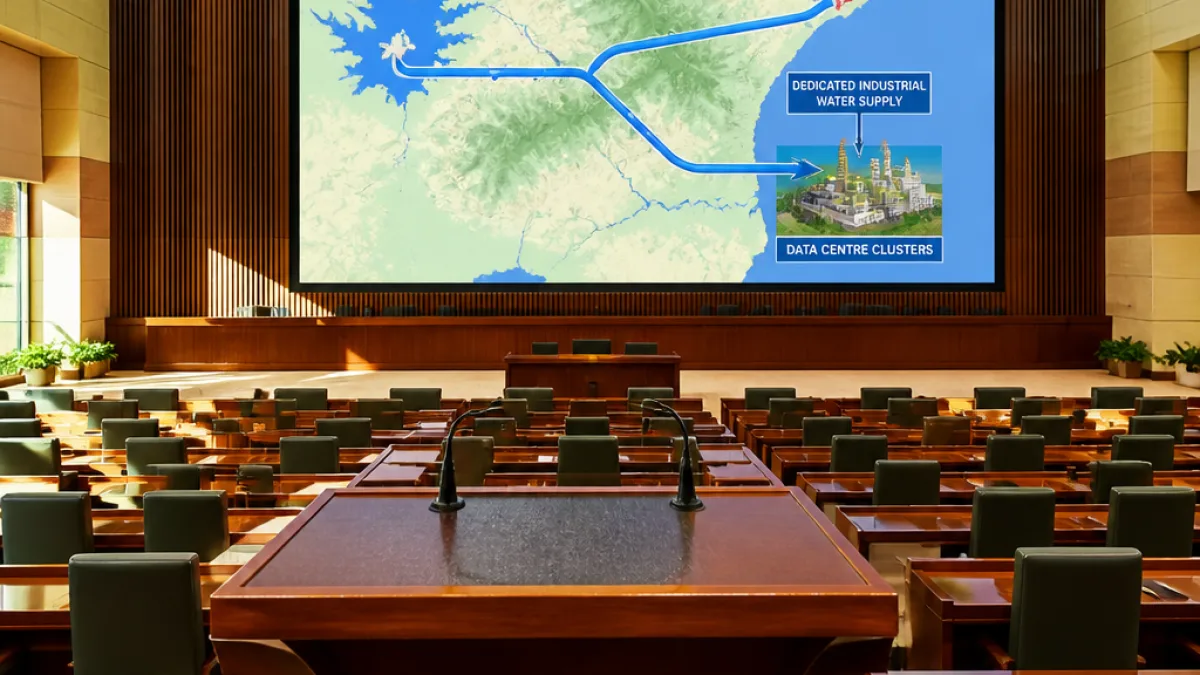
Visakhapatnam’s forthcoming data-centre ecosystem will not impinge on the city’s municipal water supply, Andhra Pradesh IT Minister Nara Lokesh said in the State Assembly on Wednesday. He told legislators the projects would be fed from an industrial allocation of Polavaram water and would have dedicated pipelines, while urban water needs for Visakhapatnam would continue to be met through the Polavaram scheme separately.
Responding to a question from Jana Sena MLA Lokam Naga Madhavi in Amaravati, the minister sought to allay public concern and what he described as misinformation about the water and environmental demands of the proposed facilities. Lokesh said the State government had capped data-centre allocations at 6.5 GW, a target set by Chief Minister N. Chandrababu Naidu, and that this limit had been reached.
"The planned data-centre ecosystem is targeted to reach 6.5 GW of capacity and would require around 3 TMC of water annually using current technologies," Lokesh said.
Lokesh added that evolving cooling technologies are expected to reduce water consumption as the ecosystem matures. He also compared water use by data centres with other industrial installations, saying a 1 GW thermal power plant consumes nearly ten times the water of a data centre on an annual basis — an argument he used to question why protests were targeting data-centre projects rather than larger water-consuming facilities.
What has been allocated and the timeline
- Data-centre ceiling: 6.5 GW (state limit fixed by Chief Minister).
- Estimated water need: ~3 TMC per year under current cooling technologies.
- Supply source: Industrial allocation from Polavaram project for data centres; separate Polavaram supply for Visakhapatnam urban needs.
- Infrastructure: Dedicated pipelines to be laid for data-centre projects; a gravity-based city supply expected within 18 months.
The minister said the State will ensure that water earmarked for city residents is not diverted to the data-centre projects. He emphasised that the data-centre water would come from the industrial share of Polavaram, thereby keeping municipal allocations intact.
Local implications and context
For Visakhapatnam residents, the announcement addresses a core concern: whether large-scale IT infrastructure will compete with households for scarce water. The government’s plan to use separate industrial allocations and build dedicated pipelines seeks to segregate supplies for industrial and municipal use.
However, the environmental footprint and longer-term water demand of any large industrial cluster remain points of public interest. Lokesh’s reference to emerging cooling technologies suggests the state anticipates lower per-GW water use over time, but the minister did not supply a timeline or specific technology names in the Assembly response. The comparison with thermal power plants was used to put absolute water figures in perspective but does not eliminate the need for ongoing monitoring of actual consumption once facilities are operational.
| Item | Figure / Detail |
|---|---|
| Data-centre capacity cap | 6.5 GW |
| Estimated annual water need (current tech) | ~3 TMC |
| City gravity-based supply timeline | Within 18 months |
From a business perspective, the State government’s assurances are intended to smooth the path for investors in the AI-driven digital economy and to underline a narrative of "data sovereignty" amid shifting global geopolitics — a rationale cited by the minister for the projects’ strategic importance.
For residents and local planners, the immediate concerns will centre on whether dedicated pipelines and industrial allocations are constructed and enforced before data-centre build-out accelerates, and whether projected water savings from next-generation cooling are realised in practice.
Lokesh’s statement in the Assembly represents the government’s official position; implementation details and periodic audits of water use will determine whether the separation of supplies functions as intended once the data-centre ecosystem is in operation.