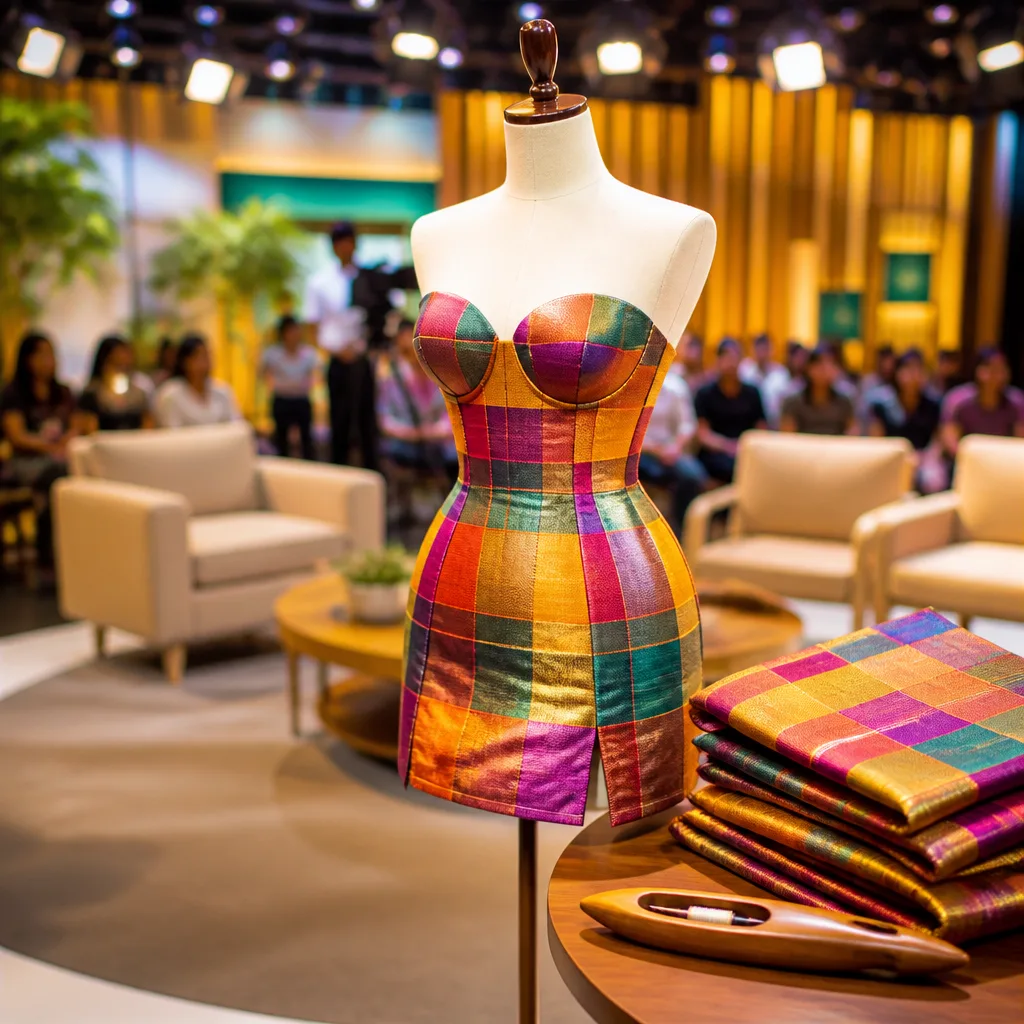
Actor Maitreyi Ramakrishnan brought a classic Tamil handloom into the global fashion conversation when she appeared on The Drew Barrymore Show in a bespoke mini dress fashioned from the Paalum Pazhamum saree. The appearance, during promotion of her new Netflix film, presented the multicoloured checked weave in a compact, western silhouette rather than the traditional drape.
Craft meets contemporary cut
The outfit, created by Indian designer Ashwin Thiyagarajan, preserved the textile’s distinctive kattam (checked) pattern while translating it into a corseted bodice and a voluminous pleated skirt. Traditionally a silk saree associated with celebrations in Tamil homes, the Paalum Pazhamum is celebrated for its bright checks and is part of regional sartorial history.
The mini dress retained key visual cues of the original weave but reframed them in a structured, modern language suitable for a television appearance aimed at a global audience. Beauty choices complemented the look: soft waves, flushed pink cheeks and glossy lips kept the styling fresh and accessible rather than overtly theatrical.
- Textile: Paalum Pazhamum (Tamil handloom, known for colourful checks)
- Designer: Ashwin Thiyagarajan
- Silhouette: Corseted sweetheart bodice with pleated mini skirt
- Occasion: US television promotion for a Netflix film
By opting to rework the saree textile into a mini dress, the actor joined a growing trend in which traditional Indian weaves are adapted into hybrid silhouettes that travel more easily across red carpets and talk-show couches. The result is both visual recognition — the checks immediately read as Paalum Pazhamum to those familiar with the weave — and fresh storytelling about how regional crafts can be reimagined without erasing origin.
| Element | Traditional Saree | Reworked Dress |
|---|---|---|
| Weave | Paalum Pazhamum checks (kattam) | Retained |
| Fabric | Silk (handloom) | Structured, tailored |
| Silhouette | Saree drape | Corseted bodice with pleated skirt |
Context and cultural resonance
The Paalum Pazhamum name, which translates to "milk and fruit" in Tamil, carries associations beyond fabric: it evokes a mid-20th-century Tamil cinema era and is part of household visual memory across many Tamil families. Wearing such a textile in a visibly modified form on an international platform brings two conversations together — one about craft preservation and another about cultural signalling in diasporic identities.
Maitreyi Ramakrishnan, who has often acknowledged her Tamil heritage publicly, made the choice while promoting her latest film on an American talk show. The look arrived amid renewed attention on the actor’s comments about her identity; however, irrespective of the surrounding discourse, the outfit itself underscores how designers and wearers are negotiating heritage pieces for new settings.
For producers, weavers and designers in Tamil Nadu and elsewhere, such reinterpretations offer both opportunities and questions. They can broaden markets for handloom fabrics and stimulate creative commissions, yet they also raise debates on authorship, design credit and how much of a craft’s traditional technique should be maintained when textiles are repurposed.
Fashion houses and independent designers have increasingly collaborated with regional artisans to produce contemporary garments that retain handloom signatures. These projects can provide commercial lifelines for weaving communities when done ethically, with proper credit and fair compensation. On the other hand, fast-fashion cycles and unauthorised appropriation can undercut long-term sustainability for handloom clusters.
Seen on a widely watched international platform, the mini-dress reinterpretation of a Paalum Pazhamum saree is a reminder that Indian handlooms continue to inspire contemporary wardrobes. It also offers a practical lesson for those who wish to bring traditional textiles into modern dressing: preserving recognisable motifs and giving them new structure can create garments that celebrate origin while meeting global style codes.
For viewers in India and abroad, the appearance served as both a sartorial moment and a prompt to look more closely at regional weaves — their history, names and the hands that make them.