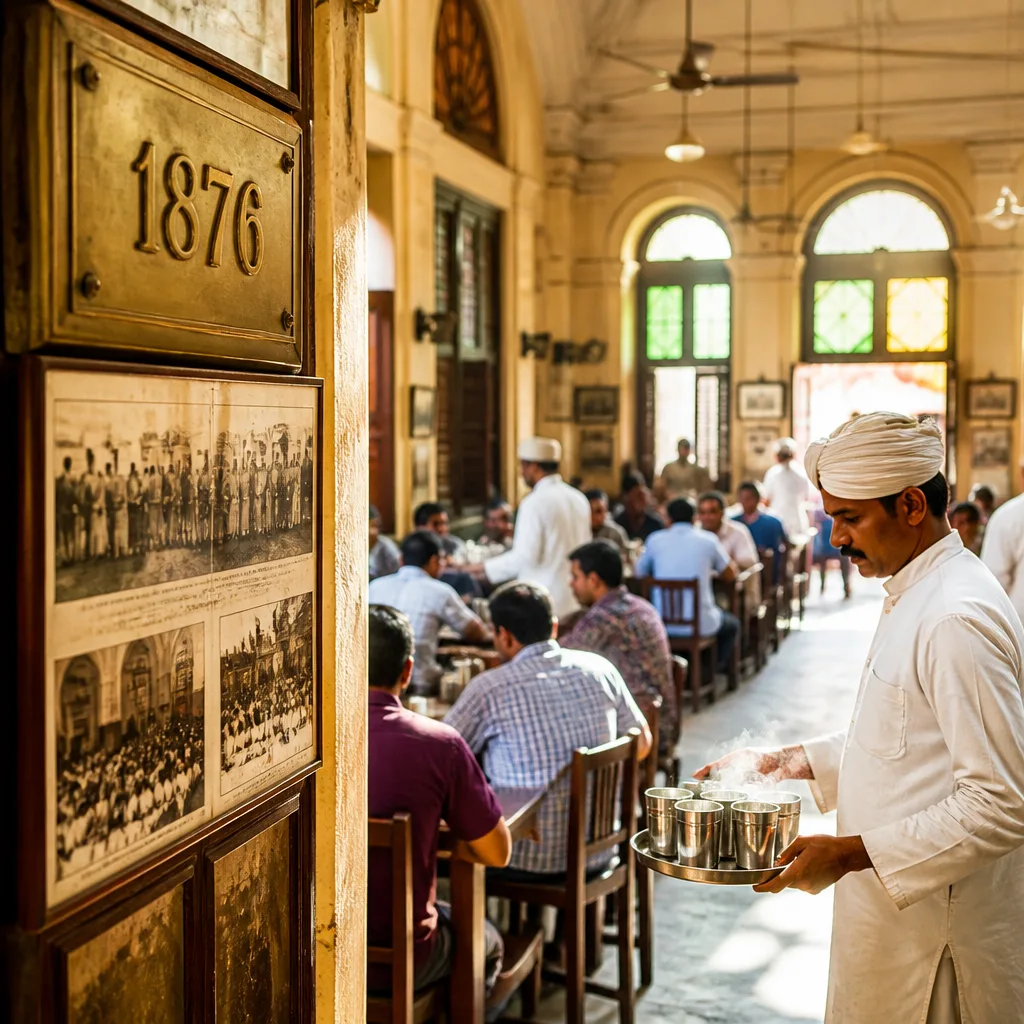
Kolkata’s Indian Coffee House on College Street is widely known today as the city’s favourite adda, where waiters in white kurtas and turbans weave between long tables and students linger over cheap filter coffee. What is less commonly recalled is that the building, which began life as Albert Hall in 1876, was already the scene of nationalist organising and political debate long before it became synonymous with casual conversation and culture. Recent reporting has drawn attention to that earlier chapter of the site’s history.
From a Victorian public hall to a political meeting place
The structure that houses the Coffee House was built in the late 19th century and retained the name Albert Hall into the early decades of the 20th century. Historical activity in the building included meetings and gatherings connected with the early nationalist movement. Prominent Bengal leaders were associated with efforts to mobilise civic opinion in the decades before independence; records show that reformers and organisers used halls and public spaces across Calcutta as venues for discussion and planning.
Coverage pointing to this past notes that figures active in Bengal’s civic and nationalist circles helped form organisations in the 1880s that aimed to create a platform for Indian voices and ideas. The hall evolved into a locus for such gatherings, and over time the site’s associations shifted from formal conference-room politics to the spontaneous, polyphonic exchange of ideas that characterises the modern Coffee House.
How the Coffee House became an adda
The transformation from meeting-hall to café was gradual. By the mid-20th century, the Coffee House — with its austere wooden furniture, marble-topped tables and an inexpensive menu — had become a natural meeting place for students, journalists, writers and intellectuals. The ambience, shaped by steady chatter, cigarette smoke and the clink of cups, fuelled long conversations on literature, politics and art. A popular Bengali song about the Coffee House captured this affection and helped cement its place in the city’s cultural imagination.
Today, the Coffee House remains a meeting ground where generations converge: older habitués who recall decades of discussion; students hunched over notebooks; and tourists drawn by the aura of tradition. The staff’s manner — a uniform of white and the characteristic service style — adds to a sense of continuity that feels almost cinematic in a city of constant change.
- Historic origin: Building dates to 1876, originally known as Albert Hall.
- Political role: Venue for nationalist and civic gatherings in the late 19th and early 20th centuries.
- Cultural legacy: Became a hub for writers, students and intellectuals; celebrated in popular music and literature.
A small timeline
| Year / Period | Significance |
|---|---|
| 1876 | Construction of the building, known then as Albert Hall. |
| Late 19th–early 20th century | Used for public meetings, including nationalist gatherings and civic conferences. |
| Mid-20th century to present | Established identity as the Indian Coffee House on College Street and a cultural adda. |
The Coffee House’s layered history is part of a larger urban story: how public buildings in colonial and pre-Independence Calcutta served both administrative and oppositional functions, and how post-Independence social life reclaimed many such spaces for everyday culture. For visitors and residents alike, the place is at once a living museum and a functioning cafe where conversations continue to shape the city’s intellectual life.
The appeal is sensory as much as historical — the particular aroma of strong, filter-brewed coffee; the worn wooden seats that have absorbed decades of argument and laughter; and the unhurried rhythm that allows an ordinary afternoon to feel like an interlude from a busier world.
For travellers mapping Kolkata’s cultural sites, the Coffee House offers a compact lesson in continuity: an edifice built in the Victorian era that later hosted nationalist discussions and now sustains an enduring habit of public talk. Its story underscores how places of leisure can carry the memory of political struggle, folded into everyday life and preserved through custom, song and continued use.