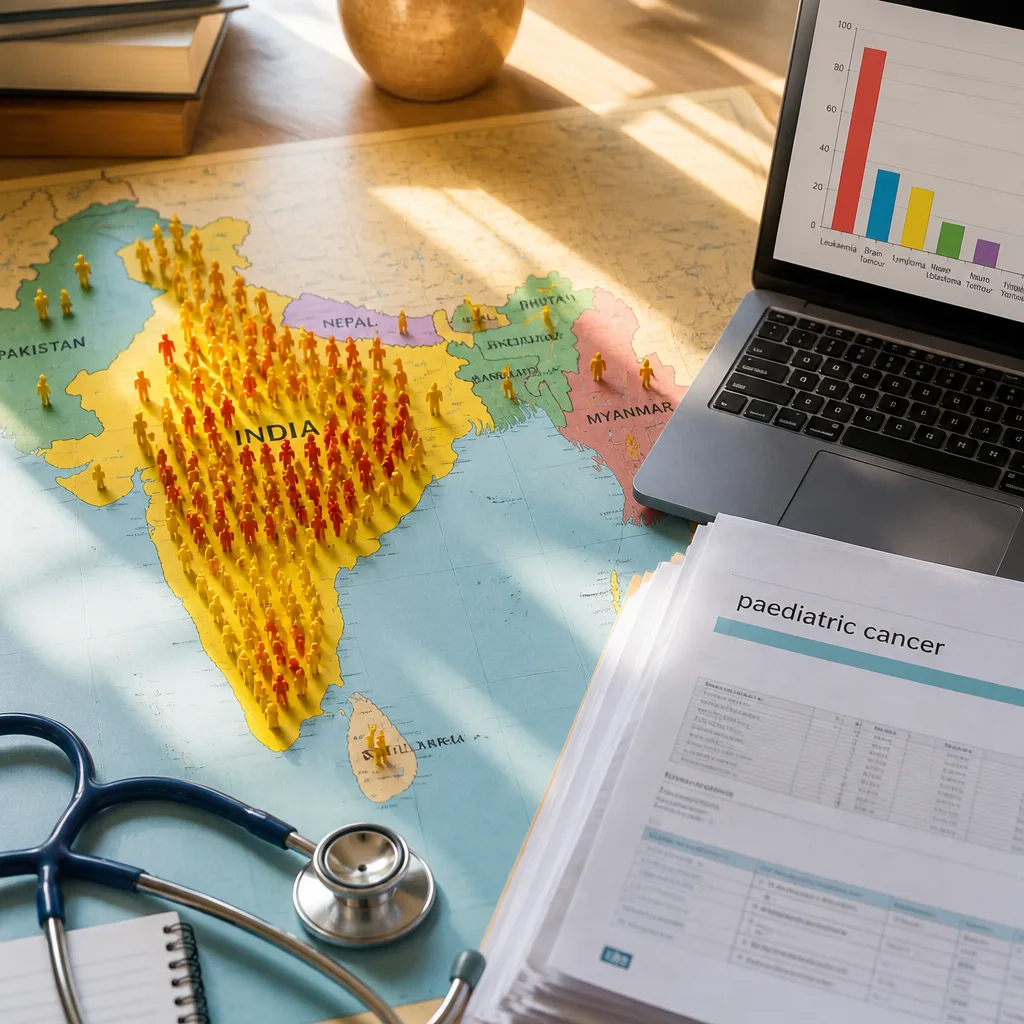
A new population-based analysis published in The Lancet Regional Health – Southeast Asia says India made up a striking share of childhood cancer cases across the eight SAARC nations in 2022. Using GLOBOCAN 2022 estimates, researchers calculated an estimated 37,716 new cancers among children aged 0–14 in the region, of which 25,939 occurred in India — or about 68.8% of the regional total.
Numbers and patterns
The study highlights that leukaemia was the single most common paediatric cancer across the SAARC countries, accounting for roughly a third to a half of childhood malignancies depending on the country. Pakistan accounted for the second-largest share of cases in the region with an estimated 7,841 new diagnoses in 2022 (about 20.8%), while the remaining five countries together contributed the balance of cases.
| Country/group | Estimated childhood cases (2022) | Share of regional total |
|---|---|---|
| India | 25,939 | 68.8% |
| Pakistan | 7,841 | 20.8% |
| Other five SAARC countries (combined) | 3,936 | 10.4% |
Why India’s share is large — and what it does and does not mean
Authors of the analysis caution that India’s large proportion of cases does not necessarily imply a higher incidence rate among Indian children alone. Rather, India’s population of children is substantially larger than that of other SAARC nations, so the absolute number of cases will naturally be higher even when incidence rates are similar.
In addition, the researchers note that differences in cancer registration systems, diagnostic capacity and access to healthcare affect reported estimates. In countries with limited registry coverage or diagnostic resources, many cases may go undetected or unrecorded, skewing regional comparisons.
- Population size: India’s large child population raises absolute case numbers.
- Data and detection: Variability in registries and diagnostics influences reported totals.
- Health access: Differences in treatment availability affect outcomes and visible burden.
Clinical pattern: leukaemia at the head
The analysis found leukaemia to be the predominant childhood cancer across the SAARC countries, representing roughly 35–50% of paediatric cancers depending on the nation. This pattern aligns with global paediatric oncology data in many low- and middle-income settings, where leukaemias and certain central nervous system tumours are commonly diagnosed in children.
Understanding which cancers predominate is crucial for planning diagnostic services, training paediatric oncologists, and organising drug procurement and supportive care. For families, it shapes expectations about treatment trajectories and the kind of long-term follow-up children may need.
Implications for policy and families
The report underlines the need for stronger cancer registration, earlier diagnosis and expanded paediatric oncology capacity across South Asia. For India, which bears the majority of the regional burden in absolute terms, the findings emphasise investment in — and equitable distribution of — paediatric cancer care: from diagnostics and chemotherapy to survivorship services and rehabilitation.
For caregivers and healthcare planners, the study reinforces several practical priorities: improving awareness of early warning signs, widening access to specialist referral centres, strengthening data collection, and ensuring affordability of treatment. Given the long-term social and economic impact of childhood cancer on families, interventions that reduce late diagnosis and treatment abandonment are especially important.
The analysis draws on GLOBOCAN 2022 estimates for the eight SAARC countries — India, Pakistan, Bangladesh, Nepal, Sri Lanka, Afghanistan, Bhutan and the Maldives — and offers a population-level view that can inform regional collaboration and national health planning.