
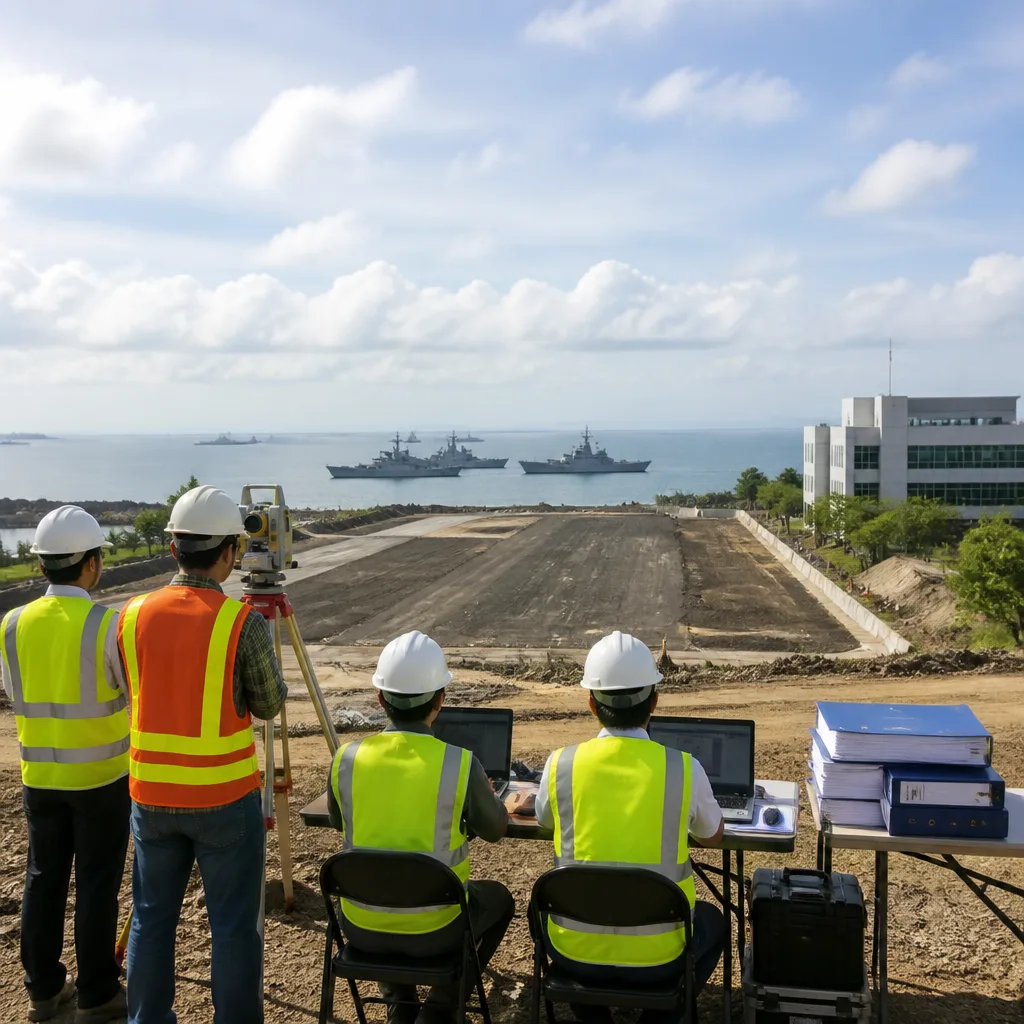
Indian infrastructure major GMR Group has reiterated its commitment to the long-delayed Sangley Point International Airport (SPIA) project in Cavite, Philippines, but said it will hold off identifying financing until required government and defence clearances are in place.
Site work and studies continue while approvals are pending
GMR's business chair for energy and international airports, Srinivas Bommidala, said the group's team has carried out “two or three” site visits over the past three months and is pursuing preparatory work including traffic and financial studies. However, the firm has not yet determined the specific quantum of capital it might commit to the development because regulatory approvals remain outstanding.
“Our team, as far as we are concerned, we are pretty serious. But things have to move because it is connected to the Navy. We don’t want to disturb the sovereignty requirements. We respect the local country’s requirements,”
The project has seen repeated delays amid changes to the consortium and technical complications. GMR first signalled a firm commitment to the Sangley aerocity and SPIA scheme in August last year, offering to participate in the development as part of a consortium.
Government moves to speed up approvals
Responding to the protracted timeline, the Philippine President issued Administrative Order No. 44 in June, establishing a technical working group to accelerate the airport's progress. The group is to be co‑chaired by the Department of Transportation and the Philippine Reclamation Authority and tasked with fast‑tracking permits, licences and other authorisations and streamlining procedures for the project.
GMR officials told reporters that while the company remains in continuous engagement with the Philippine government and other consortium partners, progress on clearances — particularly those touching on naval sovereignty and related defence considerations — will determine the point at which financing can be identified and mobilisation can begin.
What this means for investors and air connectivity
For stakeholders tracking South and Southeast Asian aviation expansion, the Sangley project is a potentially significant greenfield development that could relieve pressure on Manila’s existing airport infrastructure and unlock surrounding reclamation and aerocity opportunities. But the timeline for private investment remains contingent on political and defence clearances, not on commercial studies alone.
- GMR activity: Multiple site visits in recent months; traffic and financial studies under way.
- Financing: No firm funding amount yet identified by GMR until approvals arrive.
- Regulatory constraint: Navy and sovereignty requirements highlighted as key issues.
GMR already has aviation interests in the Philippines and its decision-making on Sangley will be watched by lenders and partner firms eyeing infrastructure opportunities in the region. Until permits and sovereign clearances are resolved, structural financing options and timelines will remain fluid.
| Item | Detail |
|---|---|
| GMR commitment | Firm commitment announced August last year; continuing engagement with government and consortium |
| Recent on‑site activity | Two to three site visits in past three months; traffic and financial studies ongoing |
| Key impediment | Pending government clearances, especially those involving the Navy and sovereignty issues |
| Government action | Administrative Order No. 44 formed a technical working group to fast‑track permits and clearances |
For business readers, the Sangley development underscores two practical points: first, that infrastructure projects in strategic locations often hinge on defence and sovereignty considerations as much as on commercial viability; and second, that preparatory studies do not necessarily translate into immediate capital commitments. Credit decisions and construction timelines are likely to follow official clearance rather than private intent alone.
GMR’s next steps — whether to formalise financing assumptions or to pause further commitments — will depend on the technical working group’s progress and the pace at which the Philippine authorities resolve naval and permitting issues. Industry participants say such milestones typically determine whether overseas infrastructure projects proceed on schedule, undergo renegotiation, or are restructured.