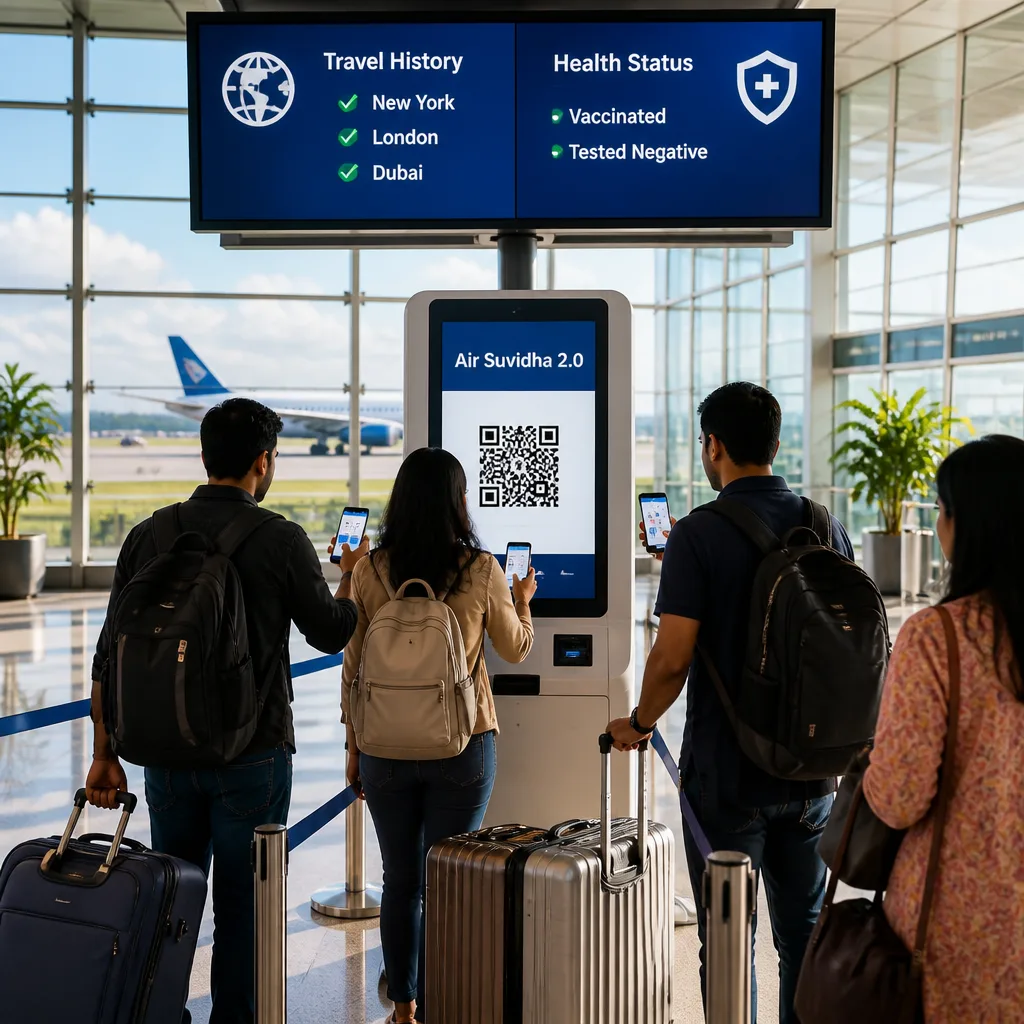
The Union Ministry of Civil Aviation on Sunday launched Air Suvidha 2.0, a fully digital and contactless health-declaration platform for international travellers arriving in India, aimed at strengthening airport-level public-health surveillance while expediting passenger movement.
Why the upgrade
The new system has been developed in collaboration with Delhi International Airport Limited (DIAL) and allows travellers to submit a health self-declaration online before arrival. Officials said the platform is intended to reduce paperwork, improve disease detection at entry points and enable faster coordination between airport operators, immigration and public-health authorities.
How it works
Under the upgraded arrangement, international passengers can complete their health-declaration as part of web check-in or up to 24 hours prior to landing in India. The declaration requests recent travel history covering the previous 21 days, any exposure to infectious diseases, current symptoms and contact details that would allow follow-up if required.
- Declaration submission during web check-in or up to 24 hours before arrival.
- Information includes 21-day travel history, exposure, symptoms and contact details.
- Travellers may still be required to present the declaration at the International Travel Health Desk or at immigration on arrival.
The Centre said the digital process is contactless, intended to minimise physical handling of documents and speed up passenger processing at international arrival terminals.
Context and public-health rationale
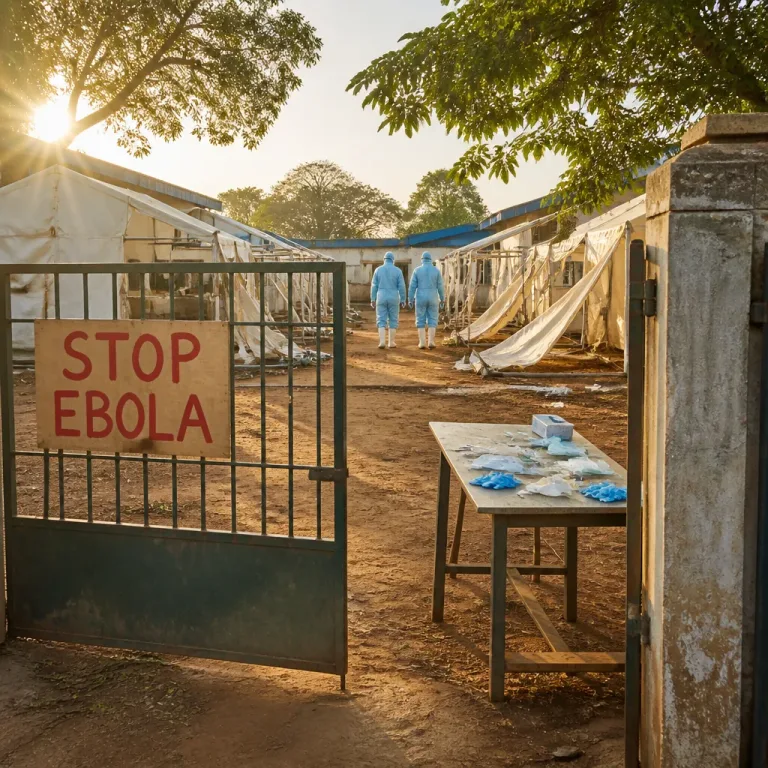
The launch comes at a time of increased global concern after the World Health Organization (WHO) declared the Ebola/Bundibugyo Virus Disease outbreak in the Democratic Republic of Congo and Uganda a Public Health Emergency of International Concern (PHEIC). The government framed the upgrade as part of routine strengthening of border health security and improved readiness to detect and respond to potential cross-border infectious threats.
While Air Suvidha 2.0 focuses on streamlining declarations and early identification of risk, established public-health protocols at ports of entry remain in force. Passengers presenting symptoms or identified as contacts of cases may be subject to additional screening or public-health follow-up in accordance with guidance issued by the Ministry of Health and Family Welfare and international health regulations.
Operational implications
Airport operators, immigration authorities and public-health officials will have access to the submitted declarations to facilitate risk assessment and co-ordination. The Ministry of Civil Aviation said the move will improve information flow across agencies and reduce delays for travellers while preserving national biosecurity measures.
| Feature | Detail |
|---|---|
| Submission window | During web check-in or up to 24 hours before arrival |
| Travel history asked | Previous 21 days |
| Mode | Fully digital, contactless |
Public-health experts and airport authorities have previously emphasised that digital tools need to be complemented by robust on-ground screening, laboratory capacity and timely public-health follow-up. The Indian Council of Medical Research (ICMR) and the Ministry of Health and Family Welfare provide clinical and surveillance guidance to state health departments and district surveillance units for such activities.
Passengers are advised to carry correct contact details and declare any recent illness or exposure truthfully to ensure appropriate and timely public-health action. As with any public-health measure, travellers should consult a qualified medical practitioner if they develop symptoms during travel or after arrival; information provided via Air Suvidha 2.0 does not replace clinical assessment.
The ministry said the platform is adaptable and will be used as required by prevailing international and national health advisories. It is not a substitute for other entry requirements that may be in force under specific health advisories or travel regulations.
Note: Readers seeking clinical guidance for symptoms or exposure should consult the ICMR, the Ministry of Health and Family Welfare or a qualified physician rather than relying solely on digital travel declarations.