The Kerala High Court on Monday held that the Central government can invoke patent provisions to manufacture or procure a patented medicine on a non‑commercial basis when the price charged by the patent holder is “exorbitant”, underscoring the State’s obligation to ensure citizens’ access to health care.
Court frames public‑interest test for patent use
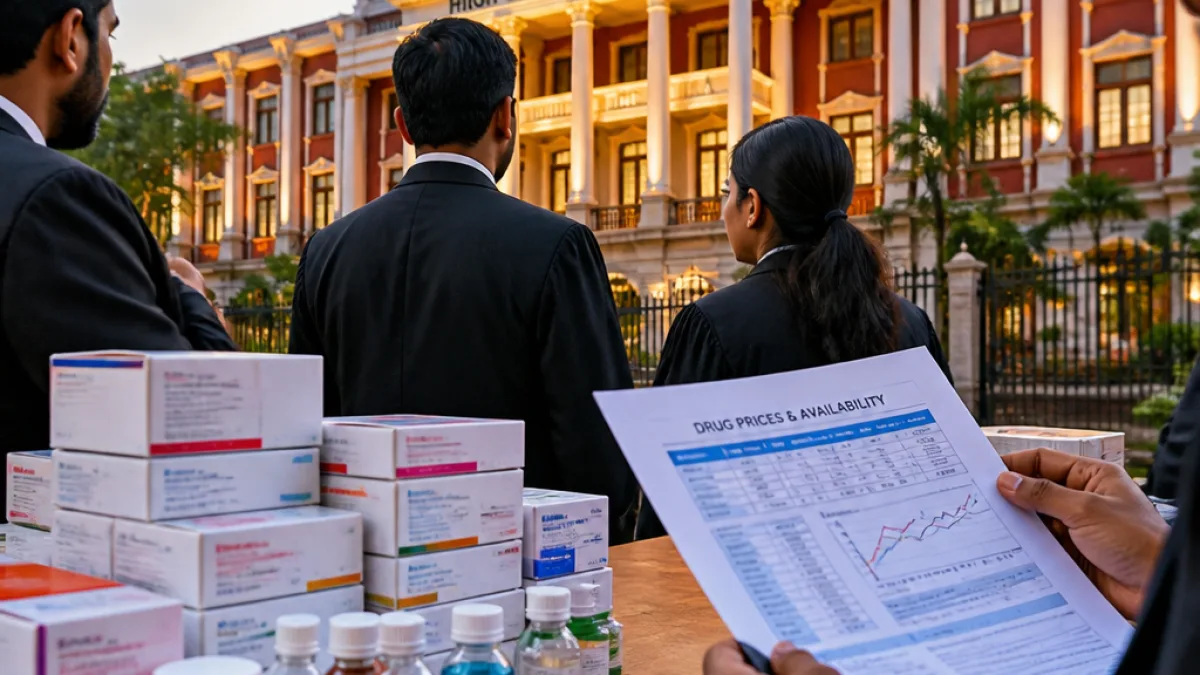
Delivering the judgment, Justice Harisankar V. Menon said the Centre should collate price and availability data to decide whether a particular medicine is affordable, and if necessary, exercise powers under the Patents Act, 1970 in the larger public interest while giving notice to the patent holder.
“The government is required to provide all necessary facilities to citizens to ensure access to healthcare, including access to life‑saving treatment, as in the case at hand,” the court said.
The case arose from a petition filed by a breast cancer patient who sought directions for the government to take over the patent for Ribociclib so that it could be made available at a lower price. The petitioner had been prescribed Ribociclib, which at the time of filing cost around ₹75,000 per month for her. She died while the plea was pending, but the court continued with the matter in view of the larger public interest.
Pharmaceutical industry stance and available alternatives
Pharmaceutical firms had opposed the petition, arguing that the Centre had already considered Ribociclib and found compulsory use unnecessary because a cheaper alternative, Palbociclib, was available in the market.
The court’s observations do not order immediate compulsory licensing or takeover of any patent. Instead, the judgment sets out a framework in which the Centre must gather and assess data on affordability and availability before deciding whether to invoke statutory powers under the Patents Act.
Practical implications for patients and policy
Legal experts said the ruling reiterates a recognised tension between patent protections that incentivise pharmaceutical innovation and the constitutional obligation of the State to protect life and health. The court’s direction that the government should take a data‑driven decision may prompt central agencies to prepare formal price‑and‑access assessments for high‑cost therapies.
For patients and families, the order offers a potential avenue to challenge high pricing where reasonable alternatives are absent. It also signals judicial willingness to entertain public‑interest claims even when individual petitioners are no longer alive, provided the issue affects wider access to health care.
What the judgement requires the government to do
- Collate data on the price and market availability of a patented medicine.
- Assess whether prices place the medicine beyond reach of patients, particularly the underprivileged.
- Consider invoking provisions of the Patents Act, 1970 to permit non‑commercial use or compulsory licensing, with due notice to the patent holder.
These steps, the court indicated, would align the exercise of patent law with the State’s duty to ensure access to life‑saving treatments.
Context within Indian patent jurisprudence
India’s Patents Act contains mechanisms—such as compulsory licensing and government use—designed to balance inventors’ rights and public health needs. The Kerala High Court’s order reiterates that such mechanisms remain within the government’s toolkit when price and access concerns meet a demonstrable public‑interest threshold.
| Issue | Fact from case |
|---|---|
| Medicine concerned | Ribociclib |
| Cost cited | Around ₹75,000 per month |
| Alternative noted by industry | Palbociclib (cheaper alternative available) |
| Statute referenced | Patents Act, 1970 |
The case will now place pressure on the Centre to frame or publish an evidence‑based position on price‑and‑access questions for high‑cost patented drugs. It also keeps alive debate on the criteria and transparency of decisions to invoke patent provisions in the public interest.
As the court noted, any government action must be accompanied by adequate notice to the patent holder and grounded in objective data, a balance intended to protect both public health and legitimate commercial interests.
The judgment does not specify a timeline for central action; it directs the authorities to undertake the prescribed assessment before deciding on invoking patents for public use.
(By Thomas Varghese, Kerala correspondent)