Chandigarh: The Postgraduate Institute of Medical Education and Research (PGIMER), Chandigarh, will formalise regular dialogue between its administration, faculty and resident doctors to address concerns over workload, stress and workplace well‑being, director Vivek Lal said on Sunday.
Formal meetings to become part of institutional support
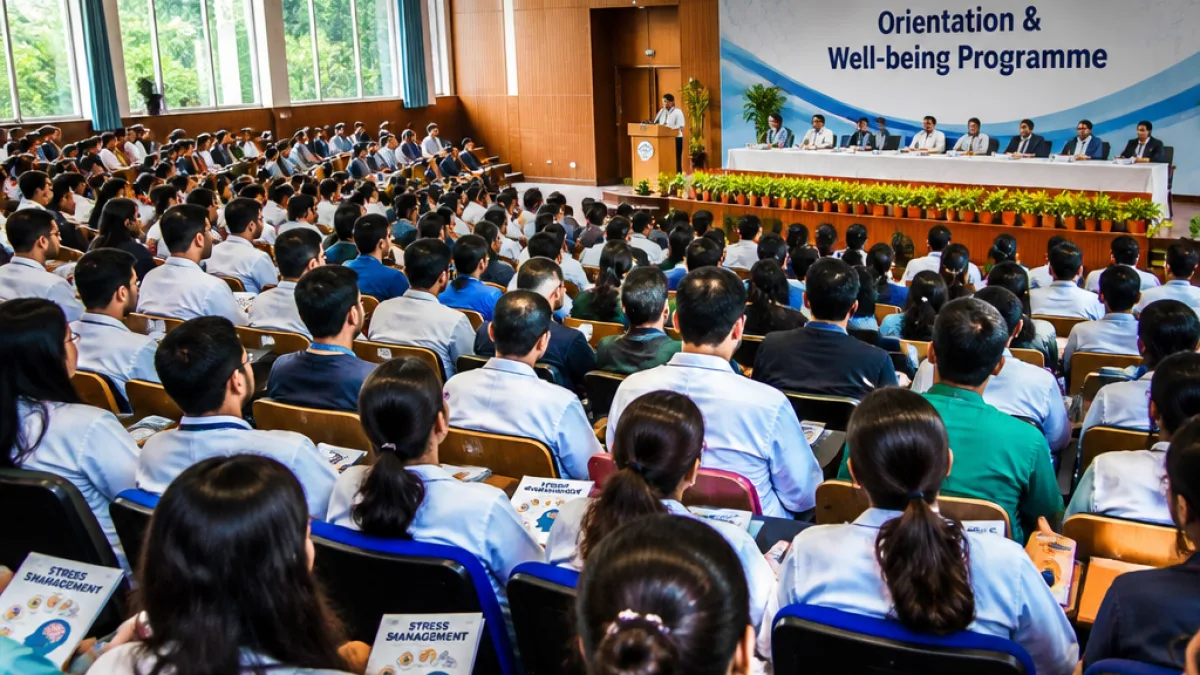
The announcement came during an open interaction held as part of an "orientation and well‑being programme" attended by about 200 residents, according to a statement released by the institute. Lal urged Heads of Departments and faculty guides to hold interactions with residents at a fixed periodicity so that communication and early resolution of problems become an integral part of the institutional support system.
Lal framed resident welfare as a component of quality patient care. "
Resident well‑being is integral to patient care. We must create an environment where our young doctors feel heard, supported and able to thrive," the statement reported him as saying. He added that regular open interactions would help identify concerns at an early stage and ensure that issues are addressed through appropriate institutional mechanisms.
Platform for raising issues, peer support and institutional mechanisms
The programme provided residents with a direct forum to raise concerns, share experiences and offer suggestions before the director, faculty and administration. Discussions at the session centred on:
- the transition into residency;
- stress and burnout;
- seeking timely help and peer support; and
- strengthening institutional mechanisms for resident welfare.
Lal drew on his own experience from residency and encouraged residents to communicate openly and seek support whenever required. He assured the gathering that the administration would continue to examine appropriate measures to strengthen institutional support, underlining that residency is a formative phase in a doctor’s professional life.
Administrative endorsement
Sanjay Jain, Dean, PGIMER, said the residents were "immensely talented and hardworking" and reiterated the institution’s dual responsibility to train and to nurture residents' growth in a healthy environment, the statement added.
The director also appreciated the role of the Association of Resident Doctors in facilitating the dialogue and bringing forward constructive suggestions on resident welfare.
What the move aims to achieve
By institutionalising periodic interactions at department level and with faculty guides, PGIMER aims to create recurring, predictable channels for residents to flag issues—ranging from workload distribution to mental‑health support—so they are addressed through formal institutional processes. The initiative links trainee welfare explicitly to patient care standards by making early detection and resolution part of routine governance.
| Issue discussed | Purpose of periodic interactions |
|---|---|
| Transition into residency | Provide orientation, set expectations, identify gaps early |
| Stress and burnout | Encourage timely help‑seeking, develop peer support |
| Institutional mechanisms | Strengthen formal channels for grievance redressal and welfare |
Practical implications for residents and departments
For residents, fixed periodic interactions could mean predictable opportunities to discuss rota pressures, training needs and mental‑health concerns with supervisors and administrative leaders. For departments, the change will require scheduling regular meetings, documenting concerns and ensuring follow‑up through established institutional mechanisms.
While the statement did not specify a timeline or exact frequency for the interactions, it made clear that Heads of Departments and faculty guides have been tasked to adopt a fixed periodicity. Further operational details are expected to emerge as departments set local schedules and reporting lines.
The initiative comes amid increased national attention on trainee doctors' mental health in medical institutions, and at a time when many teaching hospitals are revisiting support structures for residents. PGIMER’s announcement formalises one such institutional response within Chandigarh's premier postgraduate medical centre.
Officials said the orientation and well‑being programme and the open interaction were part of ongoing efforts to strengthen resident welfare, with the institute committing to examine further measures as required.