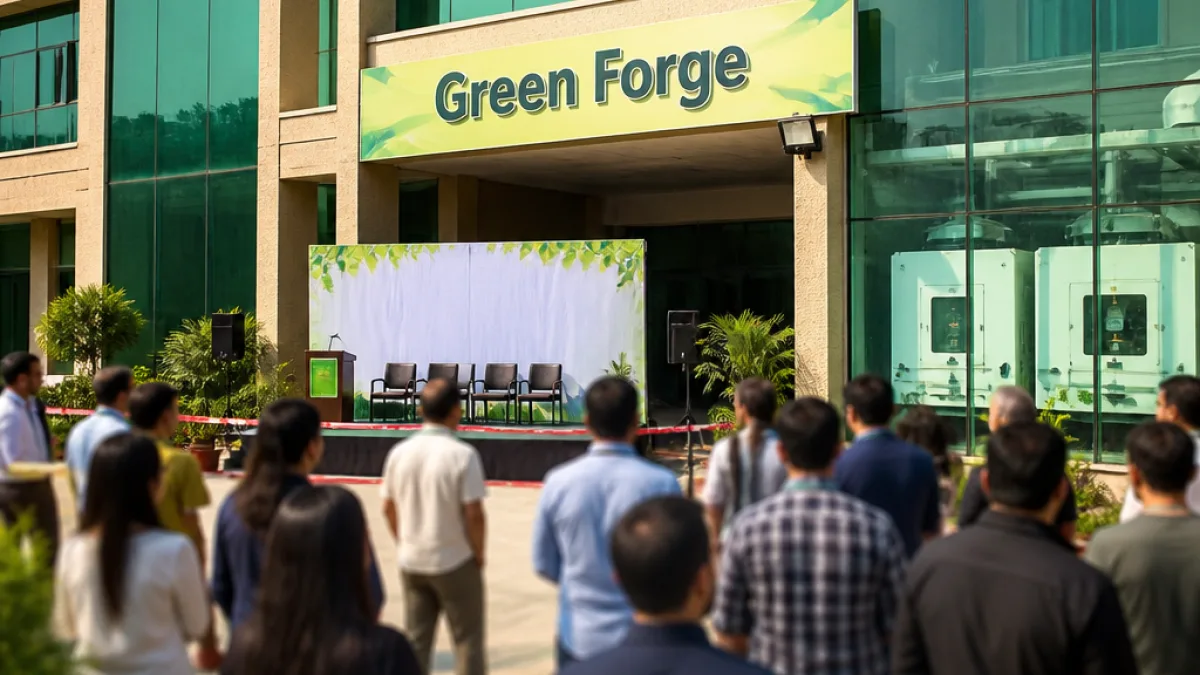
MOHALI: A purpose-built controlled-environment complex dubbed Green Forge was inaugurated at the BRIC–National Agri-Food & Biomanufacturing Institute (BRIC-NABI) in Mohali on Monday, a development the Union Minister of State for Science and Technology, Dr Jitendra Singh, described as a milestone for research on genetically modified crops.
Controlled simulation to guide crop deployment
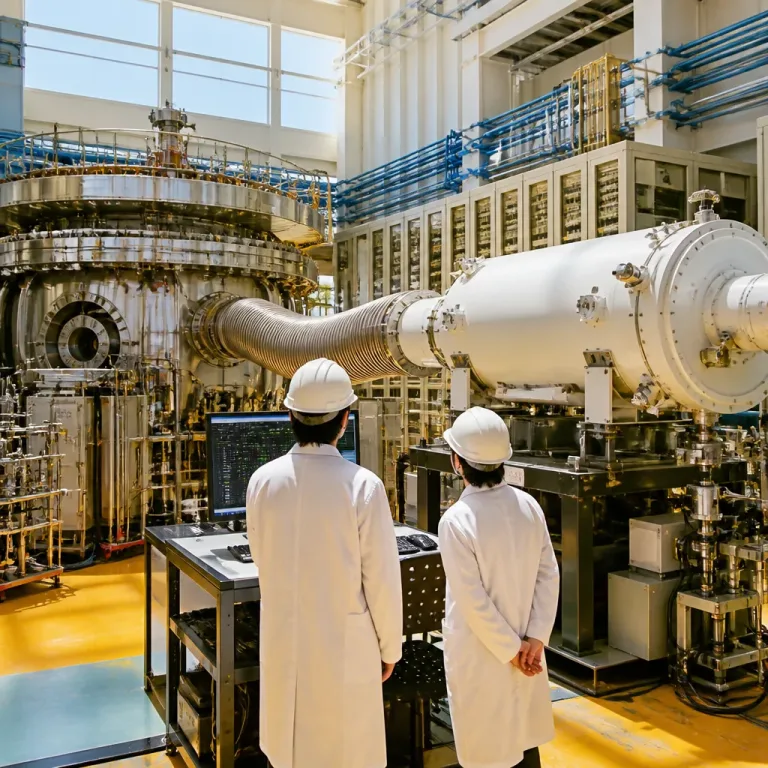
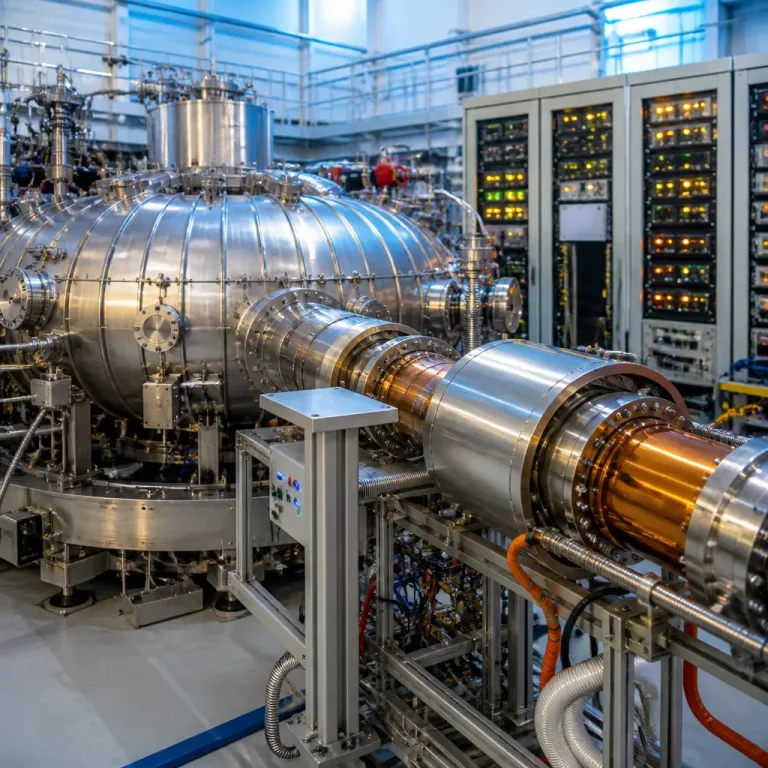
According to the institute, the Green Forge complex comprises multiple simulation chambers that allow researchers to vary the quality and quantity of light, humidity and temperature to recreate diverse climatic regimes. The facility is intended to enable systematic assessment of how genetically modified (GM) varieties perform under a range of environmental conditions before field trials and deployment.
Explaining the rationale for the facility at the National Conclave on BioE3 (Biotechnology for Economy, Environment and Employment) hosted at BRIC-NABI, Dr Jitendra Singh said the capability will help in identifying the locations best suited for a new GM variety by studying crop responses under controlled but varied settings.
“Green Forge provides simulation chambers in which the quantity and quality of light, humidity and temperature can be varied to create an optimum environment for growing and experimenting with genetically modified crops,” said Dr Jitendra Singh.
He added that the chambers can reproduce specific parameters that may be difficult to generate naturally and that integration with advanced technologies, including artificial intelligence, could further refine experiments.
Why controlled-environment research matters
Controlled-environment facilities such as Green Forge are used internationally to accelerate understanding of genotype–environment interactions — how a plant’s genetics respond to variables such as light spectrum, moisture and diurnal temperature shifts. In the Indian context, where agro-climatic zones vary sharply over short distances, controlled experimentation can reduce uncertainty before launching resource-intensive field trials.
BRIC-NABI officials said the purpose-built chambers will allow researchers to:
- Replicate a range of day/night temperature cycles and humidity regimes.
- Alter light intensity and spectra to mimic shade, high solar radiation or artificial photoperiods.
- Combine environmental factors systematically to study stress responses and yield-related traits.
| Facility feature | Research capability |
|---|---|
| Light control | Adjust intensity and spectrum to test photomorphogenic responses |
| Temperature regimes | Simulate day/night and seasonal temperature profiles |
| Humidity control | Evaluate tolerance to dry and humid conditions |
| AI integration | Analyse complex phenotypic responses and optimise treatment schedules |
Scope and limits highlighted
Dr Jitendra Singh framed Green Forge as an asset for researchers to assess suitability of GM crops across locations, underscoring that controlled studies can inform where a crop might be cultivated most effectively. He also noted the potential for linking the facility’s environmental simulations with advanced analytical tools.
The announcement did not provide details on timelines for specific projects, the number or size of chambers, or protocols for regulatory oversight and public access. The source reporting the inauguration did not list participating researchers, funding amounts or an operational schedule for the complex.
Local and national implications
For Punjab and neighbouring states, a facility that can pre-screen crop behaviour under varied stresses could shorten the development timeline for climate-resilient varieties, subject to regulatory approvals and field validation. If used for GM crops, the work will intersect with regulatory frameworks governing biosafety, field trials and commercial release.
Researchers and policymakers in the agriculture and biotechnology sectors will likely watch how experiments at Green Forge are designed, especially with respect to transparency, data sharing and compliance with existing biosafety norms. The facility’s integration with AI tools could also influence the methods used for phenotype analysis and predictive modelling, potentially affecting breeding and technology transfer pathways.
BRIC-NABI’s inauguration of the Green Forge complex adds a novel experimental capacity to the region’s agri-biotech infrastructure. Further details on operational modalities, research agendas and partnerships are expected to emerge as the institute begins work in the new facility.