Ahmedabad: A new high-power heating system has been installed at the Steady State Superconducting Tokamak-1 (SST-1), the Institute for Plasma Research (IPR) in Gujarat reported, marking a practical advance for India’s experimental fusion programme.
New heating capability for SST-1
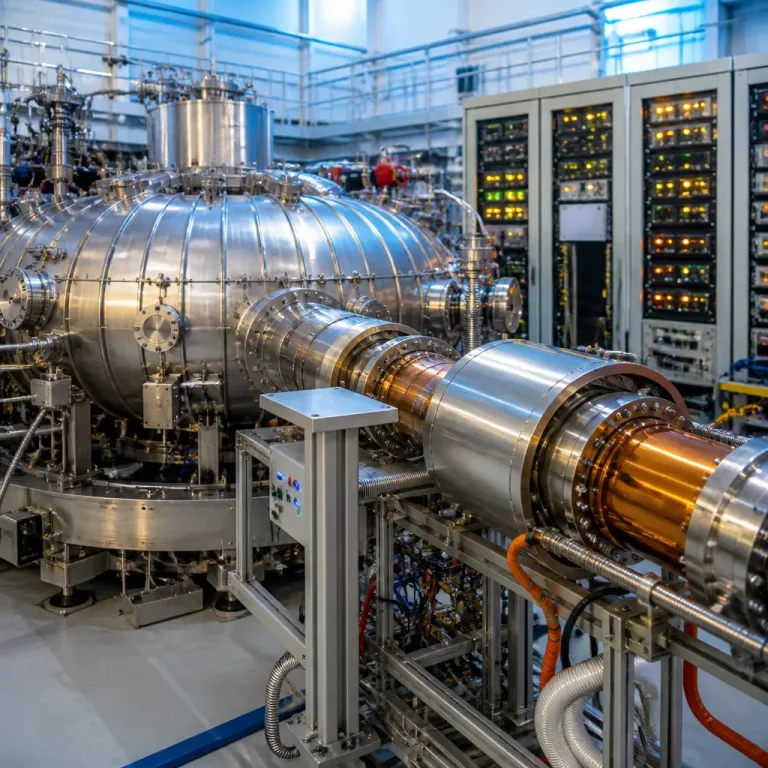
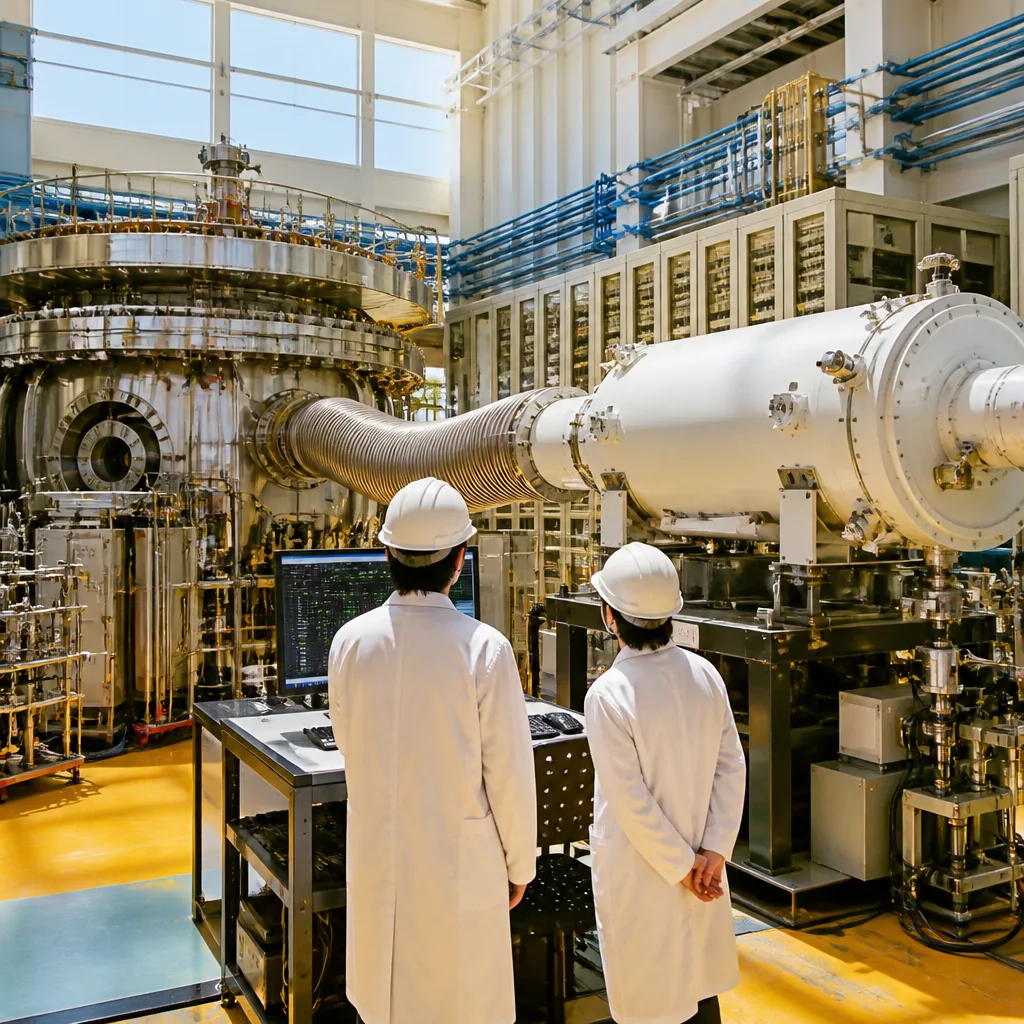
The system centres on an 82.6 GHz gyrotron capable of delivering up to 400 kW of radio‑frequency power. It has been integrated with SST-1 and is being used for electron cyclotron resonance heating (ECRH) experiments to heat and control the hot, ionised gas — plasma — inside the tokamak, IPR said.
SST-1 is a superconducting tokamak designed to study magnetically confined plasma in a doughnut‑shaped vacuum vessel. The device allows researchers to test techniques for sustaining and controlling plasma — a necessary step towards fusion, the process in which light atomic nuclei merge and release energy, the same basic mechanism powering the Sun.
Why the gyrotron matters
Heating and current drive systems such as gyrotrons are critical components of tokamak research. They supply concentrated electromagnetic energy at specific frequencies to increase electron temperatures and to help shape the plasma. Effective heating assists researchers to reach and maintain the extreme temperatures and conditions under which fusion reactions can take place, while precise power deposition helps in controlling instabilities that can otherwise damage the discharge.
- Installed device: 82.6 GHz gyrotron
- Maximum continuous power: 400 kW
- Primary use: Electron cyclotron resonance heating experiments on SST-1
| Parameter | Value |
|---|---|
| Frequency | 82.6 GHz |
| Peak power | 400 kW |
| Integration | SST-1 tokamak (IPR, Gujarat) |
Context and next steps
The IPR said the system will be used in ongoing experiments to test heating efficiency and plasma control strategies on SST-1. Such measurements help refine models of plasma behaviour and inform the design of future machines. While the announcement does not claim a breakthrough in producing net fusion energy, it represents a technological step in capability for the national research infrastructure.
Fusion research globally proceeds in incremental phases: demonstrating stable confinement, achieving required temperatures and densities, sustaining the plasma long enough, and eventually attaining net energy gain. The addition of a high‑power ECRH system broadens the experimental toolbox available to Indian scientists to address these challenges.
Scientific and programme implications
The installation underlines two practical themes in India’s fusion effort. First, developing and integrating specialised high‑power microwave sources such as gyrotrons builds domestic expertise in key subsystems needed for larger machines. Second, experiments on superconducting tokamaks like SST-1 provide operational experience with long‑pulse or steady‑state plasma conditions, important for future devices that aim for continuous or near‑continuous operation.
IPR’s statement framed the work as part of a broader effort to recreate on Earth the process that powers stars, while emphasising that controlling extremely hot plasma remains the central technical challenge. The new gyrotron will enable focused studies of how applied radio‑frequency power affects electron heating, current profiles and stability.
Researchers caution that advances in auxiliary systems and measurement do not immediately translate to electricity generation from fusion. Rather, each incremental capability — such as the installed gyrotron — contributes data, operational lessons and component know‑how that guide the next stages of machine design and experimental campaigns.
The SST-1 continues to serve as a national testbed for superconducting tokamak physics and technology; the latest addition of an 82.6 GHz, 400 kW gyrotron is the most recent enhancement intended to expand its experimental scope.