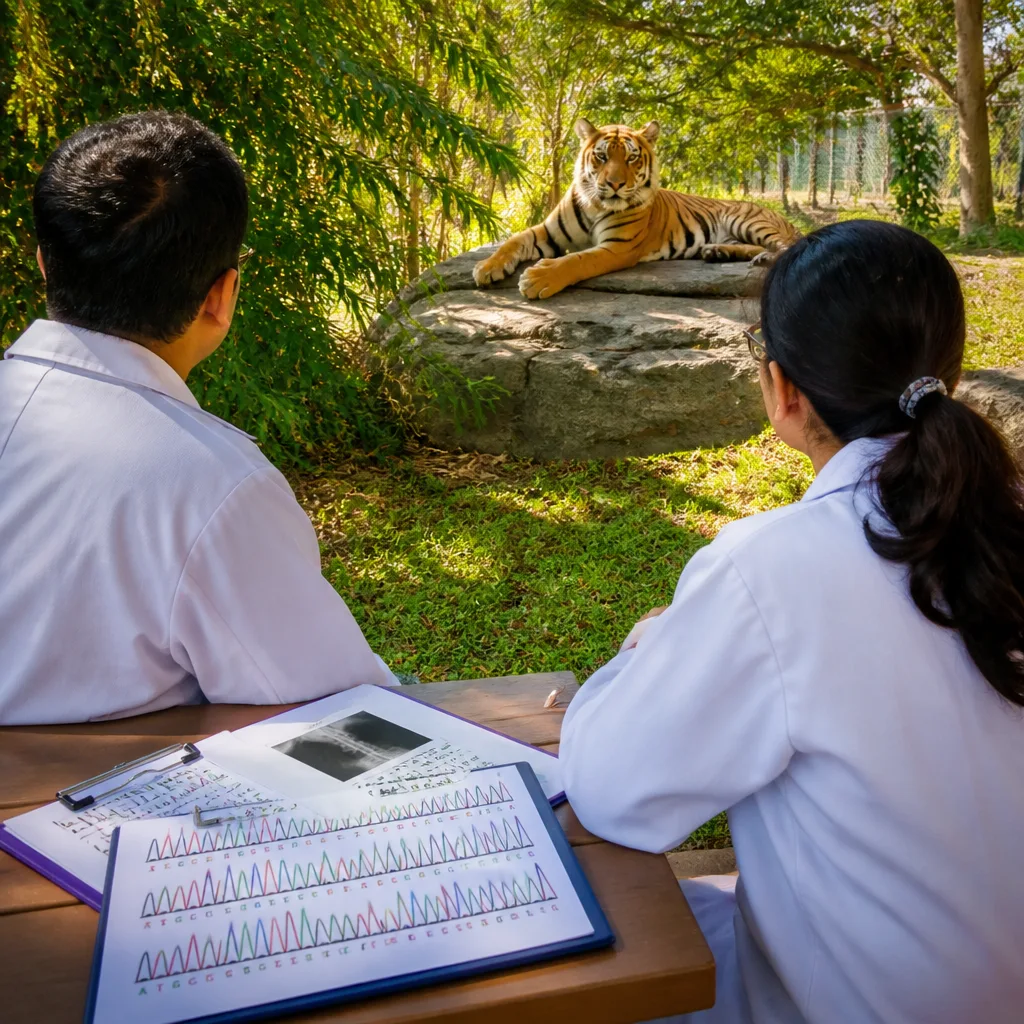
Mahak, a tigress in Kota’s Abheda Biological Park, will be the subject of a detailed scientific study to uncover biological and management factors that may have contributed to her record longevity, officials and media reports said.
Why Mahak matters
Born on 28 August 2004 at Nahargarh Biological Park in Jaipur, Mahak is now 23 years old — several years beyond the typical lifespan recorded for tigers in human care. Captive tigers generally live about 16–18 years, while survival in the wild is often shorter owing to conflicts, injuries and environmental hazards. Mahak’s continued activity, tooth and claw condition, and overall health have prompted the Wildlife Institute of India (WII) to study her genetic profile and life-history to identify protective factors that could be applied across zoos and biological parks.
Scope of the scientific inquiry
WII researchers plan a multidisciplinary analysis combining genetics, medical records and husbandry history. The investigation will examine:
- genetic makeup and DNA markers to look for variants linked with longevity or disease resistance;
- biological processes and indicators of physiological ageing;
- complete vaccination and treatment history;
- dietary regime, nutritional management and feeding practices;
- environmental and behavioural factors, including enclosure design and stress-reduction measures.
Mahak was moved to Abheda Biological Park in Kota in March 2023 along with another tiger, Nahar. Her sister, Rambha, who was born at the same time, died about six months ago, according to park records reported in media accounts. Mahak has lived entirely in captivity.
Potential implications for captive-animal care
Researchers say the study could influence protocols for ageing big cats, particularly in India’s growing network of zoos and biological parks. A clearer picture of how genetics, nutrition, veterinary care and low-stress environments interact may help managers develop standardised guidelines for geriatric care of tigers and other large carnivores.
The investigation will be cautious about attribution. Longevity in a single individual does not prove causality; rather, the case can generate hypotheses and identify candidate practices and genetic markers for larger-scale studies.
| Category | Typical span |
|---|---|
| Wild tigers | Generally shorter than captivity (varies widely) |
| Captive tigers | 16–18 years |
| Mahak | 23 years (current) |
Methodology and caveats
According to the reports, the study will combine genetic assays with a retrospective review of veterinary and management records. Any genetic variants identified will require validation in larger sample sets before being linked to health outcomes. Likewise, husbandry practices that correlate with better health in Mahak will need testing across multiple animals and institutions to account for individual and environmental variability.
Scientists emphasise that findings from a single, exceptional case should be treated as a starting point for broader research rather than definitive proof of best practice. Well-controlled studies, longitudinal data and comparative analyses across populations will be necessary to turn initial observations into science-based guidelines.
Next steps and broader context
If the WII study identifies promising genetic markers or management factors, it may lead to collaborative research with other institutions that house tigers and big cats. The results could also inform training for zoo veterinarians, nutritionists and keepers, and support evidence-based revisions to conservation and welfare protocols.
Beyond immediate management applications, the investigation touches on wider scientific questions about ageing in large carnivores and the interaction between genetics and environment in determining lifespan. Mahak’s case offers a rare chance to study longevity in a species where long-term, high-quality life-history records are uncommon.
The analysis is expected to be careful and methodical, with an emphasis on generating reproducible results that can be tested in larger cohorts of captive and, where feasible, wild animals.