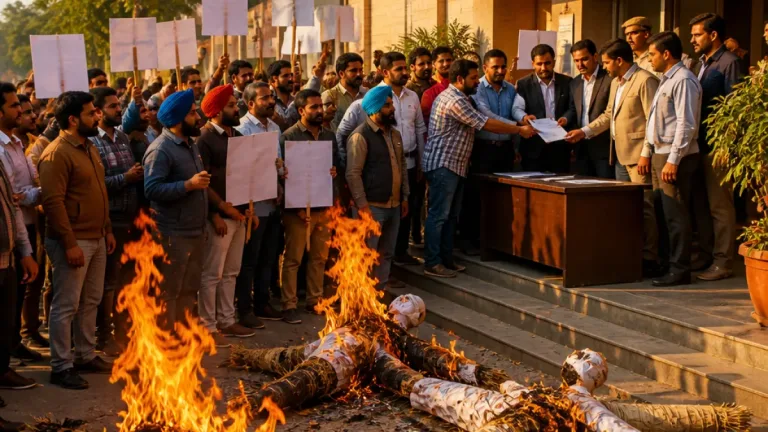
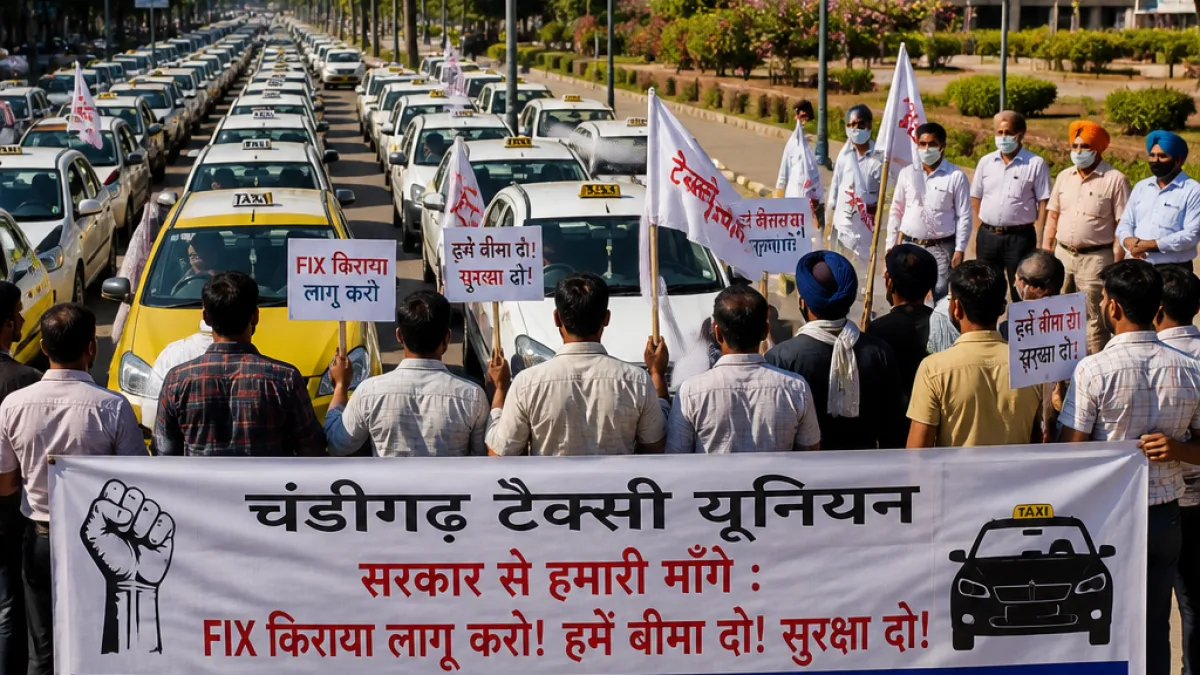
Chandigarh: Members of the Chandigarh Taxi Union continued their protest on Saturday demanding strict enforcement of government-fixed fares and benefits under the state’s cab aggregator policy, alleging that app-based companies have been flouting rules and exploiting drivers.
Drivers seek policy implementation, insurance and fare assurance
According to the union, drivers have been agitating for 90 days against major ride-hailing platforms including Ola, Uber and Rapido. The union says these companies are neither paying the government-mandated fares fixed on July 7, 2025 nor extending the benefits stipulated in the state’s aggregator policy dated June 6, 2025.
Chandigarh Taxi Union president Amandeep Singh told ANI that the policy promises specific social security measures and operational restrictions for aggregators. The union listed the principal demands as:
- Payment of government-fixed fares notified on 7 July 2025.
- Provision of medical insurance coverage of ₹6 lakh per driver as per the policy.
- Provision of term (life) insurance of ₹10 lakh per driver.
- Enforcement of the policy clause banning attachment of private vehicles to aggregator fleets.
"For 90 days, we have been staging a protest here against cab aggregators like Ola, Uber, and Rapido, who have been exploiting us for a year. We are receiving neither the government-mandated fares... nor the benefits stipulated in the aggregator policy," Amandeep Singh said.
Strikes, partial enforcement and wider context
The union said it has carried out eleven strikes over the past fifteen months and claimed a partial success in getting action taken against some aggregators, including the suspension of licences for two companies. The union appealed to the government, the public and fellow drivers to recognise that the agitation is aimed at securing justice for drivers.
The Chandigarh protest comes against a backdrop of broader tensions between traditional commercial vehicle drivers and app-based mobility platforms across the region. The source material notes that commercial vehicle drivers in the Delhi-NCR region conducted a three-day strike from May 21 to 23, urging an immediate revision of taxi and auto fares amid rising fuel and maintenance costs.
| Issue | Claim / Demand |
|---|---|
| Government-fixed fares | Drivers say aggregators are not honouring fares fixed on 7 July 2025. |
| Insurance benefits | Medical insurance of ₹6 lakh and term insurance of ₹10 lakh, as per 6 June 2025 policy. |
| Vehicle attachment | Union demands enforcement of ban on attaching private vehicles to aggregator fleets. |
| Enforcement action | Union says licences of two companies have been suspended so far. |
What the union says and the stakes for drivers
The union framed the protest as a fight for the economic survival and social security of drivers who, it alleges, have borne the brunt of business practices by aggregators while being promised statutory protections. The insurance benefits listed in the June 6 policy — if implemented — would provide drivers with specified medical and term cover, and the ban on attaching private vehicles aims to regulate fleet composition and operating standards.
Union leaders argue that failure to implement the policy leaves drivers exposed to rising operational costs and the absence of promised social protection. They have urged the state government and regulatory authorities to step in and ensure compliance by aggregators.
Regulatory and public-policy implications
The protest underscores enforcement challenges for city and state transport authorities as they seek to balance the expansion of app-based mobility services with labour protections and fare regulation. The broader debate concerns how to integrate digital platforms into urban transport systems while ensuring that drivers receive contractual protections and statutory benefits.
So far, the union reports limited regulatory action — suspension of licences for two companies — but says full implementation of the aggregator policy remains outstanding. The union's continuing agitation suggests the issue may prompt further government engagement and possible escalation if drivers' demands are not addressed.
Chandigarh's consumers and commuters could see operational impacts if the protest escalates, while policymakers must weigh enforcement mechanisms available under existing transport and labour rules to resolve the dispute.