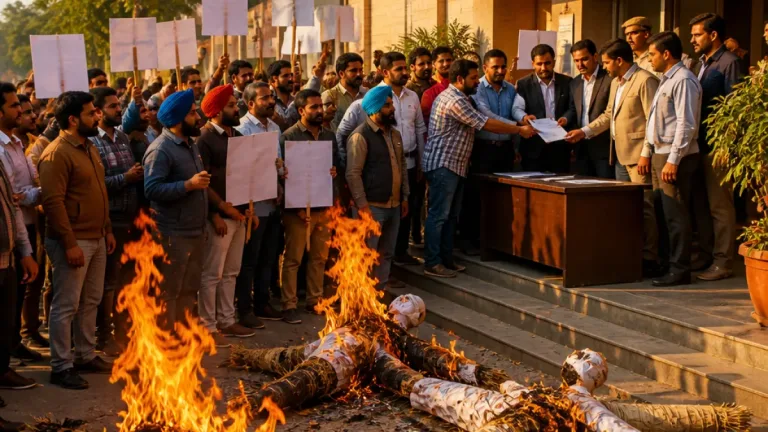
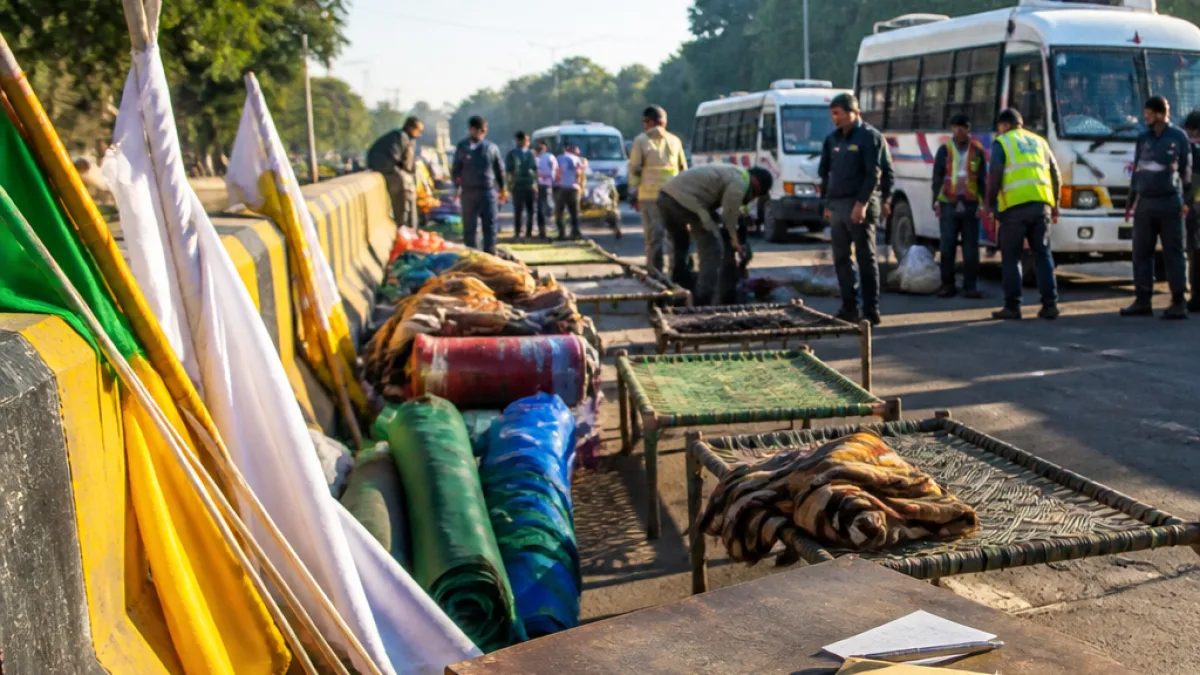
Chandigarh: The week-long protest by the United Kisan Morcha (UKM) at the Mohali–Chandigarh border concluded on Monday after leaders of the farmers' organisations and the Punjab government reached an agreement and the state provided a written undertaking, officials and participants said.
Outline of the agreement
The agitation, which began on 1 September, drew participation from several farmer groups affiliated to the UKM. Their principal demands included a legal guarantee for minimum support price (MSP), relief and restructuring of farm loans, a rise in sugarcane prices, better canal irrigation management and resolution of disputes over state river waters.
According to reports, the Punjab government accepted a number of the demands and issued a written consent that led to the withdrawal of the sit-in. A prominent element of the settlement concerns the state’s stance on river waters: the government agreed to convene a special session of the Punjab Legislative Assembly to discuss issues related to the rivers and existing water-sharing arrangements.
Officials on the ground
Punjab Agriculture Minister Gurmeet Singh Khudian addressed the Kisan Morcha after the pact was finalised and informed the farmers about the items accepted by the government, the reports said. Following the announcement, organisers declared an end to the protest held at the Mohali–Chandigarh border for seven days.
Farmers' demands detailed
The UKM had articulated a mix of immediate and structural agricultural concerns. Reports listed the following key demands:
- Legal guarantee for the minimum support price for crops.
- Resolution and relief mechanisms for cooperative bank loans and other farm indebtedness.
- An increase in sugarcane procurement price.
- Assured government procurement for alternative crops to promote crop diversification.
- Strengthening of canal irrigation to reduce dependence on groundwater.
- A comprehensive debate and clear articulation of Punjab’s position on river waters.
What the government has offered
Beyond the written consent and the promise to call a special Assembly session on river waters, the government indicated acceptance of steps to address procurement, irrigation and loan-related problems, according to the account of the talks. The exact text of the written consent and timeframes for implementation were not published in the reports available at the time of writing.
Local impact and implications
The protest, staged on a key artery near Chandigarh, had potential implications for commuter movement and supply chains in and around the Union Territory. The settlement and the decision to disband the morcha are likely to ease traffic and restore normal civic functioning in the immediate area. More substantively, a special Assembly session on river waters could recalibrate Punjab’s negotiating position on inter-state water-sharing arrangements and canal management—issues that carry both agricultural and political weight in the state.
Outstanding questions
While the government’s written consent secured an immediate end to the dharna, several operational details remain unclear from the available reports: the timetable for convening the special Assembly session; whether concrete price revisions for sugarcane or statutory changes to MSP policy will be tabled; and the specific measures to improve canal management and procurement guarantees for alternative crops. Farmers’ leaders had sought firm commitments on these points as part of a broader push for crop diversification and groundwater conservation.
Context
Punjab has in recent years been a focus of farmer agitation over pricing, procurement and water management. Demands for a statutory MSP and better irrigation are recurrent themes in the state’s agrarian politics. The present agreement follows a pattern of negotiated settlements in which the state offers procedural steps—such as legislative discussion or committees—alongside operational measures aimed at addressing immediate grievances.
| Issue | Farmer demand | Government response (reported) |
|---|---|---|
| River waters | Clear state stance; Assembly discussion | Agreement to call a special Assembly session |
| MSP | Legal guarantee | Accepted as a demand; details not published |
| Sugarcane price | Increase in procurement price | Accepted as a demand; specifics pending |
| Irrigation | Strengthen canal system; reduce groundwater use | Government to address canal management issues |
The written consent secured the immediate objective of the protest — termination of the sit-in — but the efficacy of the agreement will be judged by the speed and substance of follow-up actions from the state and the outcomes of the promised Assembly discussion.