
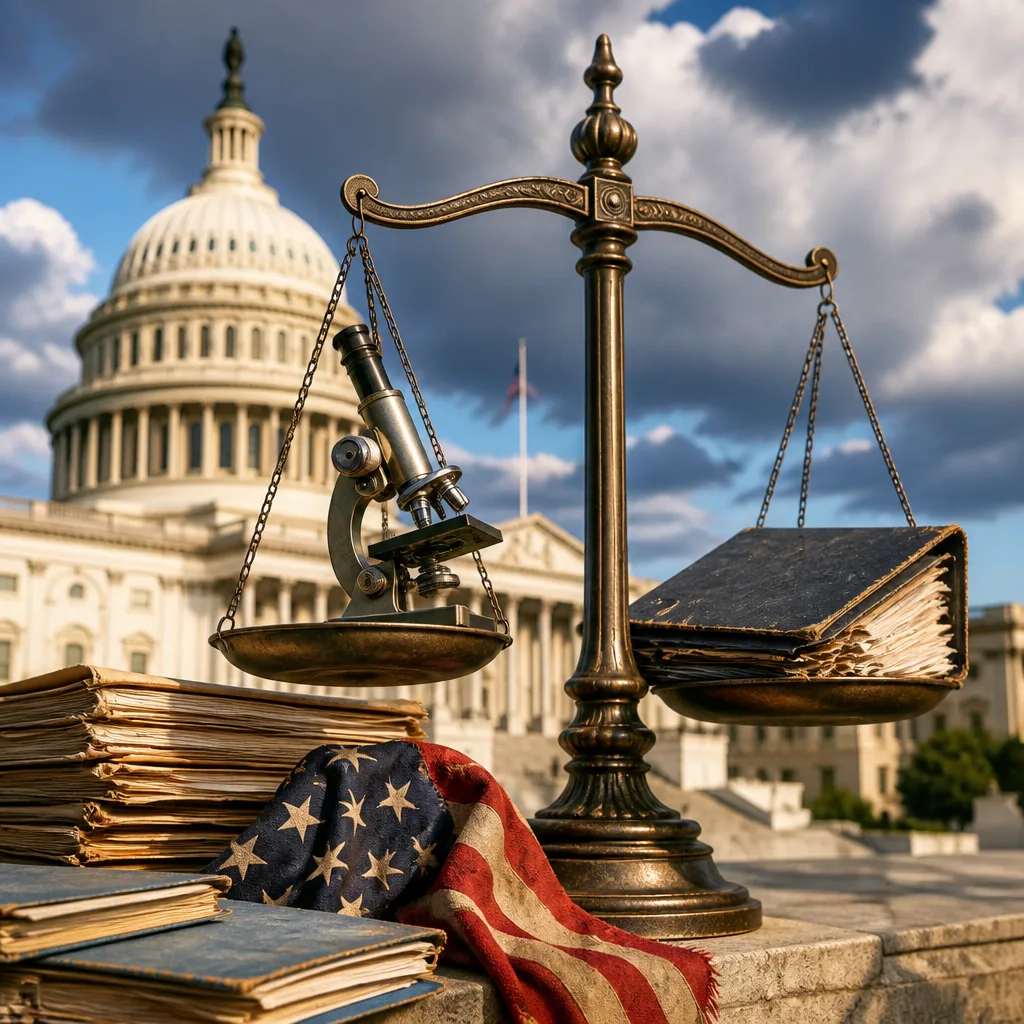
As Americans prepare for a new Congress and, ultimately, a new administration, scientific institutions and public‑health experts are warning that the United States will need dedicated political champions to repair damage to federal science agencies and restore trust in regulatory bodies. The argument is straightforward: good policy often requires a single committed advocate — or many — who will keep attention on complex issues long enough to secure meaningful change and funding.
Why champions matter
Inside universities and government, there is an old maxim: an idea rarely becomes policy unless someone makes it their cause. That person must not only propose a solution but remain engaged until powerful decision‑makers accept and implement it — and then continue oversight as the policy is delivered. Observers point to that model as what U.S. science needs now, after a period when critics say agencies have been weakened and politicised.
The recent years have been marked by tensions over leadership appointments in public‑health agencies and questions about the independence of regulatory science. Those trends, critics say, have real consequences: failures in outbreak control and gaps in food safety oversight have begun to surface, undermining public confidence.
Historical precedents and the scale of the task
Advocates cite mid‑20th‑century examples to illustrate what effective congressional champions can accomplish. After World War II, the adoption of a national science policy drew prominent figures who helped convert broad ideas into dozens of concrete laws that supported biomedical research, medical education and expanded access to care.
| Historical figure | Role cited |
|---|---|
| Vannevar Bush | Architect of the postwar science policy agenda |
| Lister Hill | Legislative champion who helped translate the agenda into numerous laws |
| Justin Smith Morrill | Evoked as a model for long‑term commitment to higher education |
Those examples are invoked not as nostalgia but as a benchmark for the scale of commitment currently required: rebuilding agencies, reasserting non‑partisan scientific advice and reversing policy changes that critics describe as harmful to the public‑health and regulatory enterprise.
Immediate concerns: public health, food safety, and academic freedom
Observers point to tangible signs of decline. The summer’s widespread foodborne cyclospora outbreaks in the U.S. are cited as an illustration of weakened disease control capability amid leadership changes at federal public‑health agencies. At the same time, questions have been raised about the effectiveness of oversight at the U.S. Food and Drug Administration and the U.S. Department of Agriculture, with potential impacts on the food supply.
Those operational worries sit alongside broader concerns about political interference in science and threats to academic freedom. Restoring durable protections for independent research and rebuilding confidence in regulatory decisions will require legislative and administrative action — and sustained political advocacy.
Political realities and competing priorities
Practical politics complicate the task. For many voters and legislators, immediate household costs take precedence: affordability remains central in current political discourse, and economic pressures are palpable. One commentator cited a personal grocery example — buying a 28‑ounce can of diced tomatoes for US$4.99 — to underline why cost‑of‑living concerns are dominating attention.
Still, advocates argue that long‑term investments in science and stronger, depoliticised agencies are essential to prevent crises that themselves can be costly — from uncontrolled outbreaks to food‑system failures.
- Rebuild federal science agencies: restore staffing, expertise and institutional independence.
- Defend non‑partisan regulation: ensure scientific advice guides public‑health and safety decisions.
- Reinvest in higher education: address long‑term erosion of academic freedom and capacity.
If these goals are to be realised, the science community and its allies will need champions in Congress and the administration willing to prioritise them over the long arc of policy work — not quick fixes, but sustained legislative and administrative engagement. The question for the next cycle of U.S. politics is who will step forward to fill that role.