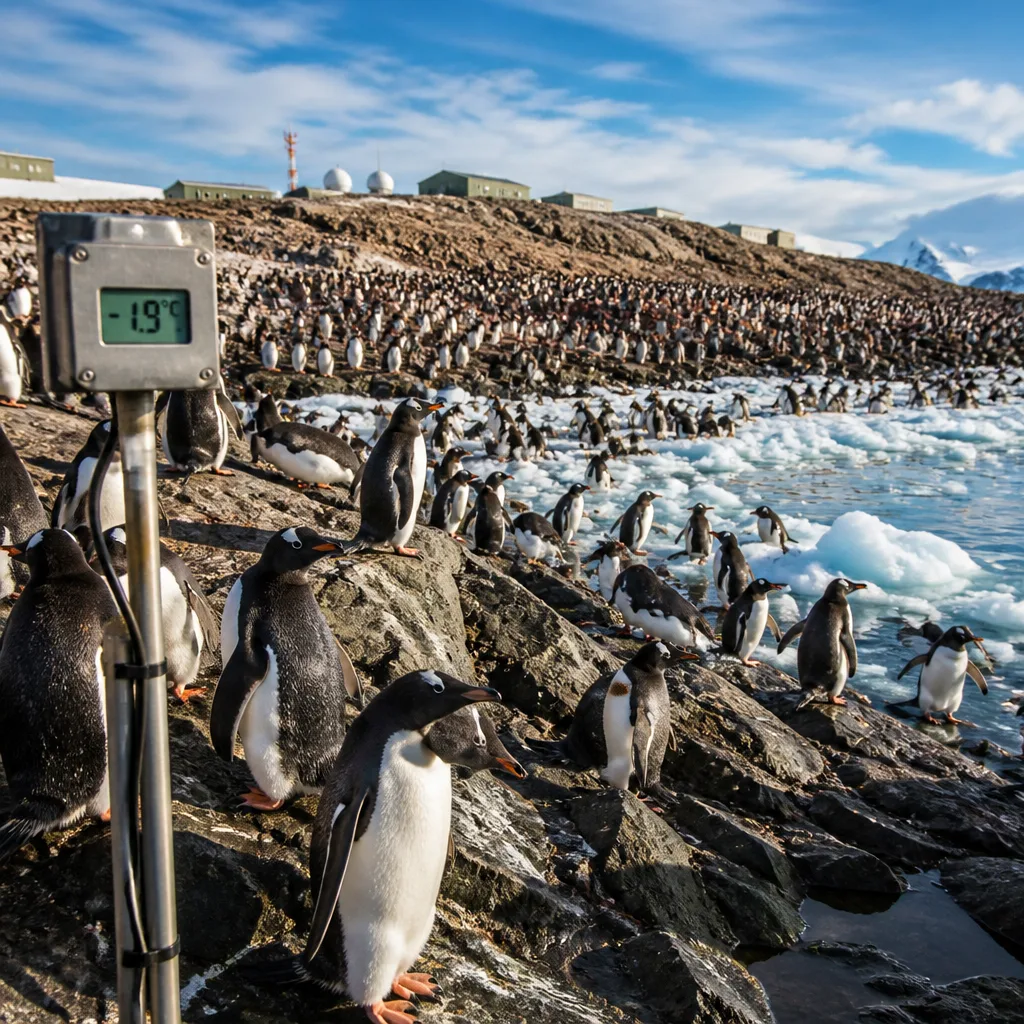
Thousands of gentoo penguins have returned to Galindez Island near the Vernadsky Research Base weeks earlier than is typical, Ukrainian polar biologists reported, a development they attribute to altered sea-ice patterns and warming ocean waters.
Mass return recorded in late August
Scientists with the National Antarctic Scientific Center said in a Facebook post that whereas gentoo penguins historically arrive en masse on Galindez Island from mid-September to mid-October, observers from the 31st Ukrainian Antarctic Expedition documented thousands ashore in the second half of August. The team has so far counted at least 3,500 birds and says numbers are still increasing.
“Only recently, we reported that these birds left Galindez Island, where the station is located, unusually late,” the centre noted. In previous years the birds typically departed around May, but this season they remained until the second half of July, despite Antarctic winter conditions.
“Now, after their return, the birds have already spread along the shoreline all the way to the station building. We can see them from the windows,” said Oleh Horiaiinov, a biologist with the 31st Ukrainian Antarctic Expedition.
Sea ice and temperature changes linked to timing
Ukrainian researchers say the early comeback is most likely tied to shifts in local sea-ice conditions and rising ocean temperatures. At the end of July, ice formed around Galindez Island and recorded water temperature dropped to -1.9°C, below the freezing point of seawater. The ice later retreated as temperatures rose, and biologists observed the penguins returning en masse.
Field notes from the expedition described that during June and July, most birds concentrated at Penguin Point — a gently sloping shore on the side of the island opposite the station that offers easier access to the water. After the mass return, the birds dispersed along the shoreline toward the station building and into usual nesting areas.
- Typical arrival: mid-September to mid-October
- This year’s arrival: second half of August
- Minimum counted so far: 3,500 gentoo penguins
- Observed low water temp: −1.9°C at end of July
| Event | Timing |
|---|---|
| Usual mass arrival | Mid‑Sept to mid‑Oct |
| Departure in past seasons | Around May |
| This season: late presence before return | Stayed until late July |
| Observed return | Second half of August |
Scientists cautioned that while a single season’s shift cannot by itself be taken as conclusive proof of long‑term change, the pattern is consistent with broader concerns about polar ecosystems responding to changing sea-ice dynamics and ocean warming. The Vernadsky team noted that if warming trends continue, the timing and extent of gentoo penguin movements around Galindez Island could change further in coming years.
Gentoo penguins (Pygoscelis papua) are known to respond rapidly to local conditions that affect access to feeding areas and breeding sites. On Galindez Island, easier access to water at sites such as Penguin Point appears to influence where birds concentrate during colder months and how quickly they disperse to nesting beaches when conditions permit.
The observations add to an expanding dataset from Antarctic field stations that researchers worldwide use to monitor ecological responses to climate variability. Vernadsky’s position on Galindez Island provides a continuous vantage point for tracking the timing of arrivals, concentrations at key landing sites and subsequent dispersal along the island’s shoreline.
For now, the Ukrainian biologists will continue counts and behavioural observations as the penguins establish themselves in nesting areas. The team’s on‑site data will be valuable to polar ecologists and conservationists seeking to understand how seabirds are adapting to shifting seasonal patterns in the Southern Ocean.