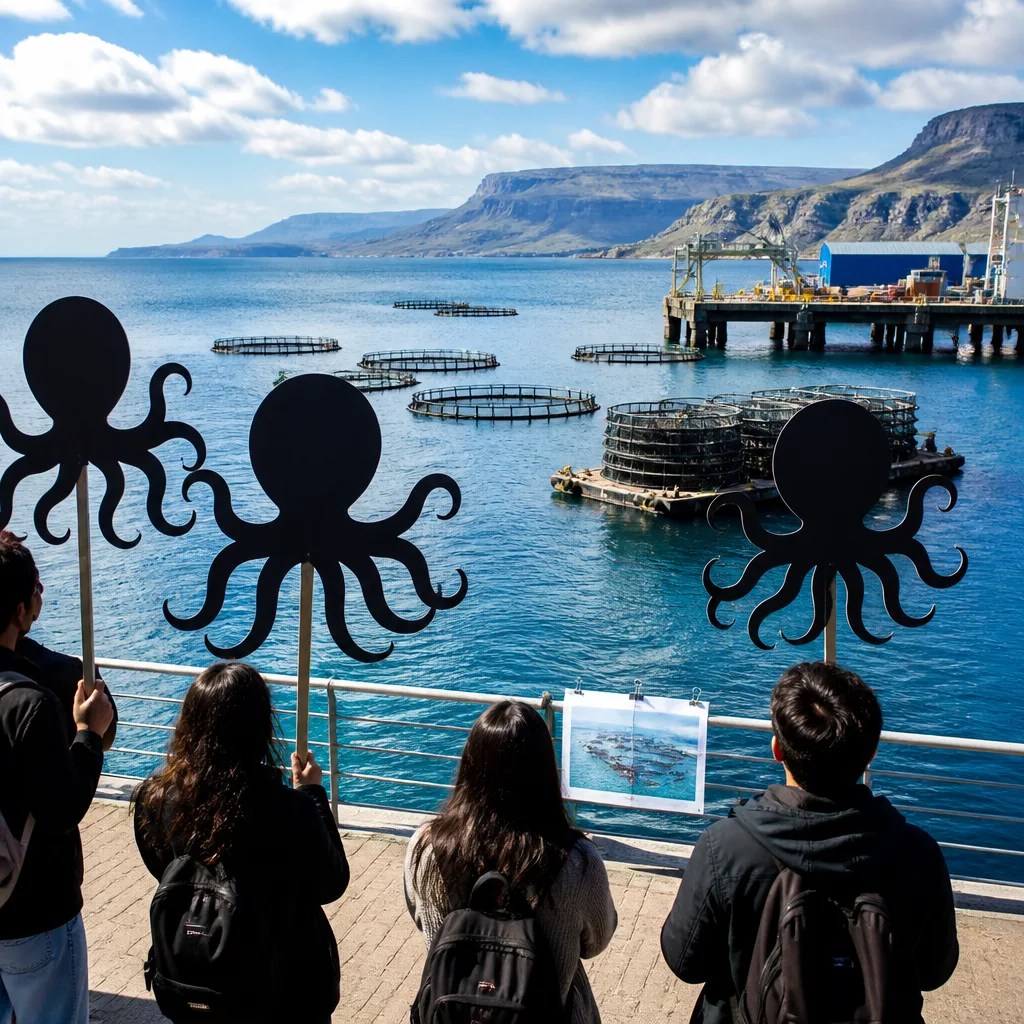
On July 22 the Port Authority of Las Palmas announced that Spanish seafood company Nueva Pescanova had withdrawn its application to build what would have been the world’s first commercial octopus farm on the island of Gran Canaria in the Canary Islands.
Project halted amid scrutiny over welfare and environmental risks
The firm confirmed the project’s cancellation to the animal advocacy outlet Sentient but declined to discuss the reasons. In the Port Authority’s release, Nueva Pescanova attributed its decision to new administrative requirements for environmental review, saying the changed regulatory obligations altered the project’s scope, timeline and compliance burden.
The planned facility had attracted attention because of its proposed scale. Campaigners said the operation would have required roughly one million octopuses a year in tanks and was projected to produce about 3,000 tonnes of octopus meat annually. Reports also said the company had invested about US$63 million in the proposal.
A coalition of scientists, advocates and the public
Opposition to the plan emerged from multiple quarters. More than a hundred scientists signed a 2024 letter published in the journal Science emphasising octopuses’ complex behaviours and raising ecological concerns about farming a carnivorous, wild species. Dozens of conservation and animal-welfare groups joined the effort, and tens of thousands of citizens added public pressure. Advocacy work by Compassion in World Farming — notably research led by Elena Lara — helped frame the ethical and welfare arguments against confining octopuses in tanks.
“a kind of desire to keep what we have that is wild, wild,”
The campaign also benefited from a broader cultural shift. The 2020 documentary My Octopus Teacher is credited with popularising octopus intelligence and fostering public empathy toward the animals, a factor campaigners say contributed to the strong response.
- Company: Nueva Pescanova
- Location: Gran Canaria, Canary Islands
- Planned annual output: ~3,000 tonnes of octopus meat
- Estimated animals housed annually: ~1,000,000 octopuses
- Reported investment: US$63 million
Why the project mattered
For industry proponents, cultivating octopus at scale represented a novel aquaculture opportunity to meet seafood demand. For scientists, conservationists and many animal-welfare advocates, the plan raised practical and ethical questions. Octopuses are increasingly recognised in scientific literature as behaviourally complex and sentient in ways that complicate conventional farming models. Opponents warned that confining a carnivorous, solitary and intelligent cephalopod in intensive systems would present severe welfare challenges and potential ecological risks.
The withdrawal demonstrates how regulatory processes, scientific evidence and coordinated public engagement can intersect to influence corporate decisions before facilities are constructed. Nueva Pescanova’s statement cited regulatory changes rather than the campaign as the proximate cause, but the company’s move follows months of high-profile criticism and analysis articulating possible environmental and welfare harms.
Next steps and broader implications
The cancellation leaves open broader questions about the future of novel aquaculture ventures involving species with limited farming precedents. It also highlights the growing role that scientific consensus and public sentiment play in shaping where and how new food-production technologies are implemented. Advocates say the outcome is a reminder that some wild species pose unique ethical and ecological constraints on industrialisation.
| Element | Detail |
|---|---|
| Company | Nueva Pescanova |
| Site | Gran Canaria, Canary Islands |
| Projected annual production | 3,000 tonnes |
| Estimated animals per year | ~1,000,000 octopuses |
| Reported investment | US$63 million |
The episode will be watched closely by industry players and regulators worldwide as they weigh whether—and under what conditions—to pursue intensive farming of non-traditional species. For now, the proposal for a commercial octopus farm in the Canary Islands has been put on hold, the result of regulatory shifts coupled with sustained pressure from scientific, civic and advocacy communities.