A fresh examination of online postings has unearthed a global market in preserved human remains and sounded a public‑health caution: items sold to collectors outside controlled museum environments may harbour dormant microorganisms that could be released during handling.
Study scope and main findings
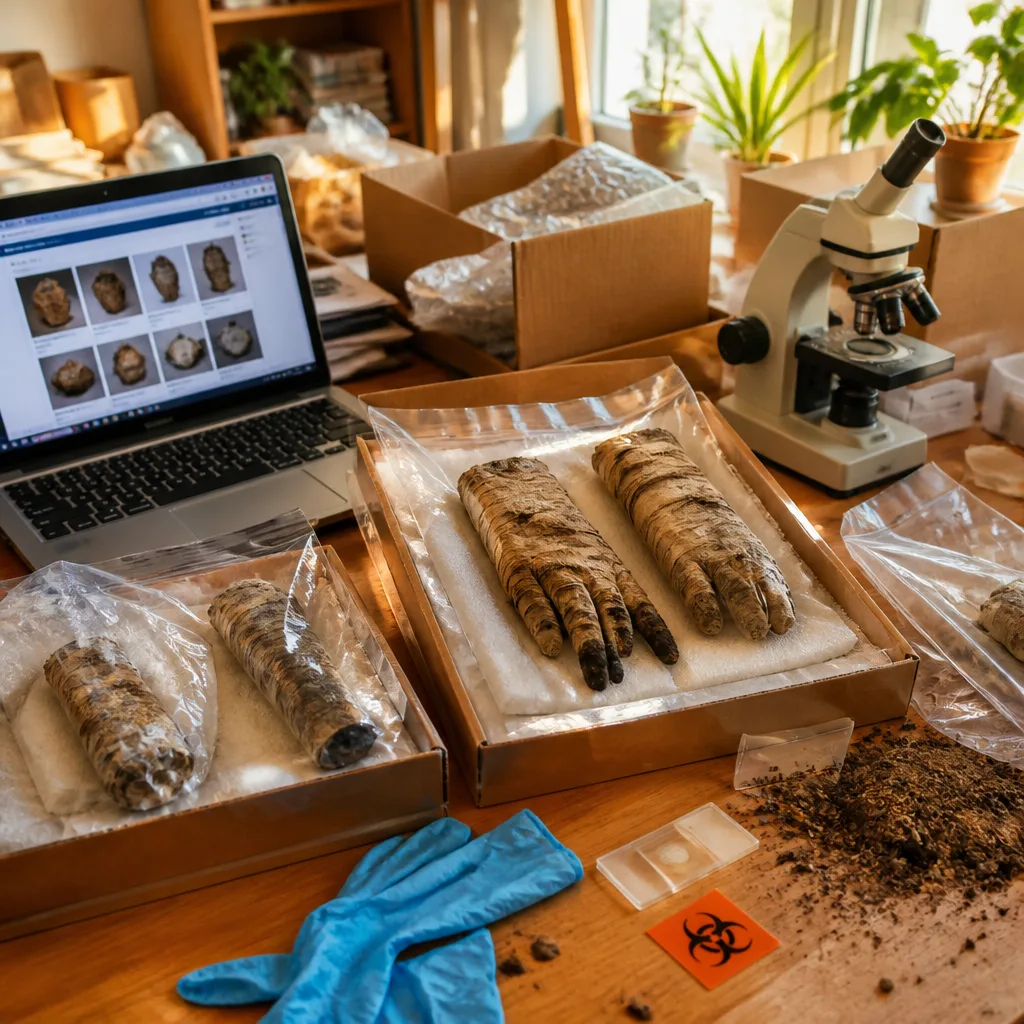
The research, published in the International Journal of Cultural Property, analysed 128 web posts dating from 2015 to 2025 that advertised or displayed human and animal remains for sale. Lead author Kirsty Squires, a bioarchaeology professor at the University of Staffordshire in Stoke‑on‑Trent, England, said the material included a striking number of intact mummified body parts.
“Mummified heads, hands and feet were very common,” Squires said.
The authors flag potential biological hazards. They say mummified remains can carry dormant fungi, bacteria and yeasts. When remains are stored or handled in non‑professional settings — homes, garages or other uncontrolled environments — visible deterioration is common and, the researchers warn, handling can release hidden microbial agents.
Why museum conditions matter
In museums, conservators manage temperature and humidity to limit biological growth and physical decay. The study emphasises that those controls are typically absent in private settings where many of these traded items end up. The researchers link much of the observed deterioration in the online images to poor storage conditions rather than intrinsic properties of the remains themselves.
At the same time, the paper notes a divided view among specialists. Some experts quoted in the study suggest that experienced collectors who follow safe handling and storage practices may face limited risk, while the authors err on the side of caution given uncertainties about dormancy and pathogen survival.
Practical implications and unresolved questions
The study does not provide a quantitative assessment of infection risk or document specific cases of disease transmission connected to traded remains. Instead, it draws attention to several practical concerns and gaps that merit further attention:
- Public health guidance: There is limited public information aimed at private collectors about safe handling and decontamination of historic human remains.
- Regulatory and ethical issues: The trade raises questions about the legality and provenance of items, and about the ethical treatment of human remains outside institutional settings.
- Research needs: More systematic microbiological testing of traded remains would clarify whether dormant organisms pose a real risk to handlers or to the public.
Those points outline where the study’s findings may intersect with policy, museum practice and public education. The authors stop short of calling for outright prohibition of sales, focusing instead on the biological uncertainties and the need for safer practices.
| Study element | Detail |
|---|---|
| Time period analysed | 2015–2025 |
| Number of web posts | 128 |
The research contributes to a growing literature on the commercial circulation of cultural‑heritage objects and the unintended consequences when those objects leave controlled institutional care.
What collectors and the public should know
The paper’s primary public‑facing message is caution. While the presence of dormant microbes in mummified material is not novel to conservators, the study emphasises that non‑specialists may not appreciate the storage and handling conditions required to reduce biological hazards. Clearer guidance from public‑health agencies and cultural institutions could help reduce potential risks for those who encounter or purchase such material online.
For now, the study stands as a call for further investigation and for stronger communication between scientists, museums, regulators and members of the public who engage with human remains in a commercial context.