
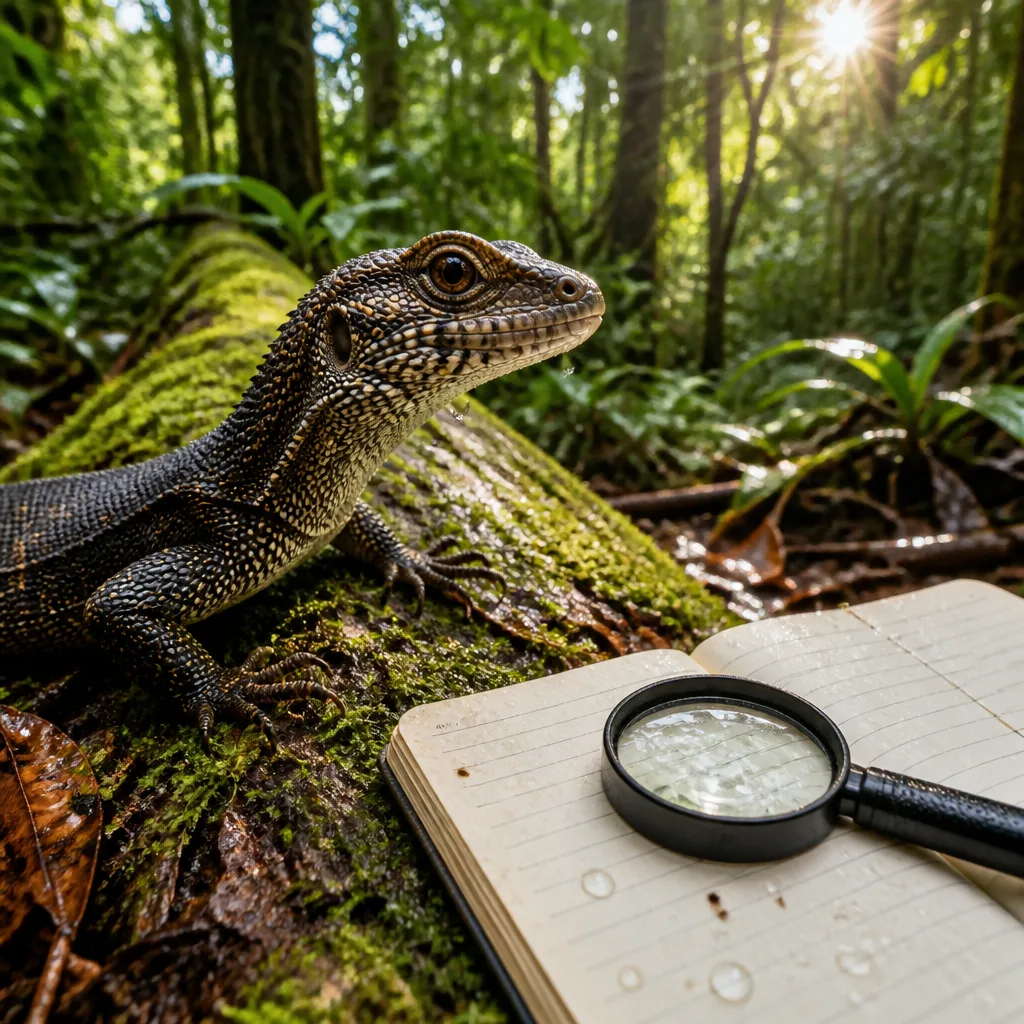
The earless monitor lizard, Lanthanotus borneensis, long nicknamed the “mini‑dragon,” remains one of the most sought‑after and least understood reptiles in the world. Found deep within the rainforests of Borneo, the species is the sole surviving representative of the family Lanthanotidae, making it a living link to a lineage that scientists say stretches back more than 66 million years.
Why scientists are captivated
Herpetologists describe the earless monitor as a rare and secretive animal whose combination of antiquity and isolation gives it outsized importance for studies of reptile evolution and biodiversity. Because it is the only species in its family, each field observation and specimen carries disproportionate value for reconstructing evolutionary relationships among lizards and for understanding how ancient lineages persisted through major climatic and ecological changes.
Researchers are drawn to several key aspects of the species:
- Phylogenetic significance: as the lone member of Lanthanotidae, the species helps anchor studies of how monitor lizards and their relatives diversified.
- Conservation rarity: its elusiveness in Borneo’s forests makes population assessments difficult and heightens concern about threats from habitat loss and human activity.
- Natural history questions: many aspects of its behaviour, diet and reproduction remain poorly documented compared with more common reptiles.
What the fossil past implies for today
Scientists refer to the earless monitor as a “living fossil” because its lineage diverged long ago from relatives that appeared in the fossil record tens of millions of years ago. That deep ancestry does not mean the species has remained unchanged, but it does make it an informative case for studying long‑term evolutionary trends and the resilience of particular body plans and ecological strategies.
Those characteristics can affect practical conservation and research priorities. Limited distribution and low encounter rates complicate efforts to estimate population size and to monitor trends. At the same time, protecting the habitats that shelter this species preserves genetic and ecological information that is irreplaceable for science.
Data at a glance
| Trait | Detail |
|---|---|
| Scientific name | Lanthanotus borneensis |
| Common names | Earless monitor lizard; “mini‑dragon” |
| Distribution | Rainforests of Borneo |
| Family | Lanthanotidae (sole extant representative) |
| Evolutionary age | Lineage traces back >66 million years |
Because published field data are limited, the table summarises established taxonomic and distributional facts rather than detailed population metrics.
Conservation and research implications
The combination of extreme rarity and evolutionary distinctiveness elevates the conservation priority for the earless monitor beyond what a simple headcount might suggest. Protecting the species’ forest habitats helps guard an evolutionary lineage not represented elsewhere. At the same time, the scarcity of observations means there are significant knowledge gaps that hamper evidence‑based management.
Addressing those gaps relies on a mix of approaches already common in conservation biology: targeted field surveys, non‑invasive genetic sampling when possible, and collaborations with local communities and researchers who can help detect and monitor the species in remote forested terrain. Any long‑term strategy will need to balance the urgency of habitat protection with the careful collection of data that deepens scientific understanding without harming fragile populations.
For scientists, the earless monitor is more than a curiosity. It is a rare living archive whose biology and evolutionary story can illuminate how some reptile lineages survived global upheavals and why others disappeared. For conservationists, it is a reminder that biodiversity value cannot be measured solely by abundance: some species matter because of what they reveal about life’s long history on Earth.