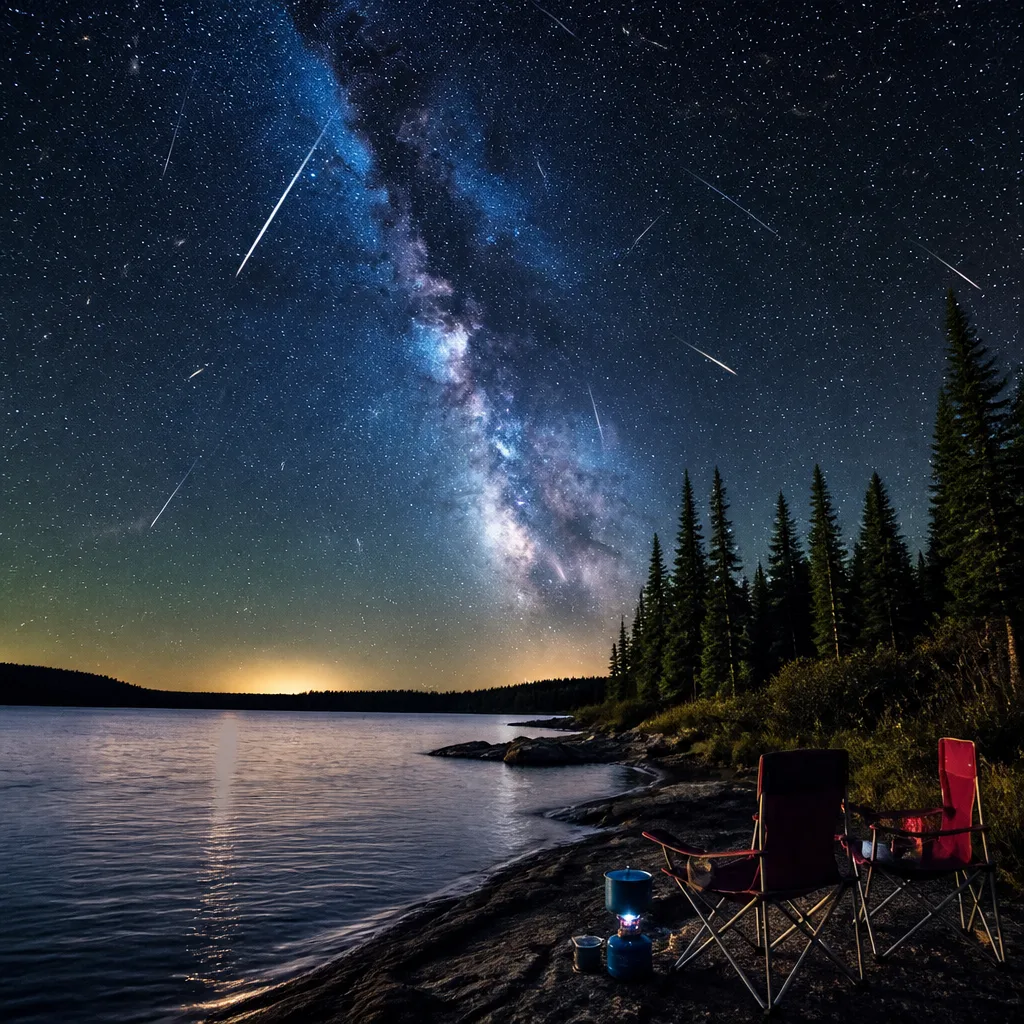
The annual Perseid meteor shower is set to reach its peak Wednesday night into Thursday morning, and viewing conditions look especially favourable across the northern hemisphere. With the moon in its new phase, skywatchers under dark skies may see a high rate of meteors, including spectacular fireballs.
What causes the Perseids and why they’re reliable
Meteor showers like the Perseids occur when Earth passes through streams of debris left behind by comets or, less commonly, asteroids. For the Perseids, the parent body is comet 109P/Swift-Tuttle, an icy nucleus that completes its orbit around the Sun every 133 years. The comet’s debris collides with Earth’s atmosphere at high speed and burns up, producing the streaks of light people call shooting stars.
Observers have recorded the Perseids for more than two millennia, and the event is prized by amateur and professional skywatchers alike because it routinely produces bright meteors and fireballs. The shower is a summer favourite in the northern hemisphere, in part because warmer nights make extended outdoor viewing more comfortable.
How many meteors you might see
Estimates for the peak rate vary depending on sky conditions and location. The U.S. space agency NASA suggests that under ideal, dark-sky conditions the shower can deliver between 50 and 100 meteors per hour. The American Meteor Society offers a more conservative rural estimate of 30 to 50 meteors per hour for observers in the United States.
| Source | Estimated meteors/hour at peak |
|---|---|
| NASA | 50–100 |
| American Meteor Society | 30–50 |
Best practices for viewing
Experts advise a simple approach to maximise your chances of seeing meteors:
- Go outside after nightfall and find a dark location away from city lights.
- Allow your eyes at least 30 minutes to adapt to the darkness.
- Look toward the northern sky where the constellation Perseus will be highest between midnight and dawn; meteors will appear to radiate from that region.
- Dress for the temperature and bring a reclining chair or blanket—comfortable, sustained viewing increases the odds of spotting more streaks and fireballs.
Astronomers emphasise that meteors can be visible on any dark night, but the half-hour to hour after midnight until pre-dawn typically yields the best counts because Earth is turning into the meteor stream.
“New moon means we don’t have moonlight flooding the sky, and you tend to see way more meteors as a result.”
The quote above comes from Aparna Venkatesan at the University of San Francisco, noting that the moon’s phase makes a material difference in visibility. Another astronomer, Zach Vanderbosch of McDonald Observatory in Texas, points out the practical appeal: summer temperatures make the Perseids an accessible event for many who prefer not to endure colder-weather viewing.
Context and what to expect
The Perseids are debris from Swift‑Tuttle, which will not return until the 22nd century, meaning the annual display is powered by material already distributed along the comet’s orbit. While exact hourly rates depend on local light pollution, cloud cover and atmospheric conditions, the combination of predicted shower intensity and a new moon this year creates a favourable window for amateur astronomers and the public.
In addition to the potential for dozens of meteors per hour, the shower will coincide in some regions with other notable celestial events, including a total solar eclipse across parts of Spain, Iceland and Greenland and a parade of planets. Observers in other northern-hemisphere locations should still have excellent opportunities to enjoy the shower, especially if they travel to darker skies away from urban glow.
For those planning to watch, patience and a clear, dark horizon are the best tools. With favourable conditions forecast, this year’s Perseids offer a reliable and rewarding spectacle for anyone willing to look up.