
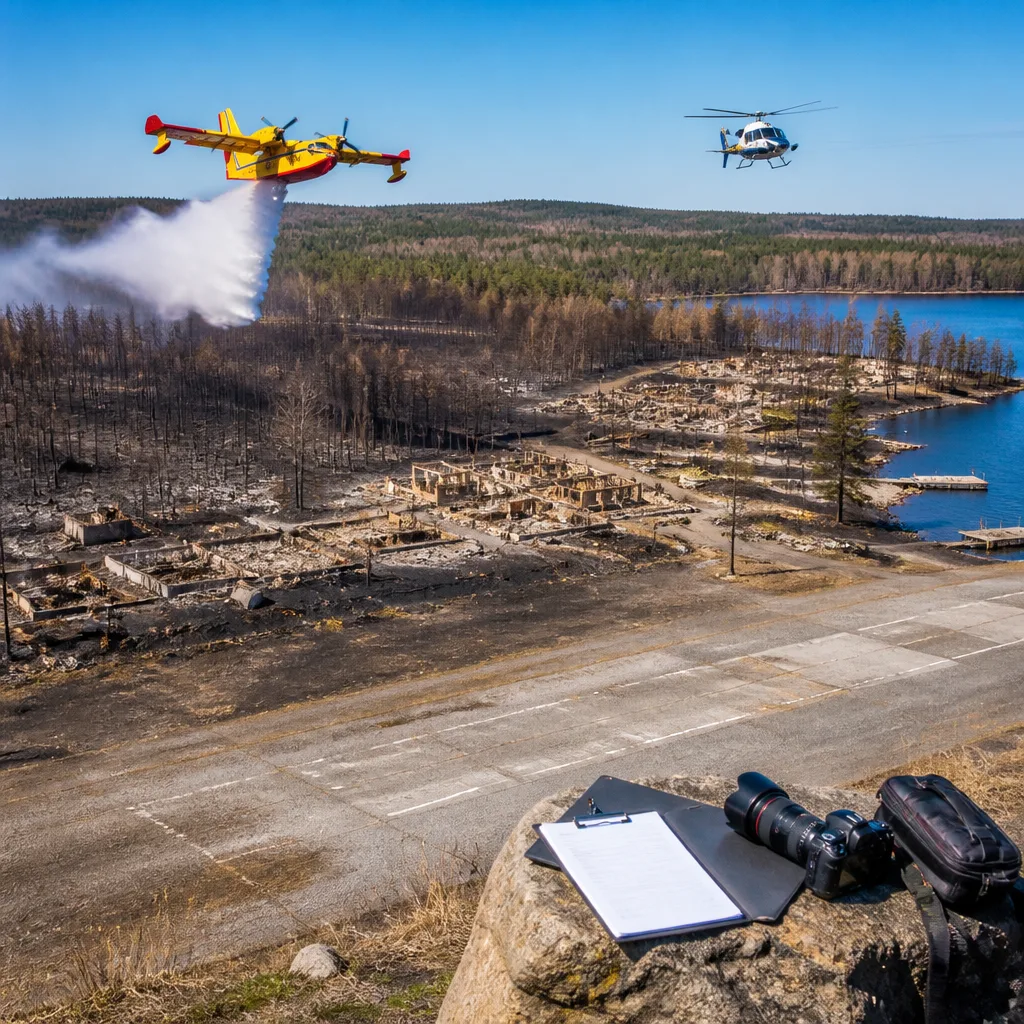
The largest wildfire in Ontario history has burned an area roughly the size of a small country, ravaging remote communities and prompting a substantial provincial response — but the event is unlikely to translate into major insurance industry losses because much of the affected territory lacks insurance coverage.
Scope of the blaze and government response
Known as Thunder Bay 36, the fire has consumed more than 301,000 hectares since it began on July 12, making it larger than entire jurisdictions’ annual burn totals in some countries. It forms part of the Rinker Complex alongside two other major fires, Dryden 34 and Dryden 35, and sits among 64 active wildfires across northwestern Ontario, five of which are not yet under control.
The inferno destroyed Namaygoosisagagun First Nation in mid‑July and inflicted heavy damage on Whitewater Lake First Nation, both communities in the Windigo First Nations Council. Ontario’s natural resources ministry has scheduled aerial assessment flights to catalogue property damage and loss, and has instructed affected property owners to contact 211 for next steps. The ministry is also coordinating road and bridge restoration work with Namaygoosisagagun First Nation.
To bolster firefighting capacity, the province has deployed foreign and domestic crews — including a 20‑person contingent from Mexico — and announced a provincial package that includes C$650 million for new waterbombers and helicopters and the creation of 170 permanent fire personnel positions for the season.
Why the insured loss tally could be modest
From an insurance standpoint, this enormous burn scar does not automatically equate to high insured losses. Analysts and industry observers point out that the location of the fires — largely remote, sparsely populated regions of northwestern Ontario and northern Quebec — means insurance penetration for homes, businesses and commercial assets is comparatively low.
That geographic concentration contrasts with smaller wildfires in densely populated corridors such as the Okanagan or the Bow Valley, which historically produce far higher claims despite burning much less area. In short: scale does not equal insured cost when exposure (the value of insured property in the fire’s path) is minimal.
Implications for brokers and the insurance market
Commercial brokers with clients in the affected zone face immediate questions. Many businesses and properties in remote First Nations communities and northern resource areas operate without property insurance or with limited coverage. That leaves governments and non‑insured owners facing much of the rebuilding bill directly.
For insurers and reinsurers, the event is a reminder of how wildfire risk and population distribution shape loss outcomes. While the industry may avoid a large claims shock from Thunder Bay 36, persistent and growing wildfire activity across Canada still pressures underwriting models, pricing and capital allocation — particularly if future years see a shift toward more fires in populated regions.
- 301,000+ hectares burned by Thunder Bay 36
- 64 active wildfires in northwestern Ontario
- C$650 million committed by the province for new aircraft and equipment
| Metric | Figure |
|---|---|
| Area burned | 301,000+ hectares |
| Active wildfires in region | 64 |
| Uncontrolled fires | 5 |
| Provincial firefighting investment | C$650 million |
Longer‑term consequences and questions for policy
Even if insured losses remain limited, the wildfire raises policy and fiscal questions. Provincial spending on aviation assets and permanent fire staff represents a material investment in capacity that will appear in budgets and could reframe future emergency preparedness. For First Nations and remote communities, the immediate costs of displacement, infrastructure loss and economic disruption may fall to public coffers where insurance is absent.
For the insurance sector, the event underlines two imperatives: improving insurance access and adjusting pricing and underwriting to reflect changing hazard patterns. Brokers may need to be proactive with commercial clients in northern regions to assess coverage gaps and mitigation measures before the next season.
Thunder Bay 36 is a stark demonstration that wildfire economics are as much about who and what sits in the flame path as they are about the size of the blaze. The devastation for affected communities is real. For insurers and policy makers, the event is a tactical and strategic prompt: invest in capacity, close coverage gaps and prepare for a landscape where remote catastrophe events can still impose heavy social — if not always insured — costs.