The northern leopard frog has been officially listed as endangered in the Northwest Territories, a move conservation authorities say reflects serious, imminent risks to the species’ few, isolated populations along the territory’s southern rivers.
Where the frogs remain
The N.W.T. Species at Risk Committee confirmed the frog’s legal listing on Aug. 27, 2026. Biologists say the species persists only in pockets of the Slave, Taltson, Tethul and Tazin rivers in the South Slave Region.
| River | Region |
|---|---|
| Slave River | South Slave |
| Taltson River | South Slave |
| Tethul River | South Slave |
| Tazin River | South Slave |
Population estimates remain imprecise. Authorities put the current number of northern leopard frogs in the territory between 2,500 and 10,000, but acknowledged that available data are limited and the animals are clustered in small, discrete sites.
Why endangered?
Under the territorial Species at Risk Act, the status of endangered is the highest risk designation. The committee reached the decision after reviewing the best available information about the frog’s distribution, numbers and threats.
“It means there’s a risk that the species could be gone from the Northwest Territories in our lifetime,”
said biologist Joanna Wilson in an interview with CBC’s The Trailbreaker. The committee’s assessment, and the subsequent management-authority decision to change the legal status, reflect concerns that current and future pressures could rapidly erode the remaining populations.
Primary threats identified
Officials highlighted several threats that could be catastrophic for small, isolated amphibian populations:
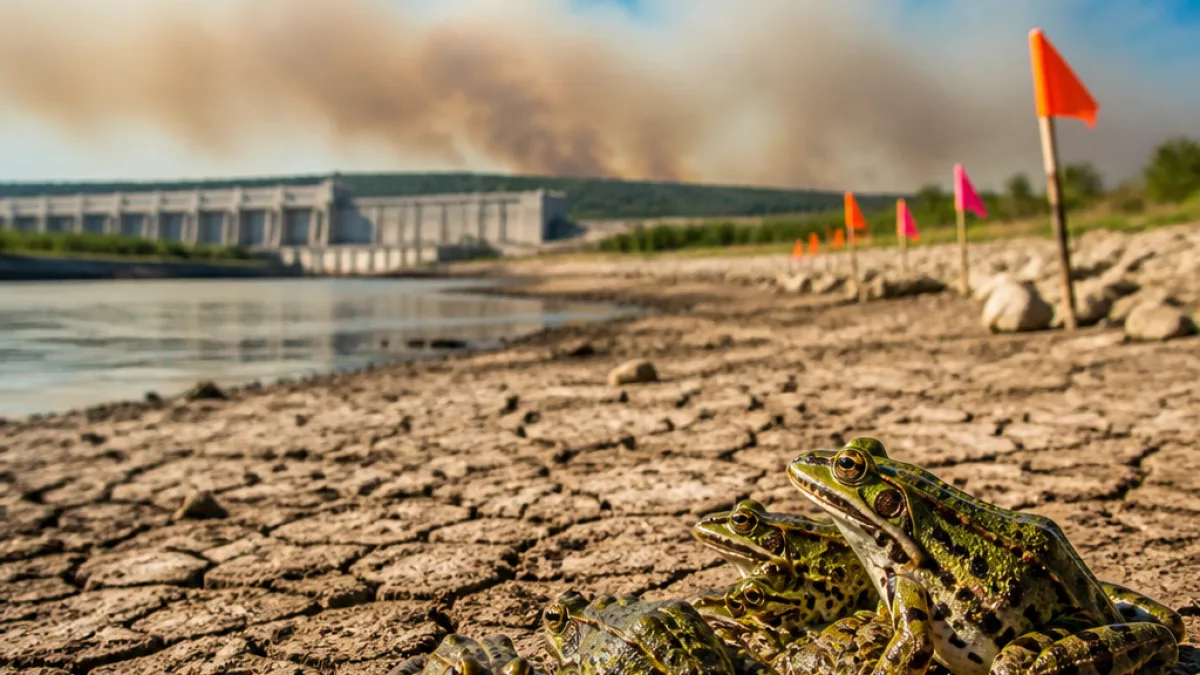
- Drought — reduced water availability can eliminate the shallow wetlands and slow-moving edges of rivers where frogs breed and raise tadpoles.
- Wildfire — fire can destroy riparian vegetation and alter habitat structure, increasing exposure to predators and temperature extremes.
- Potential hydro expansion — changes to water flow and shorelines from developments such as proposals to expand the Taltson hydro facility could damage or fragment remaining habitat.
Because the populations are geographically restricted, a single large disturbance — whether climatic or industrial — could have outsized effects.
What listing means on the ground
The endangered designation under the N.W.T. Species at Risk Act signals an urgent need for conservation action. The listing places the northern leopard frog under increased scrutiny in land- and water-use planning, and it obliges management authorities to consider measures to limit further decline.
Specific recovery measures will follow formal processes laid out by the committee and management authorities. Those steps typically include more intensive monitoring, habitat protection measures and engagement with Indigenous governments, communities and stakeholders whose lands overlap frog sites.
Local and broader implications
For communities in the South Slave Region, the listing underscores the intersection of climate change, land-use decisions and biological resilience in the North. Wetland-dependent species like the northern leopard frog are considered indicators of freshwater ecosystem health; their decline can signal broader shifts in river and wetland conditions.
Conservation biologists stress that rapid, coordinated action can still improve prospects for at-risk species, but success depends on obtaining better baseline data, protecting key breeding sites and managing cumulative pressures from development and climate change.
The Species at Risk Committee’s decision and the legal change in status mean public agencies, resource managers and communities will be expected to factor the frog’s needs into planning and development decisions in affected watersheds.
As monitoring and potential recovery planning proceed, officials say they will continue to assess the best available science to guide interventions aimed at preventing local extirpation.