
The Northwest Territories Health and Social Services Authority (NTHSSA) reported a $4.7-million operating surplus for the 2025/26 fiscal year at its annual general meeting — the authority's first positive operating result since six regional health boards were merged in 2016.
While the surplus reduced the NTHSSA's accumulated deficit to $296.1 million from $300.8 million, officials warned the improvement was driven by factors that may not recur and does not signal a lasting easing of pressure on frontline services.
How the surplus materialized
Officials at the meeting attributed the surplus largely to a combination of increased revenue and persistent vacancies in hard-to-fill positions. The authority received a roughly $30-million increase in funding from the Government of the Northwest Territories, and recorded $23 million in medical travel recoveries. A series of one-time federal allotments also boosted revenue for the year.
“factors that may not continue.”
At the same time, the cost of medical travel rose by $21 million, reflecting continuing demand for off‑territory care. The net result, however, was the first decline in the NTHSSA's accumulated deficit since amalgamation, when the authority initially took on a roughly $50-million inherited shortfall.
Staffing remains the central concern
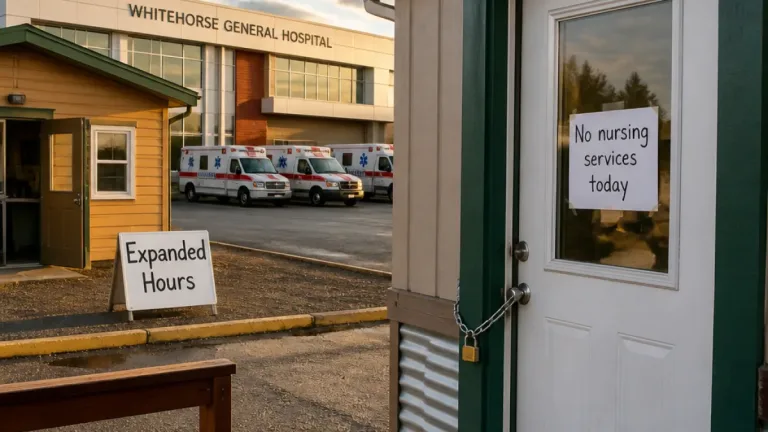
Chief executive officer Kim Riles told attendees vacancies were not intentional and that the overarching aim remains to have frontline services fully staffed. Nevertheless, the authority acknowledged that unfilled positions — many of them in remote and hard-to-recruit roles — contributed materially to lower than expected salary and benefit expenses, which in turn aided the surplus.
That dynamic raises a difficult trade-off for northern communities: temporary budgetary relief produced by vacant posts can mask growing service gaps and erode access to care, particularly in small communities where one or two clinicians may deliver the majority of primary services.
What the figures mean locally
Health officials emphasised the surplus does not change operational priorities. Investments to recruit and retain staff, and to manage rising medical travel costs, remain central. The authority’s message was clear: the fiscal picture improved this year because of unusual inflows and staffing shortfalls, not because of sustained cost reductions or permanent new efficiencies.
- Surplus: $4.7 million for 2025/26
- Accumulated deficit: reduced to $296.1 million
- Territorial funding increase: $30 million
- Medical travel recoveries: $23 million
- Medical travel cost increase: $21 million
The authority did not present this surplus as a signal to scale back recruitment drives or alter service planning. Instead, management framed the result as a narrow financial window that provides breathing room while longer‑term staffing and cost strategies remain under development.
Financial snapshot
| Item | Amount (CAD) |
|---|---|
| Operating surplus (2025/26) | $4,700,000 |
| Accumulated deficit (end of year) | $296,100,000 |
| Territorial funding increase | $30,000,000 |
| Medical travel recoveries | $23,000,000 |
| Increase in medical travel costs | $21,000,000 |
Beyond the numbers, the NTHSSA continues to face challenges that are structural rather than cyclical: recruiting health professionals to remote communities; ensuring continuity of primary care and specialist services; and controlling the rising cost and logistical complexity of medical travel when residents must leave the territory for treatment.
Officials stressed that one-time federal transfers and recoveries related to medical travel played an outsized role in 2025/26. That means the authority's operating position remains susceptible to changes in funding patterns and to improvements or deteriorations in staffing levels.
For residents and community leaders, the immediate concern is maintaining service levels while the authority and the territorial government pursue recruitment, retention and financial strategies. The surplus offers a short-term respite, but not a durable solution to long-standing pressures affecting health and social services across the North.
The NTHSSA board will continue monitoring service delivery and workforce trends as part of its 2026 planning cycle and has signalled ongoing engagement with territorial and federal partners to address the persistent operational and financial challenges ahead.