Yellowknife — As students return to classrooms across the Northwest Territories this week, education officials and school boards are contending with a funding crisis triggered by sweeping federal changes to a program intended to close gaps for Indigenous learners.
Scale of the shortfall
The territory says it lost $58.6 million in education funding after the federal government altered eligibility and delivery under the program. The reduction has translated into staff losses and pared-back services in some boards, including the loss of teaching positions in Inuvik and elsewhere.
The territorial government has moved to replace some of the lost dollars. In interviews and public statements, Education Minister Caitlin Cleveland outlined what the N.W.T. has put forward so far: an initial $10 million approved in February, followed by another $35 million allocated during the spring sitting. Additional funding for training and the school food program was also included.
"More than $45 million has been allocated to education in the territory this year,"
Minister Cleveland also said $33 million of that funding has been directed toward inclusive schooling initiatives.
Immediate impacts in classrooms
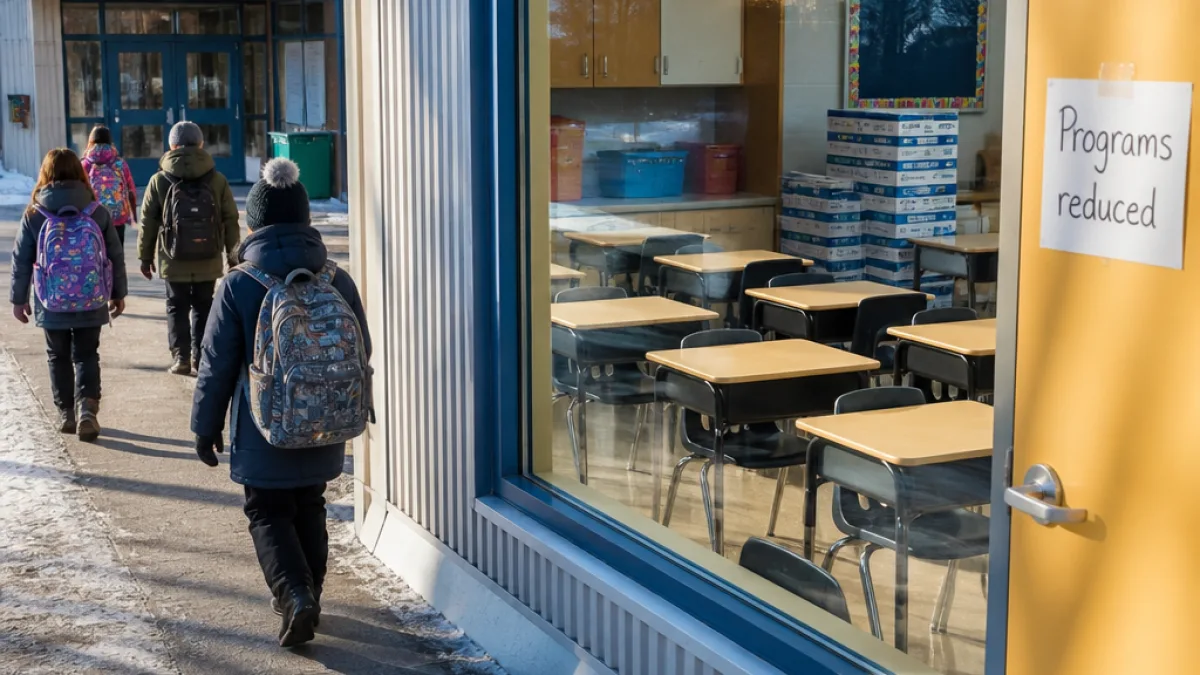
School authorities report the funding shortfall has had concrete consequences for staffing and programming. Boards have announced layoffs or unfilled positions, with one school board in Inuvik indicating that 13 teaching positions were cut. Across smaller communities, the loss of a single teacher or support worker can significantly alter classroom size, course availability and supports for students with added needs.
Administrators and parents say the cuts are coming at a delicate moment — students returning from summer and staff finalizing plans for the year. The territory’s vast geography and small, dispersed school populations mean that funding shifts can have disproportionate effects on remote communities.
What the territory has done and what remains
The N.W.T. government has redirected tens of millions of dollars to education to try to blunt the impact. Officials stress the need for a durable solution from Ottawa to restore program funding or provide a comparable mechanism tailored to northern needs. The territorial minister has said she is continuing to press federal officials on the issue.
School boards, meanwhile, are attempting to prioritise frontline teaching and wraparound supports while trimming administrative and non-essential spending where possible. That balancing act often forces difficult decisions about which programs to preserve and which to scale back.
Why northern schools are especially vulnerable
Education in the North faces structural challenges not seen in larger southern jurisdictions: higher per-student costs driven by travel and freight, difficulties recruiting and retaining qualified staff, and a greater reliance on targeted funding streams to meet the needs of Indigenous students and small communities.
The change to federal policy that removed or redefined access to funding undermines planning at the territorial and local level. Education advocates warn that gaps in early years programming, inclusive supports and culturally relevant services could widen unless the funding situation is stabilised.
Numbers at a glance
| Item | Amount |
|---|---|
| Federal funding revoked | $58.6 million |
| Territorial allocation (Feb) | $10 million |
| Territorial allocation (spring) | $35 million |
| Directed to inclusive schooling | $33 million |
Officials and community leaders say more clarity from Ottawa is needed about whether the revoked funds will be restored, replaced by a different program, or permanently removed — and what that will mean for long-term planning across the territory.
What families and communities can expect
For families, the near-term effects include larger class sizes in some centres, fewer course options for older students, and reduced availability of in-class supports for students with special needs. In small communities, a single vacancy may force combined classes, multi-grade instruction or shifts in itinerant specialist schedules.
- Expect some schools to operate with fewer teachers or support staff this year.
- Boards will prioritise core teaching roles and student supports where possible.
- Parents and guardians should contact local boards for specific information about program and staffing changes in their community.
The territory’s education minister says the government will continue to press the federal government for a solution, while adjusting territorial budgets to limit harm. For communities across the N.W.T., the coming weeks will be a test of how quickly those measures can be translated into stability in the classroom.