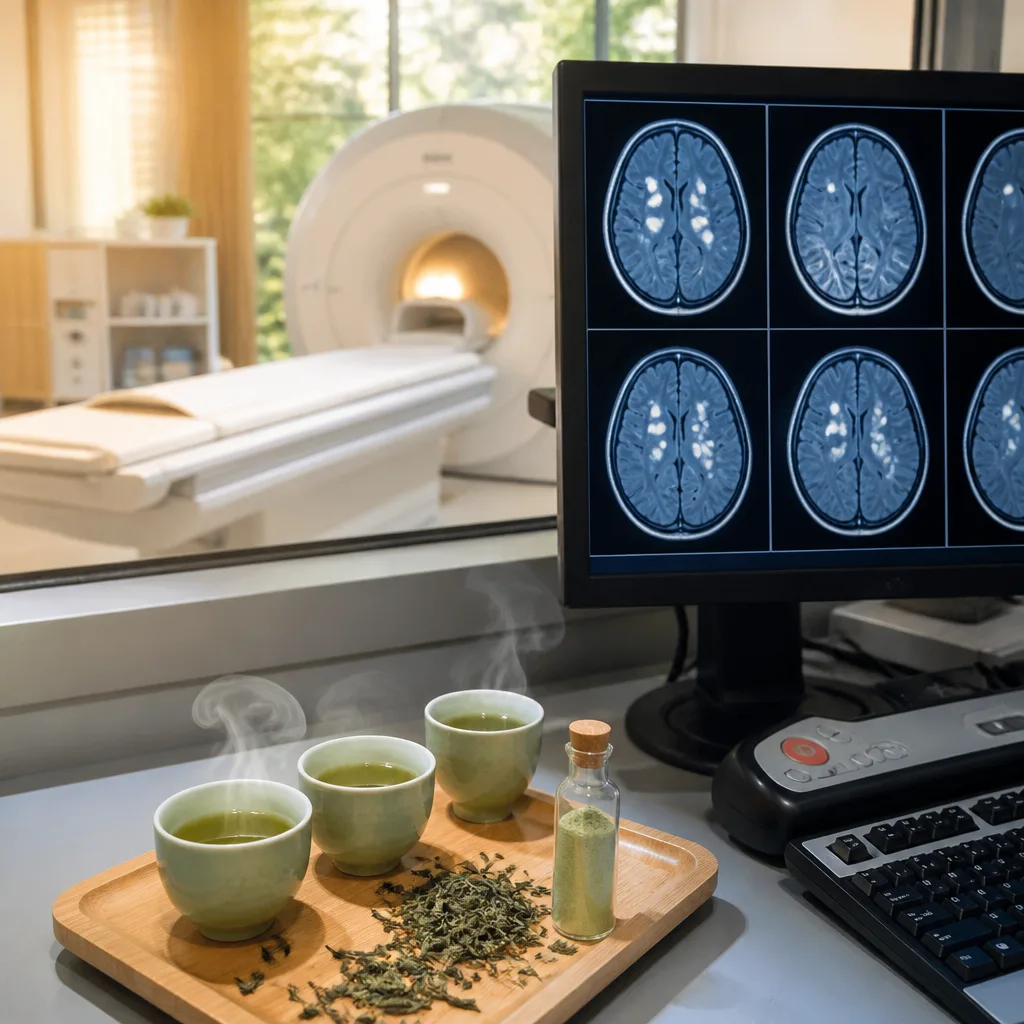
Epigallocatechin gallate (EGCG), a catechin concentrated in unfermented green tea leaves, has been associated with fewer age-related white-matter lesions on brain MRI in a large observational study of older adults, according to recent research reported in npj Science of Food.
What the study found
Japanese researchers analysed structural MRI scans from more than 8,000 participants and compared lesion burden with reported green tea consumption. Those who drank three or more cups per day consistently showed lower volumes of white-matter lesions than infrequent drinkers or non-consumers, after statistical adjustment for age, sex, smoking history and heart disease.
| Feature | Reported result |
|---|---|
| Sample size | ~8,000 older adults |
| Key exposure | ≥3 cups/day green tea |
| Primary imaging marker | White-matter lesion volume on MRI |
| Secondary evidence | Short-term trials: improved processing speed and sustained attention |
How EGCG may act on the brain
Investigators emphasise that the protective pattern appears to reflect vascular maintenance rather than reversal of established neurodegeneration. EGCG is thought to act on the vascular endothelial cells that line small brain arteries. Laboratory studies in cell cultures and rodent models indicate EGCG can:
- promote release of nitric oxide, encouraging arterial dilation and preserving elasticity;
- neutralize reactive oxygen species, limiting local oxidative stress and inflammation;
- reduce mechanical strain that contributes to micro-lesions over time.
Those mechanisms offer a plausible link between regular EGCG exposure and lower white-matter lesion burden on imaging.
Limits and interpretation
Scientists caution that the cohort findings are observational and cannot establish causation. The authors and commentators note several important caveats:
- Cross-sectional and population-tracking designs identify associations but cannot prove that green tea consumption directly prevents lesion formation.
- Green-tea drinkers often have healthier lifestyles overall — better diets, more physical activity and lower metabolic risk — factors that can confound results despite statistical adjustment.
- While short-term human trials reported modest gains in processing speed and sustained attention, these trials do not speak to long-term outcomes such as dementia incidence.
Put simply, the evidence so far supports a hypothesis that EGCG helps maintain small-vessel health in the brain, which could slow the accrual of MRI-visible wear and tear. It does not provide a clinical licence to claim green tea prevents Alzheimer’s disease or other neurodegenerative disorders.
Implications for Canadians
The findings add to a growing body of research linking cardiovascular and cerebrovascular health to cognitive ageing. For clinicians and public-health planners, the study reinforces the value of vascular risk control — blood pressure management, smoking cessation, physical activity and healthy diets — as strategies to protect brain structure and function.
For individuals, a modest, evidence-informed takeaway is that regular green tea consumption may contribute to vascular resilience in the brain as part of an overall healthy lifestyle. Whether isolated intake of EGCG or green tea extract will deliver clinically meaningful protection against future dementia remains unproven and requires long-term randomised trials.
Researchers continue to probe the biological pathways by which EGCG, alongside caffeine and L-theanine found in tea, might influence cerebral blood flow and neural arousal. Until randomized, long-duration trials are available, green tea should be viewed as one potentially beneficial component among many in the broader toolkit for brain health.