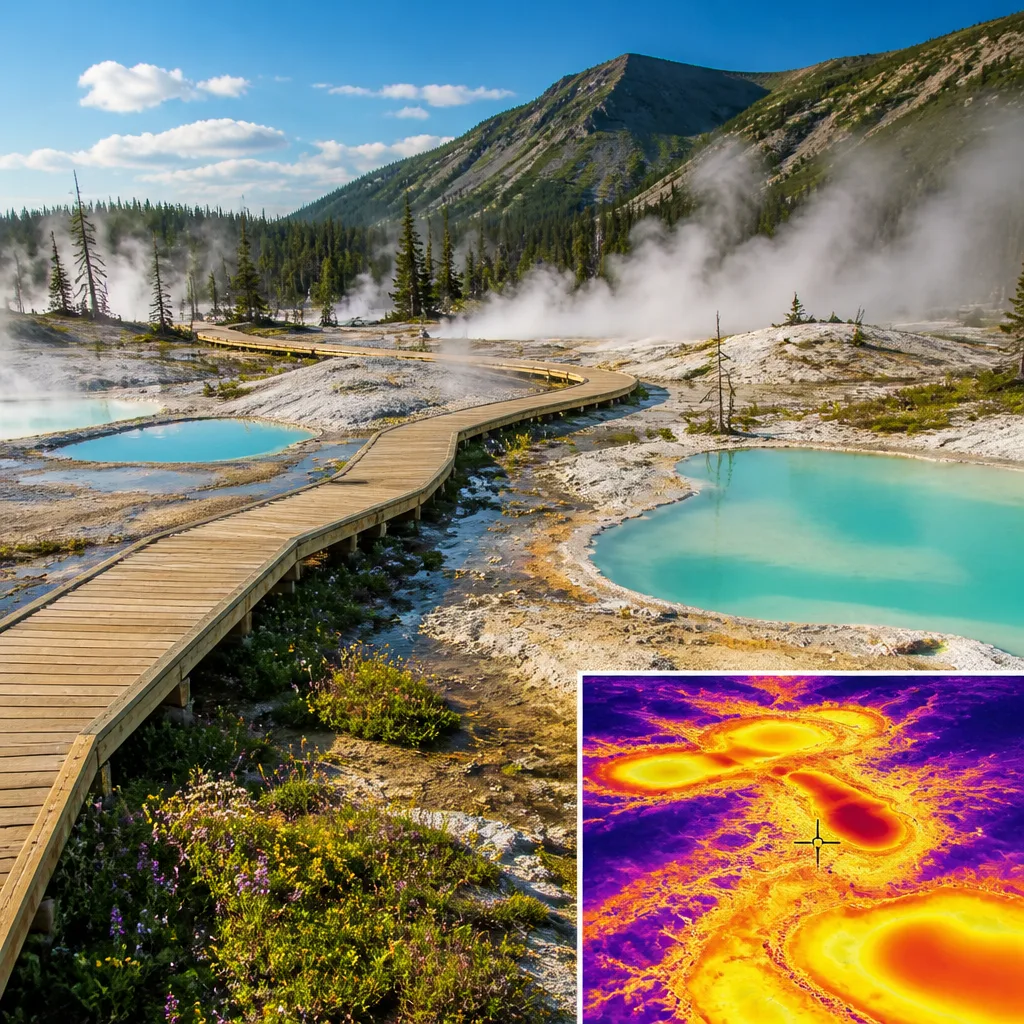
Yellowstone National Park relies on a mix of field science and careful craftsmanship to guide visitors safely around some of North America’s most hazardous natural attractions. The park maintains roughly 15 miles of boardwalks that let people view steaming hot springs and erupting geysers while minimising risk to both visitors and fragile ecosystems.
Mapping danger before building
Park staff begin by mapping hazard zones. Geologists use thermal cameras to find unusually hot ground and detect areas where subsurface heat and fluids make the surface unstable. Those thermal surveys direct where crews should not place paths, helping to keep boardwalks clear of zones that could scald or collapse.
Designers also layer in ecological and cultural knowledge. Botanists walk proposed alignments to identify rare or sensitive plants so they can be avoided, and archaeologists check for buried cultural materials that would be harmed by construction. The result is a route that threads between thermal features while leaving important natural and historical resources intact.
- Thermal imaging: locates hot or unstable ground.
- Botanical surveys: protect rare and delicate species.
- Archaeological review: prevents damage to cultural sites.
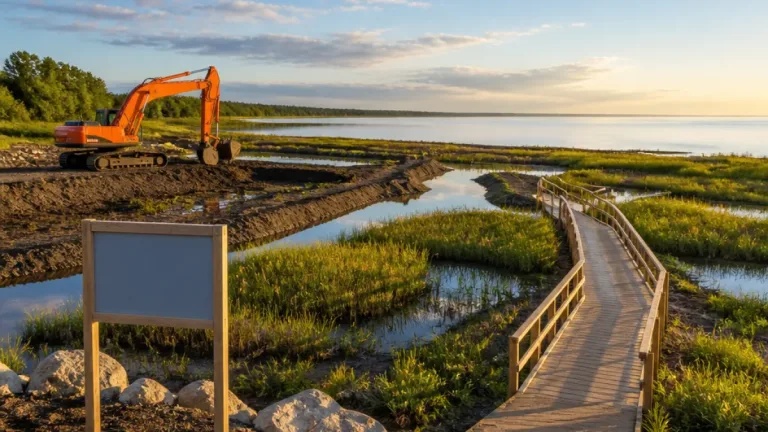
All construction is done by hand. Crews physically build the boardwalk planks and supports on site rather than bringing in heavy machinery, an approach that minimises disturbance to the thermal basins while accommodating the complex terrain.
Engineering for extremes
Yellowstone’s hydrothermal features can reach boiling and occasionally produce eruptions that send hot water and steam dozens of feet into the air. The park’s design standards account for those extremes. Boardwalks are placed at conservative distances and incorporate durable materials and elevated structures to reduce the likelihood of heat transfer to the walking surface and to prevent subsidence from underlying hydrothermal activity.
Maintenance is ongoing. Park crews inspect walkways for heat damage, settling or other signs of movement and repair or reroute sections as conditions change. That vigilance is essential because hydrothermal systems are dynamic — features can shift, enlarge or drain, sometimes without much warning.
| Stage | Purpose |
|---|---|
| Thermal survey | Identify hot ground and instability |
| Ecological and archaeological checks | Protect plants and cultural materials |
| Hand construction | Limit disturbance and fit complex terrain |
| Ongoing inspection | Detect and repair damage; adapt to change |
Yellowstone’s approach balances two sometimes competing aims: letting large numbers of people experience rare geothermal phenomena, and protecting both visitors and the park’s scientific and cultural values. Millions of people visit the park annually, and the boardwalk network is a key tool for keeping those visitors safe while preserving features that are scientifically valuable and fragile.
Beyond safety, the boardwalk design contributes to scientific and conservation goals. By keeping foot traffic off surrounding soils and delicate microbial mats, boardwalks reduce erosion and accidental contamination of hydrothermal features. That protection helps preserve the park’s natural laboratories, where researchers study extremophile microbes, mineral deposition, and geothermal processes.
While the public can admire geysers and hot springs from close range, the park’s layered process — thermal mapping, ecological and archaeological review, hand-built construction and continuous upkeep — ensures that ‘close’ remains safe for both people and the landscape.