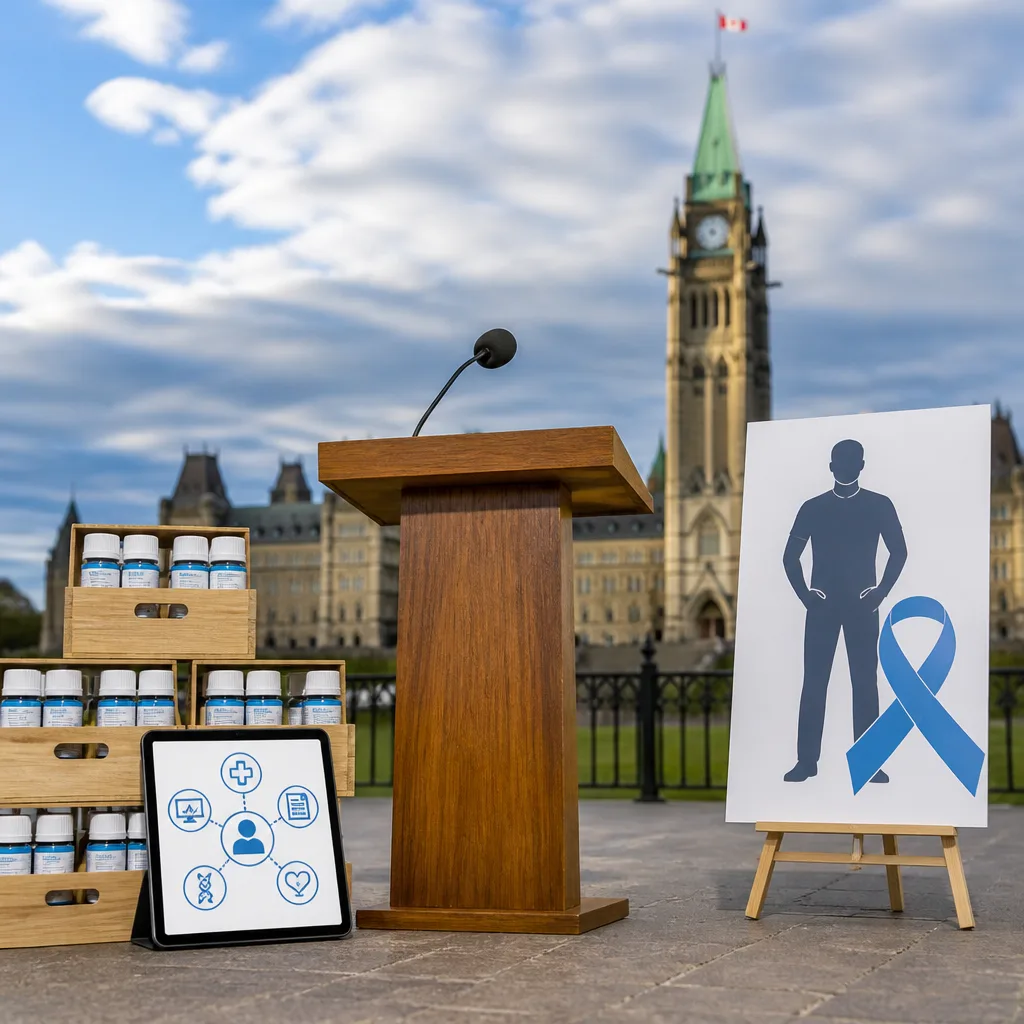
Health Minister Marjorie Michel plans to press three key files this fall: strengthening Canada’s capacity to produce pharmaceuticals, moving forward on a bill to connect patient care through digital health data, and advancing a promised mental-health strategy aimed at men and boys. Her office also confirmed the opioid crisis remains a priority.
What the minister has said
At a June 15 press conference in Ottawa, the minister outlined the themes that will guide the department’s work in the coming months. The statement of priorities was reported by The Hill Times and reflects the government’s focus on health-sector resilience and targeted mental-health interventions.
"are still cutting through the noise"
The line above is part of an observation by consultant Danielle Flieler, who warned that with the health file not a top priority for the current government, advocates and policy-makers will need to ensure health-system needs remain visible amid other pressing national issues.
Policy elements and implications
The items flagged by the minister represent distinct policy challenges and opportunities:
- Pharmaceutical production: an emphasis on building domestic capacity to produce medicines aims to reduce reliance on foreign supply chains and improve resilience against shortages.
- Connected care and digital health data: a proposed bill is intended to improve the flow of patient information across providers and settings, supporting continuity of care and potentially enabling new models of remote and co-ordinated services.
- Mental health for men and boys: a targeted strategy will focus attention on specific needs and service gaps for males, an area the minister has highlighted for development.
Each of these files has practical and political implications. Strengthening domestic medicine manufacturing involves industrial policy, procurement and regulatory considerations. A connected-care bill raises questions about privacy, data governance and interoperability standards. A mental-health strategy for men and boys will require careful program design to reach populations that historically underuse mental-health services.
How these priorities fit with ongoing crises
The minister’s office reaffirmed that the opioid crisis remains a priority this fall. While the government’s broader attention is divided across economic and trade matters, officials say opioid policy work will continue alongside the three central files.
Observers and stakeholders will watch how the ministry sequences legislation and funding. With finite parliamentary time, advancing a new digital-health bill while simultaneously building manufacturing capacity and developing a mental-health strategy will demand coordination across departments and collaboration with provinces and territories.
| Priority | Focus |
|---|---|
| Pharmaceuticals | Boost domestic production and supply resilience |
| Connected care | Introduce a bill to improve digital sharing of health data |
| Mental health — men and boys | Develop a targeted mental-health strategy |
| Opioid crisis | Retain as ongoing priority |
Federal-provincial co-operation will be essential. Health-care delivery in Canada is primarily a provincial responsibility, so national ambitions for medicine production, digital infrastructure and mental-health programming will require negotiated roles, funding arrangements and shared standards.
Experts and advocacy groups have been urging clarity on timelines and concrete measures for each file. The minister’s announcement sets the high-level agenda; the coming weeks and parliamentary sittings will reveal how those elements are translated into legislation, investments and intergovernmental agreements.
As the fall session proceeds, Canadians can expect debate over how the government balances these health priorities with competing domestic and international pressures. The success of the agenda will depend on policy detail, stakeholder engagement and the ability to maintain focus on health issues amid a broader policy landscape.
This report is based on coverage from The Hill Times and statements from the minister’s office regarding fall priorities.