WASHINGTON — The Department of Health and Human Services did not meet commitments to open procedures or produce new, high‑quality evidence when it framed President Donald Trump’s recent executive order on childhood vaccines, according to reporting by KFF Health News.
Promises vs. the product
When Robert F. Kennedy Jr. became head of the federal health department last year, he repeatedly pledged two things to calm worries among scientists and public‑health professionals: “radical transparency” in decisions and the production of only “gold‑standard science.” Those assurances have become central to critiques of the administration’s approach to its vaccine directive, which proposes significant changes to current recommendations without presenting new scientific studies to justify them.
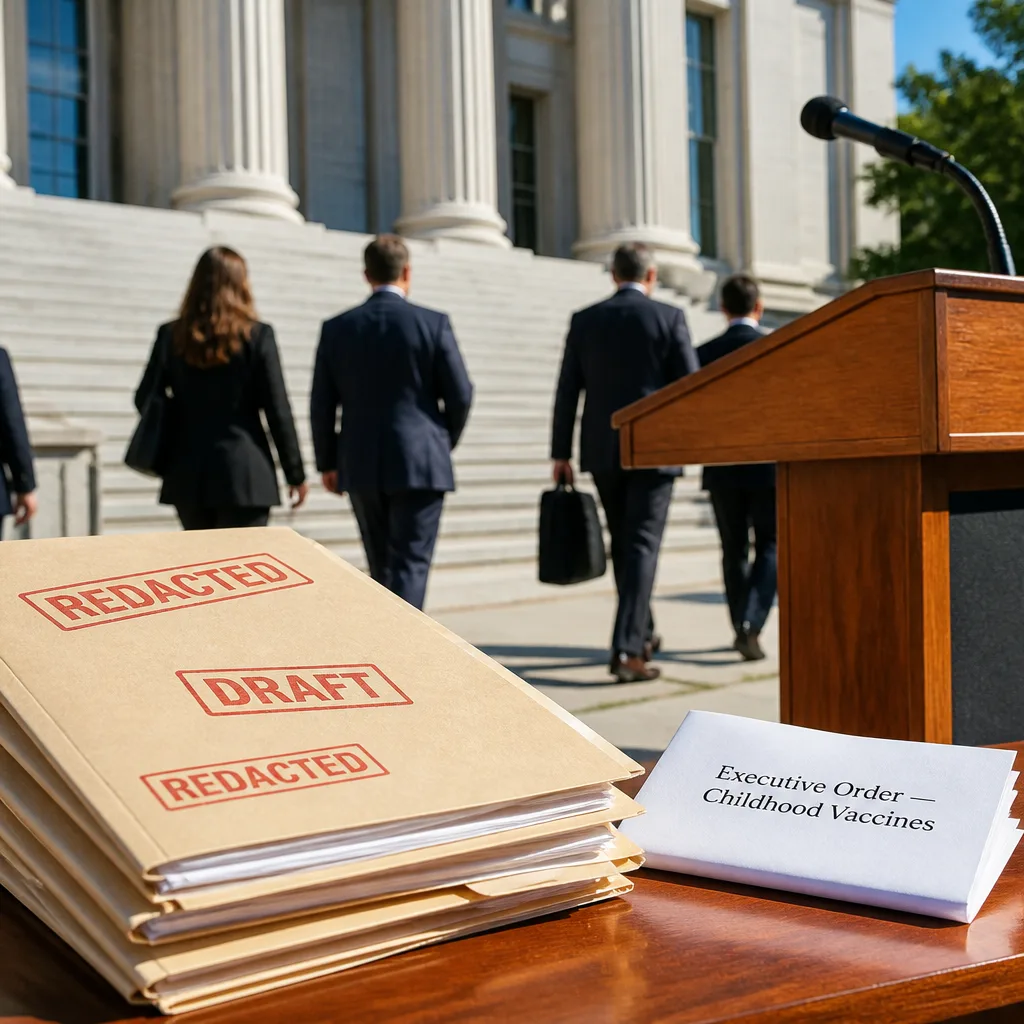
The executive order, titled “Delivering Gold Standard Childhood Vaccine Recommendations for Americans,” instructs review of the nation’s childhood vaccine guidance. Among the measures described by KFF are directives to:
- reduce the number of childhood vaccine recommendations;
- separate the measles, mumps and rubella (MMR) shot into individual vaccines;
- prioritise “religious freedom” over school vaccination requirements.
“Delivering Gold Standard Childhood Vaccine Recommendations for Americans.”
Critics tell KFF that the order offers no new peer‑reviewed research or evidence to support those prescriptions and that the public‑health community was not provided the kind of open process Kennedy had promised.
Autism claims and research oversight
The reporting notes that Kennedy has frequently suggested vaccines may be linked to rising autism diagnoses — a claim at odds with a substantial body of research that finds no causal link between vaccines and autism. Kennedy had also pledged to identify an environmental cause of autism by September of last year, a deadline he missed.
Instead of convening established scientific investigators, KFF reports, Kennedy has placed trust in political appointees — many of whom lack documented research or scientific credentials — to lead the autism initiative. The National Institutes of Health recently held a webinar to present progress on the autism project; a media account of the sessions said the work illustrated the slow pace of science.
Researchers and stakeholders involved in autism research told KFF they felt excluded from the process. White House officials, during a briefing with reporters, declined to answer questions about the development of the order and the scientific basis for its recommendations, KFF reported.
Implications for public confidence
Public trust in vaccine policy depends not only on outcomes but on process: open review, transparent data and independent evaluation. The KFF analysis suggests those elements were not evident in the production of the executive order, leaving scientists and public‑health officials concerned about precedent and the potential for policy to be driven by political priorities rather than the consensus of the research community.
| Item | Noted figure/claim |
|---|---|
| HHS budget | $1.8 trillion |
| Kennedy’s missed deadline | Promise to identify an environmental cause of autism by September (last year) |
Those concerns carry practical consequences: changes to vaccine schedules and school‑entry requirements could alter immunization coverage, with potential effects on herd immunity and outbreaks of vaccine‑preventable diseases. Public‑health experts told KFF they saw no new data in the order that would support the specific changes proposed.
The KFF reporting underscores a broader tension in federal science policy: how to reconcile political leadership and priorities with norms that underpin scientific credibility — transparency, peer review and reliance on independent expertise. The gap between stated commitments and the process used to produce this executive order has left many in the research community calling for clearer evidence and a more open consultation.
As the controversy unfolds, the details of how the HHS will implement the order and whether it will produce the new, peer‑reviewed research its title promises remain key questions for public‑health officials, clinicians and parents alike.