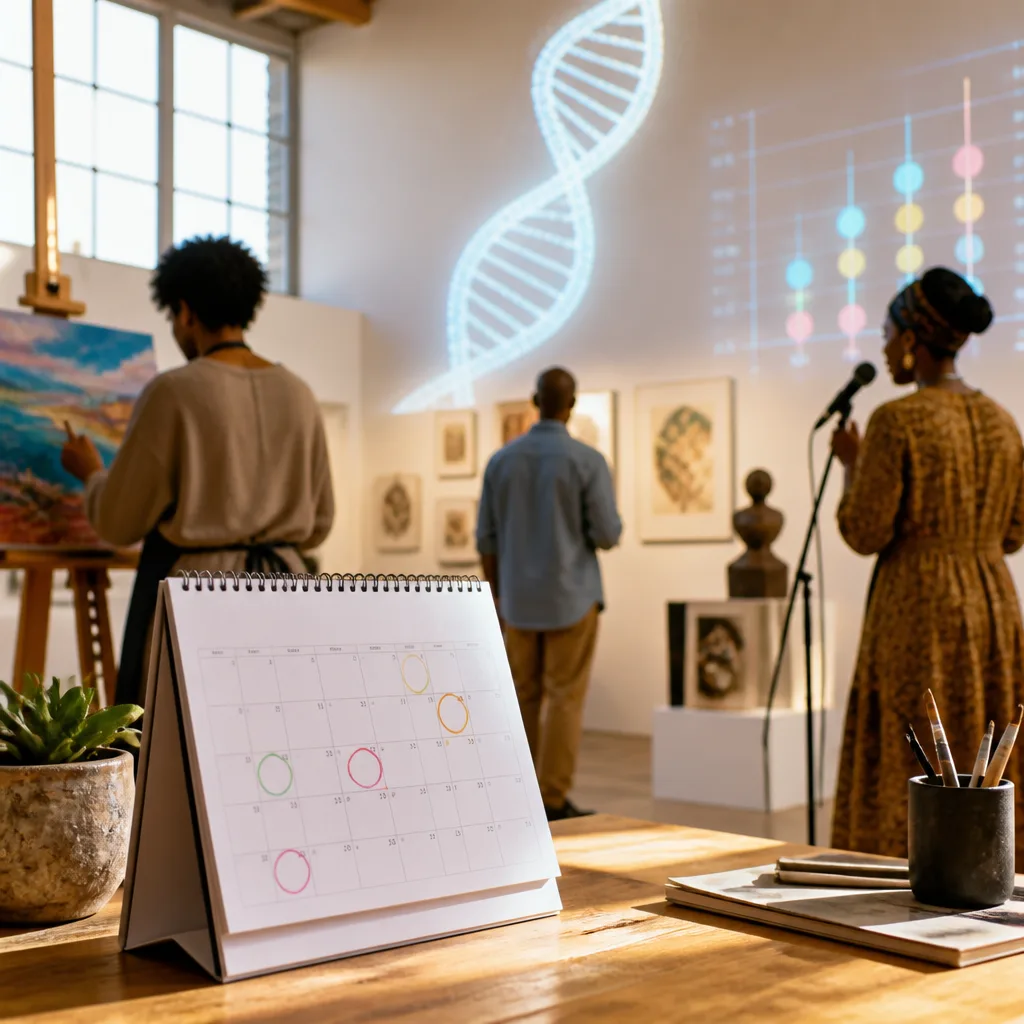
Regular engagement with cultural activities — museums, libraries, singing, painting or crafts — was associated with modest reductions in biological ageing in a large UK study, researchers reported. The study analysed health and lifestyle data from more than 3,500 adults and linked weekly cultural participation with roughly one year lower biological age and a 4% slower rate of ageing, the authors reported on 11 May 2026 in Innovation in Aging.
What the researchers measured
The work, led by investigators at University College London, compared participants’ reported frequency of arts and cultural activities with biomarkers that reflect biological ageing. Biological age is an estimate of how well a person’s body and systems have aged, which can differ from chronological age. The study did not equate cultural attendance with diagnosis or treatment, but assessed associations between habitual cultural involvement and measurable ageing markers.
- Sample size: more than 3,500 adults in the United Kingdom.
- Exposure: a wide range of cultural activities, including museum or library visits, exhibitions, DIY crafts, singing and painting.
- Reported outcomes: approximately one year reduction in biological age and a 4% slower ageing rate among those taking part weekly.
Why this matters
Biological age is distinct from the number of years since birth: it seeks to capture cumulative physiological change across tissues and systems and is increasingly used in research as an indicator of long-term health risk. Interventions that modestly reduce biological ageing at a population level could have important implications for disease burden and healthy life expectancy. The authors frame cultural participation as a potentially low-cost, accessible complement to established health-promoting behaviours.
The study also strengthens a growing interest in so-called social prescribing or cultural prescriptions — where healthcare services recommend or provide access to non-clinical activities for well-being. The report notes existing models elsewhere in Europe and Canada, where health providers have trialled free or supported museum visits and arts referrals as part of broader care packages.
Limitations and interpretation
The researchers report an association, not definitive proof of cause and effect. Observational studies can be affected by confounding factors — for example, people who take part in cultural activities regularly may differ in education, income, mobility or social networks compared with those who do not. The authors adjusted for a range of covariates, but residual confounding cannot be excluded.
Further, the magnitude of the effect reported is modest: a one-year difference in biological age and a 4% slower ageing rate are small on an individual level. Nevertheless, at a population level such differences could be meaningful if they translate into delayed onset of age-related conditions or improved quality of life. The study therefore forms a rationale for experimental trials to test whether promoting cultural engagement causes measurable health benefits.
Policy and practical implications
Health systems and cultural institutions considering arts-on-prescription programmes may take two lessons from this study. First, cultural engagement appears to be a plausible adjunct to physical activity, healthy diet and social support as part of a holistic approach to healthy ageing. Second, robust evaluation — ideally randomised trials or well-designed implementation studies — is needed to determine whether cultural prescriptions deliver clinically relevant effects and are cost-effective.
| Measure | Reported association |
|---|---|
| Biological age | ~1 year lower with weekly cultural participation |
| Rate of ageing | ~4% slower |
The authors point to existing schemes in France’s Yvelines region and pilot work in Canada, where free museum visits or arts referrals have been trialled as part of health and social-care packages. These initiatives provide practical models for how cultural access might be integrated with public health objectives.
Overall, the study adds to an emerging literature that links social and cultural participation with measurable aspects of health. It does not replace established prevention strategies such as vaccination, tobacco control, physical activity and balanced nutrition, but suggests that cultural life could be a complementary component of policies that promote healthier ageing.