
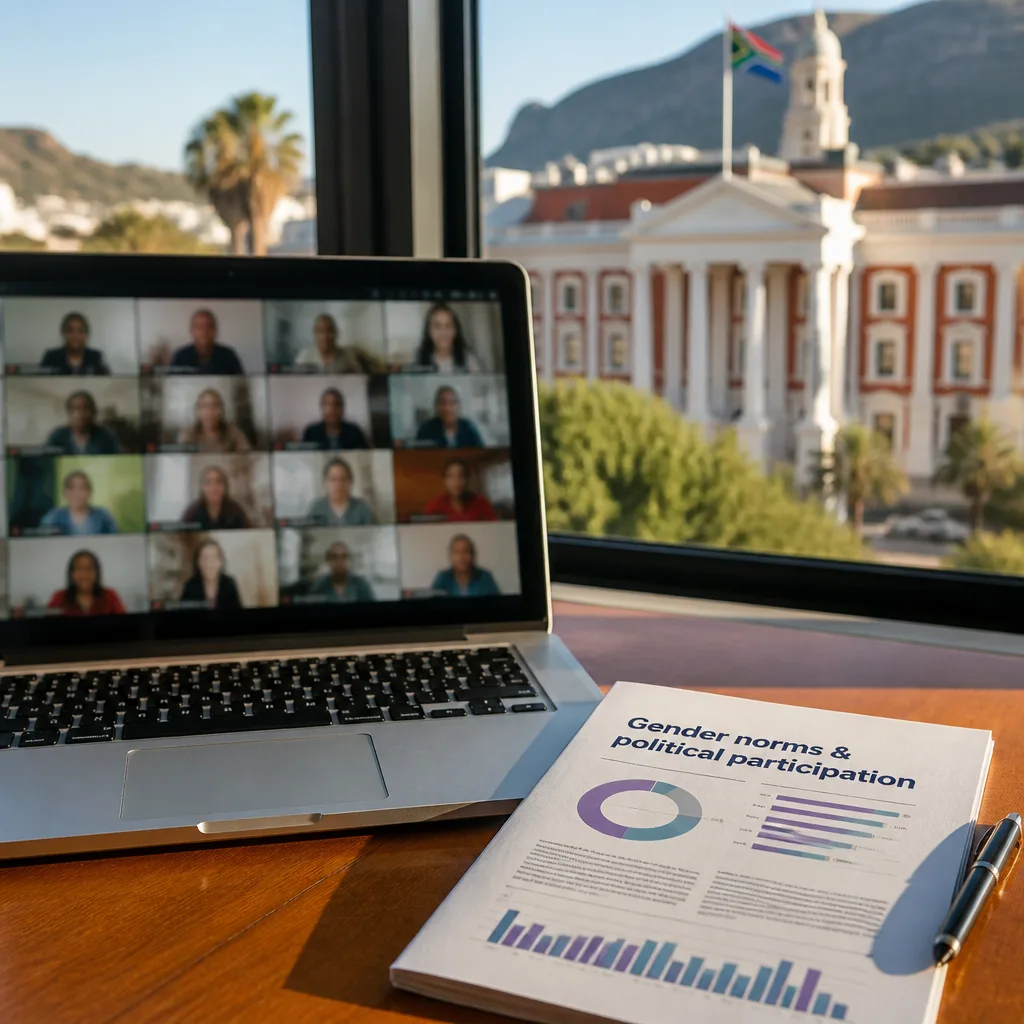
The International Institute for Democracy and Electoral Assistance (International IDEA) will host a closed webinar to present a thematic fact sheet that maps the effects of gender social norms on women's political participation and representation, the organisation said.
From expectations to costs: what the fact sheet addresses
The fact sheet, produced under the Women and Youth Democratic Engagement (WYDE) – Women’s Leadership Initiative, was developed with funding from the European Union (EU) and in partnership with UN Women, the Inter‑Parliamentary Union (IPU) and United Cities and Local Governments (UCLG), according to the organisers. International IDEA said the note draws on regional dialogues, Young Women’s Empowerment Academies, engagements with media practitioners and contributions from the iKNOW Politics platform and partner organisations.
The webinar aims to examine how invisible social expectations — about care, endurance and leadership — shape the prospects and experiences of women in public life. In the fact sheet’s own words, “
Women in politics are often expected to do it all: lead, care, endure, and succeed in systems that were not designed with them in mind.”
What organisers want to achieve
Speakers and participants will seek to validate the fact sheet’s key findings and recommendations, share regional and country practices for changing gender norms, and identify emerging trends and priorities that can inform future advocacy and programming under the WYDE initiative, International IDEA reported. The lead author of the fact sheet, Maansi Verma, will present the work.
- Validation: Test and refine the fact sheet’s findings and case studies.
- Exchange: Share examples of effective interventions at regional and national levels.
- Prioritise: Identify common trends and shape future WYDE programming.
The event is closed and attendance is by invitation only, the organisers said.
Why this matters for national politics
Gender social norms influence who stands for office, who wins internal party contests, and how politicians are perceived once elected. By focusing on the “hidden costs” — such as mental health burdens, reputational double standards and uneven labour in caregiving — the fact sheet seeks to make explicit what often remains unspoken in party corridors and media coverage.
For decision‑makers and party strategists, the fact sheet offers a diagnostic: where informal expectations restrict participation, targeted policies and cultural interventions may be needed in addition to quotas or legislative reforms. For donors and civil society, the work aims to provide evidence to guide investments in training, media engagement and support networks.
| WYDE webinar objectives | Intended outcome |
|---|---|
| Validate findings and case studies | Stronger, evidence‑based recommendations |
| Exchange regional and country practices | Practical models for adaptation |
| Identify emerging trends and priorities | Inform future advocacy and programming |
International IDEA’s statement frames the issue as both systemic and personal: when norms expect women to reconcile public leadership with traditional care roles, their wellbeing, confidence and capacity to participate fully are affected. The fact sheet, organisers say, explores pathways toward wellbeing, resilience and institutional change.
Who stands to benefit, and who pays
If the recommendations are adopted, political parties, legislatures and local governments could benefit from a broader talent pool and more representative decision‑making. Women's constituencies and advocacy groups would gain practical tools for campaigning and support. But the work also implies costs — financial and organisational — for parties and institutions to implement training, mentoring, media programmes and potentially revised workplace norms.
The webinar is part of a larger EU‑funded initiative implemented with UN Women and other partners; those bodies will direct the next phase of programming based on what emerges from the validation and exchange process.
Public officials, party leaders and civil society in South Africa monitoring women's representation may look to the WYDE findings for comparative lessons. However, because the event is closed, immediate public access to the presentations and case studies will depend on subsequent releases by International IDEA or partner organisations.












