
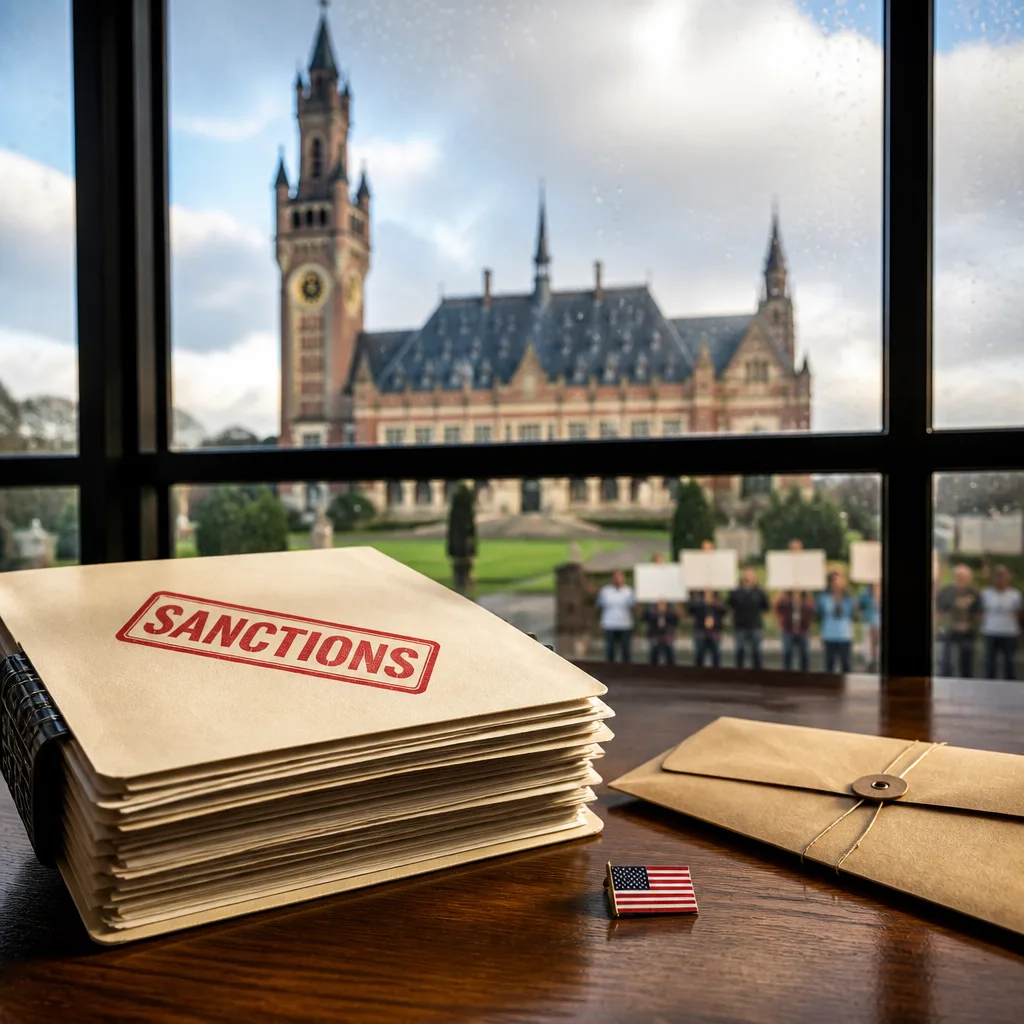
The United States has announced sanctions against the president of the International Criminal Court, Tomoko Akane, and a senior ICC trial lawyer, Abdoulaye Seye, marking a further escalation in Washington’s confrontation with the Hague-based tribunal.
Sanctions announced under US executive order
US Secretary of State Marco Rubio said the measures were taken under an executive order signed by President Donald Trump, which declared a national emergency in February 2025 and authorised action against ICC officials involved in what the administration calls “illegitimate” investigations of US nationals and allies.
"We will not tolerate its assault on state sovereignty," the State Department said in a statement, and Rubio wrote that the measures form part of an "unwavering mission to protect Americans from this sham of a court."
The move follows earlier US sanctions on ICC officials, including a previously sanctioned chief prosecutor and other individuals targeted by Washington in recent years. The US government has consistently rejected the court’s jurisdiction because it is not a party to the Rome Statute, the treaty that established the ICC in 2002.
Context: warrants and jurisdiction
The administration’s action is directly linked to ICC arrest warrants issued over the Israel–Gaza conflict. A three-judge panel of the court in November 2024 found that Israeli Prime Minister Benjamin Netanyahu and his former defence minister, Yoav Gallant, bore responsibility for the war crime of "starvation as a method of warfare" and other alleged inhumane acts in the Gaza Strip. The United States has said it sees such steps as beyond the court’s legitimate reach when directed at officials of non-member states or their allies.
The ICC may assert jurisdiction where crimes occur on the territory of a member state, even if the national concerned is from a non-member state. Washington argues the court’s actions threaten US personnel and undermine state sovereignty; the court’s backers say it is a necessary institution for accountability when domestic systems fail.
Legal and diplomatic reverberations
Human Rights Watch and three other advocacy groups have taken legal action in the US, suing the administration earlier in August 2026 on grounds that the sanctions impede efforts to hold perpetrators of genocide and other serious crimes to account. The lawsuit underscores tensions between civil society groups seeking international accountability and a US administration determined to blunt ICC authority.
Washington has also in recent years taken other measures signalling disquiet with international bodies that take positions it opposes. Last year the administration announced its withdrawal from UNESCO after that body recognised Palestine as a member state; previous sanctions targeted other international officials accused by the US of bias.
- Sanctioned individuals: Tomoko Akane (ICC president), Abdoulaye Seye (senior trial lawyer).
- Legal basis cited: US executive order declaring a national emergency (February 2025).
- Triggering event: ICC arrest warrants related to the Israel–Gaza conflict, including allegations of starvation as a method of warfare.
| Individual | Role | Nationality |
|---|---|---|
| Tomoko Akane | ICC President | Japanese |
| Abdoulaye Seye | Senior trial lawyer | Senegalese |
For South Africa and other states that are parties to the Rome Statute, the dispute raises practical and principled questions. South Africa has been a vocal supporter of international criminal justice in the past; any durable weakening of the ICC’s capacity to investigate and prosecute alleged atrocities would be watched closely by its government and civil society.
The latest US action sets up a sustained confrontation between a powerful non-member state and the court. How other states, particularly ICC members, respond diplomatically could shape the court’s operating environment and the broader international rules-based order that underpins post-World War II mechanisms for accountability.
The sanctions deepen a pattern of friction between Washington and international institutions when their findings or decisions run counter to US policy preferences. The immediate consequences for the court’s day-to-day operations are uncertain, but the measures are likely to complicate co-operation and heighten political pressure on the ICC at a time when it faces sensitive investigations into ongoing conflicts.









