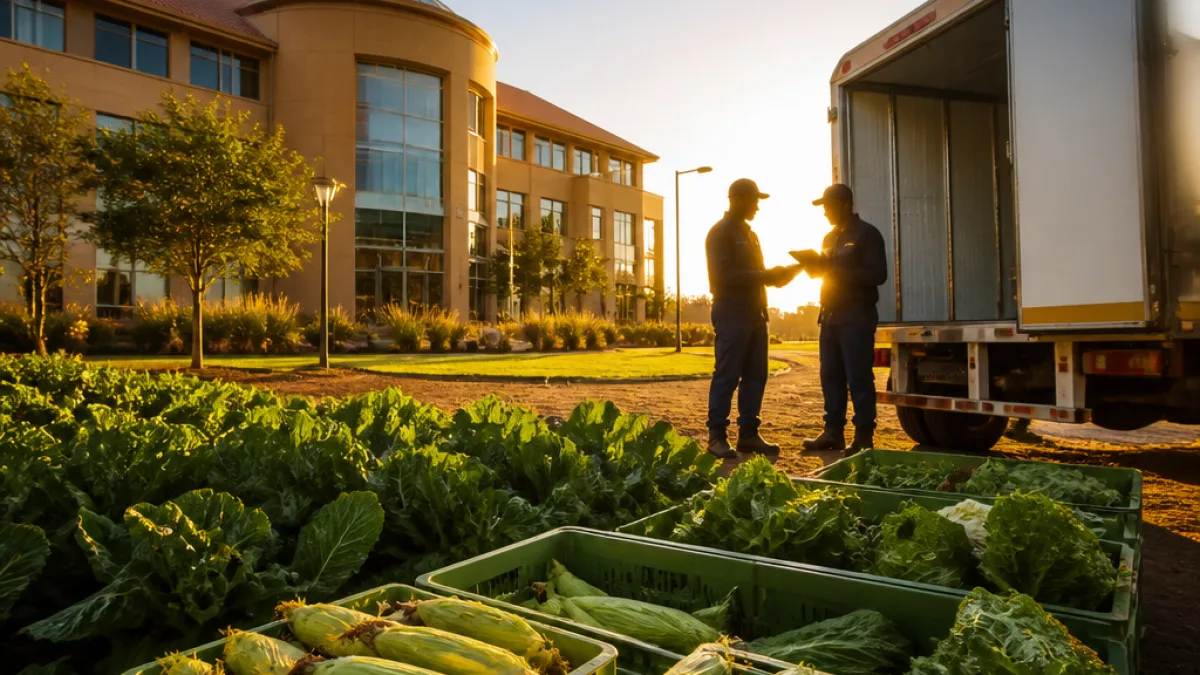
Bloemfontein — Tiger Brands and the University of the Free State (UFS) have launched a three-year strategic partnership aimed at improving the productivity, sustainability and competitiveness of South Africa’s agricultural value chain, the parties said.
Bringing research into farmers’ fields
The agreement links the UFS Faculty of Natural and Agricultural Sciences’ research capacity with Tiger Brands’ industry experience across the food value chain. According to the announcement, the collaboration is intended to produce practical, science-based solutions to support local agricultural production and strengthen local sourcing.
Tiger Brands noted that more than 90% of its revenue comes from food and beverages, underlining why resilient, competitive local agricultural supply matters to the company. In 2025, the firm directed 70% of its agricultural procurement spend to local producers, the statement said.
“South Africa needs a strong agricultural sector if we are going to produce enough to support food security, remain globally competitive and continue giving consumers access to quality, affordable food,” said Tjaart Kruger, CEO of Tiger Brands.
Academic research applied to industry needs
UFS framed the partnership as an opportunity to translate academic research into solutions that can be implemented on the ground. Professor Vasu Reddy, Deputy Vice-Chancellor for Research, Innovation and Postgraduate Studies at UFS, said collaboration creates a platform to combine researcher expertise with industry knowledge of markets, processing and the food chain.
The partnership complements an existing collaboration between Tiger Brands and Stellenbosch University’s Faculty of AgriSciences and forms part of the company’s broader sustainable sourcing agenda, the release added.
What the partnership aims to deliver
- Joint research projects targeting bottlenecks in agricultural production and supply chains.
- Development of applied, field-ready solutions that can be implemented by local farmers and processors.
- Support for strengthening local sourcing resilience and competitiveness to secure supply for industry and improve farmer market access.
The announcement did not specify project budgets or the number of researchers and staff to be seconded to the programme. It also did not provide details on how farmers or co-operatives in the Free State would be recruited or engaged in the pilot projects.
Local impact and practical considerations
For Free State farmers and agri-businesses, the collaboration could provide access to university-led trials, agronomic advice and technical support aligned with the demands of a major buyer. For Tiger Brands, the stated goal is to reduce supply-chain risk and improve the competitiveness of local suppliers so they can meet quality, volume and cost requirements.
Practical outcomes to watch for in the coming months include publicly announced pilot projects, extension or training programmes, and measures to track improvements in yields, input efficiency or market access for participating producers.
| Detail | Information provided |
|---|---|
| Partnership duration | Three years |
| Key partners | Tiger Brands; UFS Faculty of Natural and Agricultural Sciences |
| Tiger Brands: revenue from food & beverages | >90% |
| Tiger Brands: 2025 local agricultural procurement | 70% |
While the announcement highlights mutual benefits, stakeholders in the Free State will seek clarity on how the partnership translates into concrete support for small-scale and emerging farmers, how intellectual property from joint research will be managed, and whether funding for extension services will be sustained beyond the initial term.
Why this matters for provincial food security
A stronger, more competitive local agricultural sector can reduce dependence on imports, lower price volatility and improve food access. By pairing university research with industry insights, the partners aim to create innovations that are both scientifically robust and market-relevant — a combination that can accelerate adoption on commercial farms and among smaller producers.
For the Free State — a province with extensive commercial agriculture and many communities reliant on farming income — the partnership offers the prospect of targeted interventions that could improve productivity and bolster market linkages. Observers will be watching for public reporting on project outcomes and for mechanisms that ensure smaller producers share in any gains.
Further details on specific projects, funding arrangements and farmer participation are expected as the partnership moves from announcement to implementation.