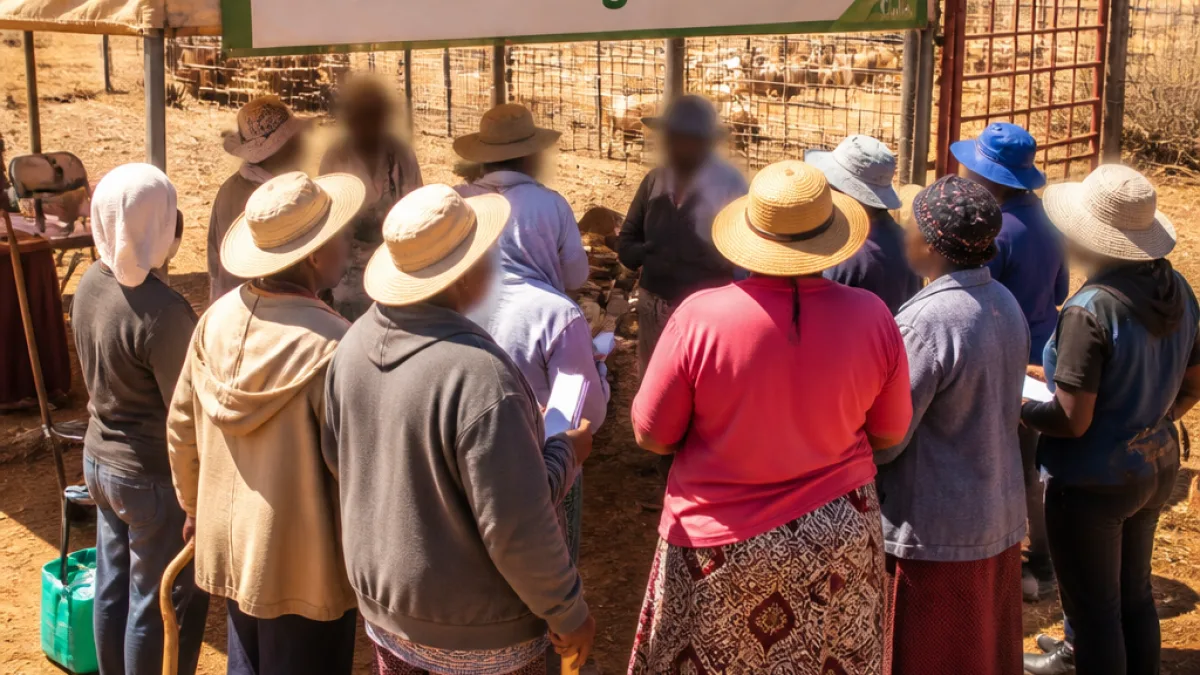
Women farmers in the Free State have told provincial authorities and agricultural stakeholders that limited access to land, finance and markets — together with a rising threat of stock theft — are constraining their ability to grow viable farming enterprises. The concerns were raised at the province’s first Women in Agriculture Imbizo held in Botshabelo.
Calls for extension services and economic guidance
At the imbizo, farmer Mponeng Lentoro urged that agricultural extension officers and economists be made available to work directly with small-scale women producers. She said expert advice on cropping choices, soil management, weather patterns and market opportunities would enable farmers to make more informed decisions.
“Another challenge, the big challenge. Where are our economists? They should come to our farms and advise us. They know the weather patterns, they know what a niche market is, and they should check what we are doing and advise us.”
The request underscores a broader need for sustained technical support rather than one-off engagements. Extension services can help with crop selection, pest and disease management, post-harvest handling and links to markets; economic advisers can assist with business planning and identifying niche opportunities suited to local conditions.
Stock theft poses a particular threat to women
Producers at the imbizo also highlighted stock theft as a major and gendered risk. Agnes Mokhele, who runs a mixed operation producing livestock, vegetables and animal feed, said women farmers face particular vulnerability to theft, which undermines household incomes and the ability to reinvest in farming.
“Some of the challenges that we have as women farmers is the issue of stock left. We believe, and we see that, a lot of women, we are experiencing more stock theft, more than male counterparts,” she said. The claim points to the economic and social consequences of livestock losses for women-headed households and small-scale producers.
Barriers raised at the imbizo
- Limited access to land — constraining scale and security of production.
- Insufficient funding — restricting investment in inputs, infrastructure and stock.
- Poor market access — limiting returns and growth potential.
- Stock theft — causing direct loss of assets and income, with reported gendered impacts.
- Need for extension and economic advice — for crop, soil and market decisions.
Local impact and wider implications
For rural areas such as Botshabelo, women farmers contribute to household food security and local economies. Constraints on their operations therefore have ripple effects beyond individual producers: reduced production affects local supply chains, informal employment and community resilience.
Improved access to land and finance, better protection against theft and targeted technical assistance would not only support individual livelihoods but could strengthen local food systems and broaden participation in commercial agriculture. The imbizo represents a platform for women producers to present these priorities to provincial agricultural authorities and potential partners.
Practical measures raised and possible responses
Participants called for straightforward, practical support measures:
- deployment of agricultural extension officers to regularly visit small-scale women farmers;
- engagement with economists to identify niche market opportunities and advise on climate- and soil-appropriate crops;
- strengthening policing and community-based prevention to address stock theft;
- improving access to affordable finance and market linkages so women can scale operations and secure better prices.
| Issue | Raised by | Immediate implication |
|---|---|---|
| Access to land | Women farmers at imbizo | Limits ability to scale and obtain tenure security |
| Extension services & economists | Mponeng Lentoro | Need for technical and market guidance |
| Stock theft | Agnes Mokhele | Loss of income and production, gendered vulnerability |
The issues outlined at the Botshabelo meeting mirror long-standing challenges in rural development policy: securing land reform outcomes that enable production, ensuring access to finance and markets, and improving rural policing and agricultural support services. The imbizo is the first of its kind in the province, signalling an appetite among women producers to be heard and for tailored interventions.
Provincial departments and law-enforcement agencies were not quoted in the report of the imbizo; the concerns were recorded in coverage by SABC News. Moving from discussion to measurable progress will require coordinated responses from the provincial agriculture department, municipalities, policing structures and agricultural-support organisations.
For women in Botshabelo, the immediate priority is practical assistance that protects existing livelihoods — frequent extension visits, rapid responses to theft and improved access to markets and finance — so that farms can move from subsistence to sustainable, income-generating enterprises.
Reported by SABC News; local coverage by the Free State correspondent.