
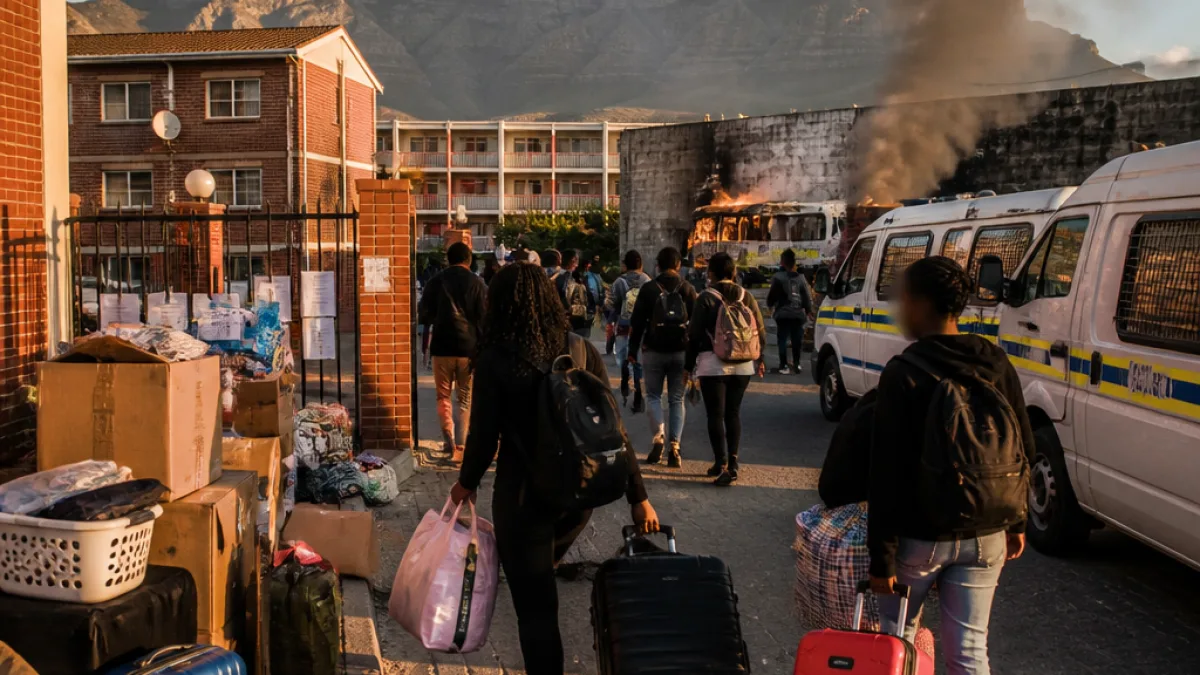
Students ordered to vacate residences after days of unrest
Thousands of students at the Cape Peninsula University of Technology (CPUT) have been told to vacate residences across the Cape Town metro after days of protests over the institution’s draft 2027 financial recovery plan. The university said academic activities would end immediately because of violence during the demonstrations, and that residence occupants had to leave by Wednesday.
The unrest followed the release of a plan that proposed students pay up to R7,000 to register for the new academic year. Protesters burned buildings and damaged property during demonstrations that have drawn national attention, including a march by hundreds of students to Parliament where they submitted a 20-page memorandum to the Portfolio Committee on Higher Education.
- Student debt: CPUT recorded the highest student debt of any South African university at R4.2-billion in May 2026.
- Withheld certificates: The university has withheld about 16,200 certificates from students in arrears.
- Registration fee proposal: The draft recovery plan would require payments of up to R7,000 to register.
Outside CPUT’s District Six campus, student leader Liyabulela Gela said they had taken the memorandum to Walter Tebogo Letsie, chairperson of Parliament’s Portfolio Committee on Higher Education, and demanded the committee summon university decision-makers for scrutiny and an independent investigation into management conduct.
“We are not going anywhere. CPUT chasing us out it means we will not be able to finish and graduate next year.”
The comment was attributed to Amamkele Mtshulwana, a third-year journalism student living in one of CPUT’s residences, who said she has no family in Cape Town and was concerned about how the eviction would affect her ability to complete her studies.
Parliamentary engagement and public order response: On Tuesday students marched through the city centre to hand their memorandum to the committee. Public order police were deployed at Parliament gates as the delegation met officials. CPUT’s decision to halt academic activities and evacuate residences prompted criticism from the committee chair, who described the order to leave as “harsh” and “stupid”.
Local impact and unanswered questions
The order affects students living in multiple residences across the metro and raises immediate concerns about accommodation, safety and continuity of learning:
- Students who face eviction may have limited alternatives in the city, particularly those who have come from other provinces.
- With academic activities suspended, teaching and assessments for the current term are in limbo until the situation is resolved.
- Damage to buildings and property during protests could lengthen the disruption if repairs are required before residences can reopen.
CPUT statement and next steps: In a public statement the university said the suspension of academic activities followed violence during the protests but did not set out a timeline for when normal operations might resume or provide details on support for displaced students. The source material reports that students were given 24 hours to leave some residences and until Wednesday at others.
| Issue | Figure |
|---|---|
| CPUT student debt (May 2026) | R4.2-billion |
| Certificates withheld | 16,200 |
| Proposed registration charge | Up to R7,000 |
Parliament’s committee chair Walter Tebogo Letsie was present when students handed over their memorandum and has been reported as calling the eviction order “harsh” and “stupid”. The students want the committee to summon CPUT officials responsible for the decisions behind the recovery plan and accommodation policies.
Policy context: CPUT’s financial position — reflected in the size of outstanding student debt — underpins the university’s decision to draft a recovery plan. The institutional debt figure is the highest recorded among South African universities in May 2026, according to the reporting. The dispute highlights tensions between efforts to restore institutional financial sustainability and students’ ability to afford and complete their studies.
What happens next will depend on interactions between CPUT management, the Portfolio Committee on Higher Education and student representatives. The immediate priorities are ensuring displaced students have safe accommodation, restoring campus safety, and clarifying how academic programmes and credentials will proceed for affected students.












