
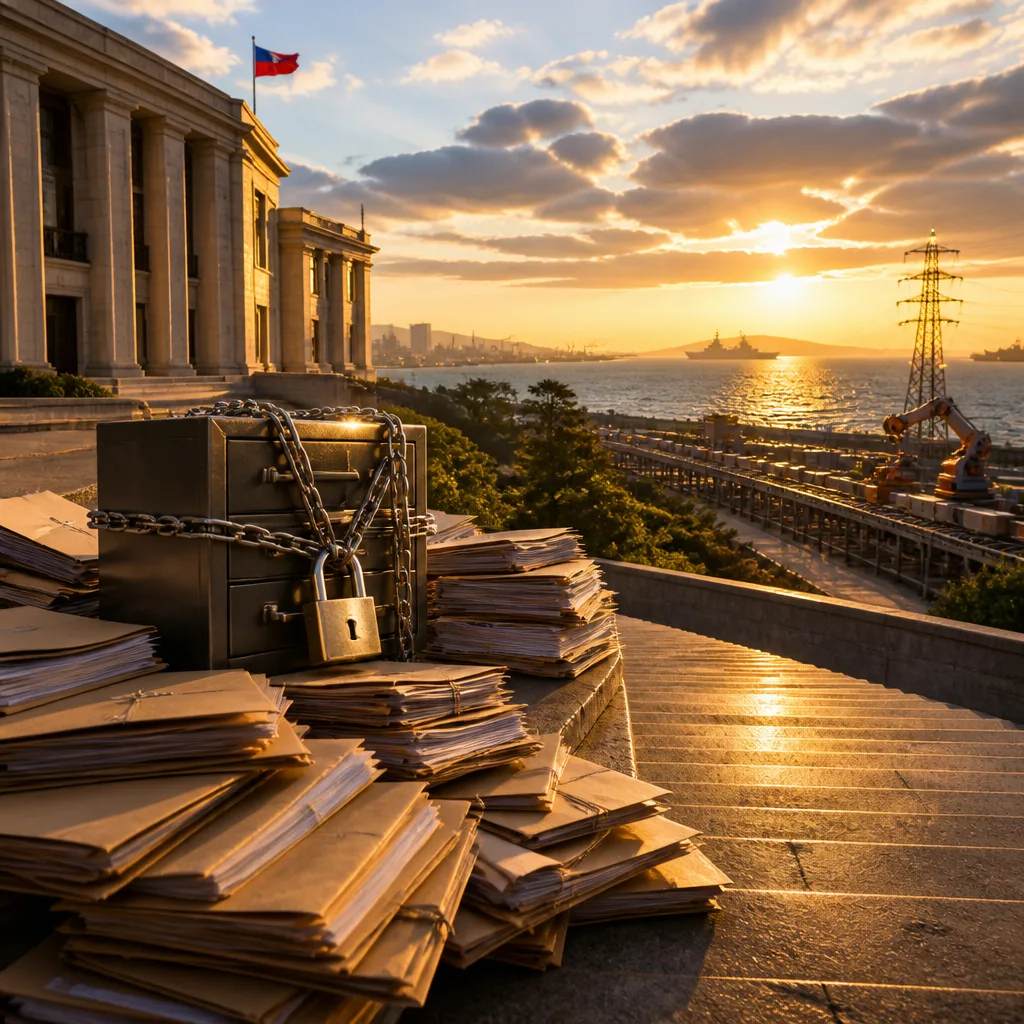
Taiwan’s strategic calculations are being shaped as much by routine governance — budgets, industrial policy and energy provision — as by high-profile geopolitical tensions, a recent analysis of Taipei’s politics concludes. The dynamics around the island’s annual budget in particular have emerged as a test of state capacity and a potential constraint on defence preparedness.
Budget timing and control: a recurring problem
The central government’s annual budget has been repeatedly delayed into the fiscal year it is meant to fund, the analysis found, complicating planning across ministries and for defence procurement. In 2025 the budget only cleared legislative review in January, and key appropriations were subsequently cut or frozen before being released in later months. By contrast, in 2026 the legislature enacted a separate defence spending bill in May, while the annual budget remained unresolved at the time of reporting.
Those episodes demonstrate how ordinary parliamentary bargaining and divided government can translate into tangible effects on policy execution. Delays and last‑minute adjustments mean agencies face uncertainty on when funds will flow and whether planned programmes will retain their full allocations.
Why the details of governance matter for strategy
For international observers, Taiwan is often viewed through the narrow lens of cross‑Strait tensions and semiconductors. The recent piece argues that this framing risks missing what really underpins Taipei’s strategic success: effective management of everyday governance tasks such as budget timing, industrial development and energy security.
Those domestic processes are not merely administrative: they determine whether strategic priorities — including defence modernisation and industrial policy that supports semiconductor supply chains — are translated into sustained, executable programmes. The analysis cautions that weak or delayed domestic governance can undermine the very capabilities partners look to support.
- 2025: Annual budget cleared legislative review in January; significant appropriations were then cut or frozen and later released.
- 2026: Legislature passed a separate defence spending bill in May; the annual budget had not been finalised at the time of reporting.
| Year | Budget milestone |
|---|---|
| 2025 | Budget cleared in January; cuts/frozen appropriations later released |
| 2026 | Separate defence bill passed in May; annual budget unresolved |
The policy implication is simple: allies and analysts assessing Taiwan’s resilience should look beyond headlines to institutional capacity. How smoothly Taipei passes, allocates and releases funds has direct bearing on defence readiness, industrial policy execution and crisis response.
What partners should watch
Understanding the link between domestic budgeting and strategic outcomes means international partners need to track routine governance indicators as closely as diplomatic and military signalling. The analysis suggests that delays in the annual budget and reliance on ad hoc defence bills could erode planning horizons and complicate cooperation on long‑lead procurement or joint industrial projects.
In short, the island’s strategic strength is not only a function of geography or chip manufacturing prowess. It is also a product of whether core governance processes — budgeting, energy management and local administration — are robust enough to deliver policy on time and at scale. For Taiwan’s partners, reassessing engagement strategies to account for these domestic governance dynamics will be essential.
The piece was written by Lucy Best for the US‑Taiwan‑European Next Generation Working Group and emphasises that issues of everyday governance increasingly shape matters of international concern.












