
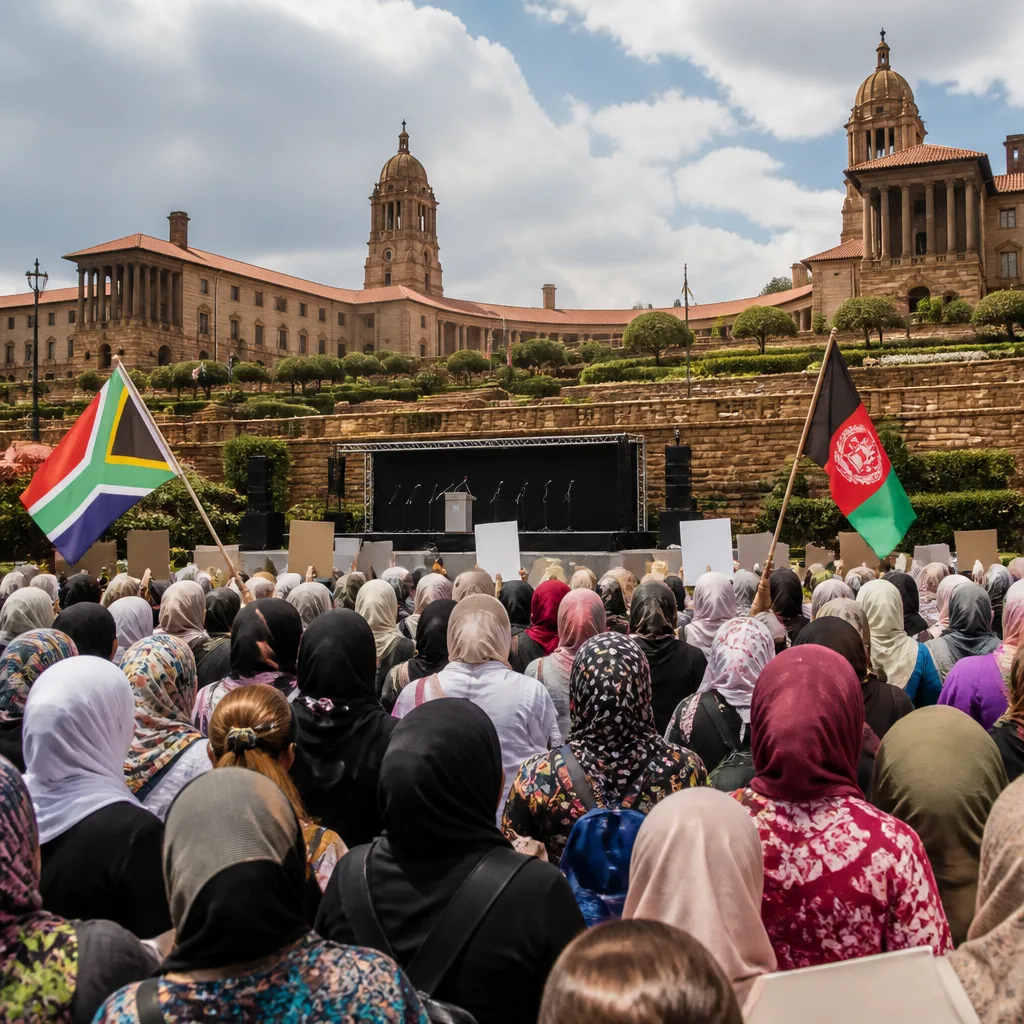
Nobel Peace Prize laureate Malala Yousafzai on Sunday appealed to South Africans to lend solidarity to Afghan women facing restrictions under Taliban rule.
Appeal made at Union Buildings commemoration
Malala was among delegates attending a commemoration of the 1956 women’s march at the Union Buildings. She said her visit to Constitution Hill had been an inspiration, and that South Africa’s history of struggle offered lessons for the Afghan cause.
Referring to the situation in Afghanistan since the Taliban regained control, Malala said the group had taken control of courts, police and public administration, and used their authority to target women and girls. She singled out bans on higher education and professional opportunities for women as key elements of that repression.
"We have come to honour your heroes, to learn from your movement, and to ask for your solidarity in our own fight against oppression. Since the Taliban took control over Afghanistan, they have controlled courts, the police, and public administration, and they have used their power to abuse women and girls."
The Pakistani activist said she was encouraged by South Africa’s freedom activists and motivated to take up a similar fight against Taliban policies that limit women’s rights. Her remarks tied the symbolically significant 1956 march — when South African women protested pass laws — to contemporary campaigns for women’s freedoms abroad.
Context and consequences
Malala’s appeal comes as Afghanistan remains under de facto Taliban governance. International concern has focused on restrictions placed on girls’ education and women’s participation in public life. South Africa’s role in such international solidarity can range from public advocacy to diplomatic engagement, but the precise responses available to government, civil society and institutions were not outlined by Malala.
Her presence at the Union Buildings carries symbolic weight. The 1956 women’s march is a cornerstone of South African women’s mobilisation against apartheid-era pass laws; invoking that history frames Afghan women’s plight as part of a wider global struggle for gender equality and civil liberties.
Details on follow-up actions — whether formal campaigns, statements by government, or co‑ordinated civil-society efforts — were not provided during the commemoration and remain unconfirmed.
- Where: Union Buildings, Pretoria; she also visited Constitution Hill.
- Focus: Afghan women’s loss of access to higher education and professional work under Taliban rule.
- Message: Request for South African solidarity and learning from the anti-apartheid women's movement.
| Issue | Example cited |
|---|---|
| Bans on education | Restrictions on higher education for women |
| Limits on employment | Barriers to professional opportunities for women |
Malala’s remarks echo wider international critiques of the Taliban’s policies since 2021, when the group returned to power. Human-rights advocates have repeatedly highlighted the impact of restrictions on education and employment for women and girls, describing them as systematic and far-reaching.
This appeal to South African solidarity may spur responses from a range of actors here: political parties, rights organisations, universities and women’s groups that mark the legacy of the 1956 march. How those actors choose to respond — through statements, protest, advocacy or diplomatic channels — will determine whether Malala’s call results in sustained support for Afghan women’s rights.
At the time of the commemoration, no formal response from the South African government was announced and no specific collaborative initiatives were detailed. Further developments or planned actions were not confirmed and will need to be monitored.
Key points
- Malala Yousafzai appealed for South African solidarity for Afghan women at a 1956 women’s march commemoration at the Union Buildings.
- She cited Taliban control of courts, police and public administration and pointed to bans on higher education and professional opportunities for women.
- Her remarks linked South Africa’s anti-apartheid women’s struggle to contemporary campaigns for women’s rights in Afghanistan; follow-up actions remain unconfirmed.














