
International recognition for Stellenbosch research on viral genomics
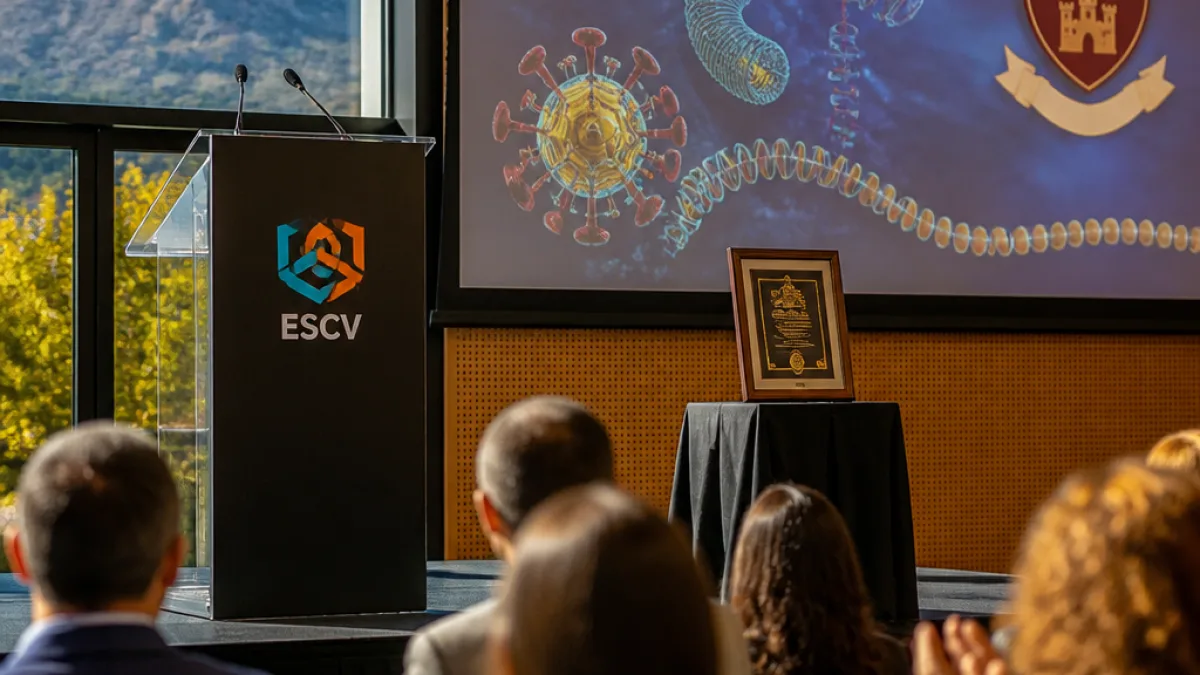
Professor Tulio de Oliveira, director of the Centre for Epidemic Response and Innovation (CERI) at Stellenbosch University, has been awarded the European Society for Clinical Virology’s (ESCV) Gardner Lectureship Award. The honour was presented at the ESCV’s 28th Annual Conference in Porto, Portugal, held from 16–19 September 2026.
The university said the award recognises scientists with an international reputation in virology and that recipients are invited to deliver the Gardner Lecture at the ESCV meeting on topics that matter to clinical virologists, including diagnostic applications and their practical impact.
The recognition acknowledges more than two decades of de Oliveira’s work at the intersection of viral genomics, bioinformatics, infectious diseases and public health. He founded and previously directed the KwaZulu‑Natal Research Innovation and Sequencing Platform (KRISP) at the University of KwaZulu‑Natal and now leads teams at CERI that have been prominent in rapid identification and characterisation of SARS‑CoV‑2 variants, including Beta and Omicron.
“Science at this scale is never an individual achievement,”
The university quoted de Oliveira saying the award reflected collaborative efforts and credited colleagues and collaborators in South Africa, across Africa and internationally.
Local impact and international standing
The award places a Stellenbosch researcher alongside an internationally recognised group of previous recipients, the university noted. Those names include leading virologists such as Prof Sarah Gilbert and Prof Florian Krammer. For Stellenbosch, the accolade strengthens the university’s standing in genomic surveillance and public‑health research—fields that have direct relevance to provincial and national epidemic preparedness.
- Scientific leadership: the award highlights local capacity in genomic sequencing and rapid pathogen characterisation.
- Public‑health relevance: genomic surveillance work informs government and health services about emerging threats.
- Collaboration: de Oliveira credited teams and international partners for their role in the work recognised.
Stellenbosch University said de Oliveira’s research teams at KRISP and CERI drew international attention during the Covid‑19 pandemic for their speed in identifying variants of concern. That work has fed into national and global surveillance networks and helped shape responses to rapidly evolving viral threats.
| Recognition | Reason |
|---|---|
| Gardner Lectureship Award (ESCV) | Contributions to virology, genomic surveillance and epidemic response |
| Portugal’s Honor of Merit Medal | Awarded by the Portuguese president (noted by Stellenbosch University) |
What this means for Stellenbosch and the Western Cape
For residents and civic stakeholders in Stellenbosch, the award affirms the town’s role as a node in a wider scientific and public‑health network. Academic expertise anchored at local institutions can influence provincial response planning, laboratory capacity and training of health professionals. It also feeds into the university’s ability to attract research funding and partnerships that may benefit students and staff.
While the university highlighted the international nature of the prize, the broader implication is practical: expertise developed and coordinated from Stellenbosch contributes to surveillance systems that inform policy and clinical practice in South Africa. That connection between local research and public‑health action remains a priority as national and provincial authorities work to strengthen epidemic preparedness.
The university’s announcement did not specify the subject of de Oliveira’s Gardner Lecture at the ESCV conference, but the award traditionally focuses on advances with diagnostic and clinical relevance. In the coming months the lecture and related outputs will be watched by colleagues and policymakers who rely on genomics to detect and characterise emerging infections.
De Oliveira’s recognition in Porto follows a broader pattern of South African researchers receiving international honours for work during and after the Covid‑19 pandemic. For Stellenbosch residents, the award is a reminder of the town’s research footprint beyond the Cape Winelands and the practical value of local scientific expertise in keeping communities safer.










