
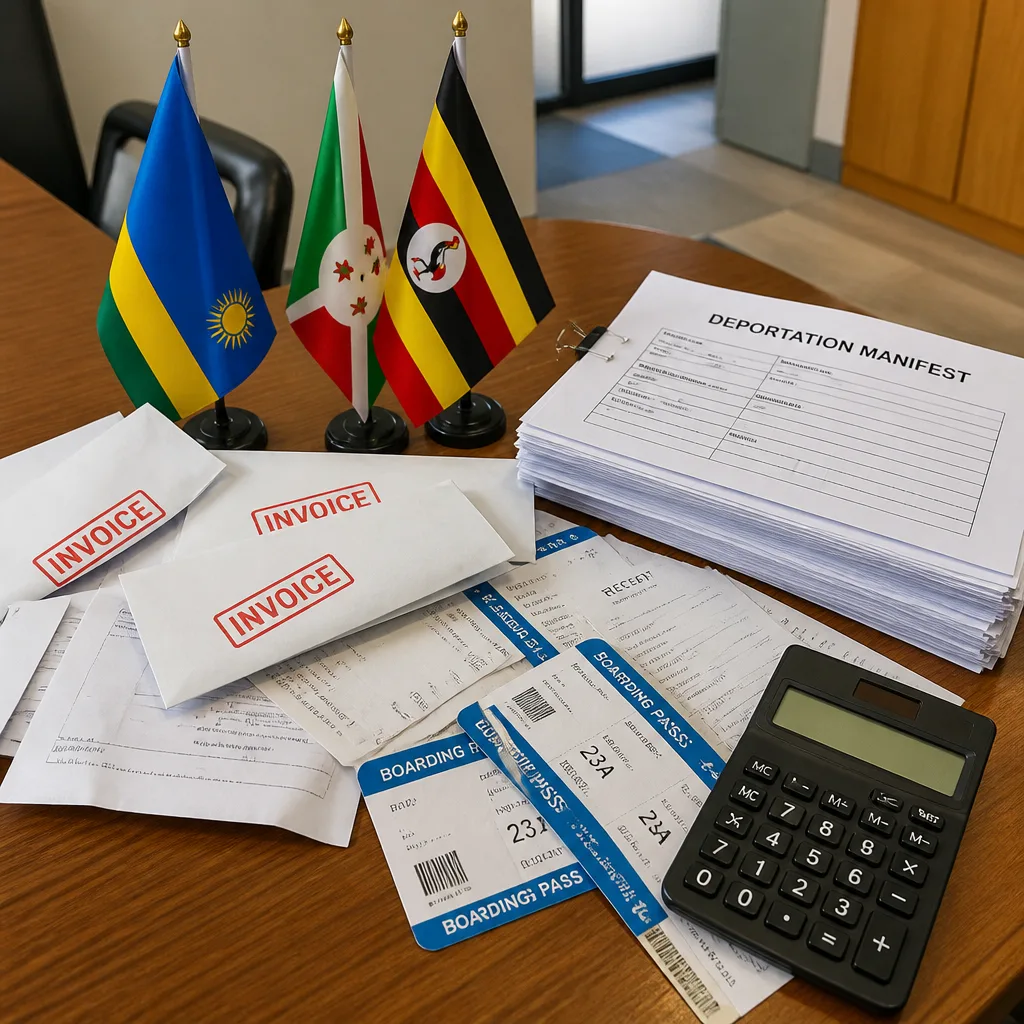
South Africa has asked fellow African states to pay the full cost of repatriating more than 80,000 undocumented citizens, the government said on Tuesday, handing bills to countries including Malawi, Ethiopia and Nigeria for airfare, ground transport and processing.
Government says costs were unavoidable
The Department of Home Affairs says it has spent in excess of US$18 million on deportations following a recent surge of anti‑immigration protests and violence. The department described the expense as unforeseen and unavoidable. Converting that figure at an indicative rate of about R18 to the US dollar would put the sum at roughly R324 million, though the government has reported the amount in US dollars.
“The costs were unforeseen and unavoidable,” said Home Affairs Minister Leon Schreiber, according to government statements.
The requested charges cover a package of operational items, the government said, including transportation, accommodation and overtime pay for immigration personnel involved in removals. Formal requests for payment have been dispatched to a number of states whose nationals are affected; the government specifically named Malawi, Ethiopia and Nigeria.
Scale of recent movements
Since March, the government says more than 178,000 African migrants have either been deported or fled the country amid a wave of formal and informal persecution. The upheaval followed attacks on foreign‑owned businesses, looting and incidents of violent assault against migrants, the government account states. Anti‑immigrant groups reportedly issued an informal deadline of 30 June for migrants to leave, a development that contributed to the disorder.
| Item | Figure |
|---|---|
| Undocumented migrants for which cost recovery was requested | 80,000 |
| People deported or who fled since March | 178,000+ |
| Declared deportation costs | US$18 million (roughly R324 million at ~R18/US$1) |
- The government has billed origin states for airfare, ground transport and processing costs.
- Requests for payment have been sent to Malawi, Ethiopia and Nigeria, among others.
- Civil society and rights groups have criticised the state response to anti‑immigrant violence.
Rights groups, policing and politics
Critics have pointed to what they say is a failure by the South African Police Service to adequately address a surge in hate crimes targeting migrants. They have also criticised what they describe as an overreliance on raids in predominantly migrant communities. Last month, President Cyril Ramaphosa appealed to other African states for co‑operation on migration issues during an address to the Pan‑African Parliament, while condemning anti‑immigrant violence. Rights organisations, however, have argued the government’s response has been inadequate and, at times, complicit by omission.
The request for other states to assume repatriation costs raises immediate diplomatic and operational questions. Governments approached must decide whether to accept liability for travel and processing charges for their nationals. Acceptance would have budgetary implications for those states and could shape bilateral relations with Pretoria.
The Home Affairs Ministry did not provide a detailed timetable for recovery of the billed amounts or a breakdown of costs per country in its public statement. The implementation of mass removals, the conditions under which returns are carried out and protections for migrants remain focal points for human rights organisations monitoring the situation.
This is a developing story. Further details, including responses from the governments approached and any formal cost breakdown from Home Affairs, were not available at the time of publication.














