Ecoprogetti has completed a technical overhaul of the Ener‑G‑Africa (EGA) photovoltaic (PV) manufacturing plant in South Africa, turning a stalled, multi‑vendor production line into a functioning module factory ready for growth. The intervention, described by the company as a
"Project Rescue", resolved integration faults and performance shortfalls that had prevented the plant from meeting its intended output.
What was done
The team undertook a detailed assessment to identify critical bottlenecks and then implemented targeted upgrades designed to improve stability, throughput and quality control. Key interventions included:
- Replacement and addition of testing and interconnection equipment to secure product quality and assembly reliability.
- Consolidation of a previously heterogeneous line of machines from several vendors into a single, accountable turnkey system.
- On‑site engineering services during installation and restart to support continuous performance tuning.
- Support for compliance with international standards through IEC certification assistance and in‑house certification of PV "golden modules".
New equipment and certification
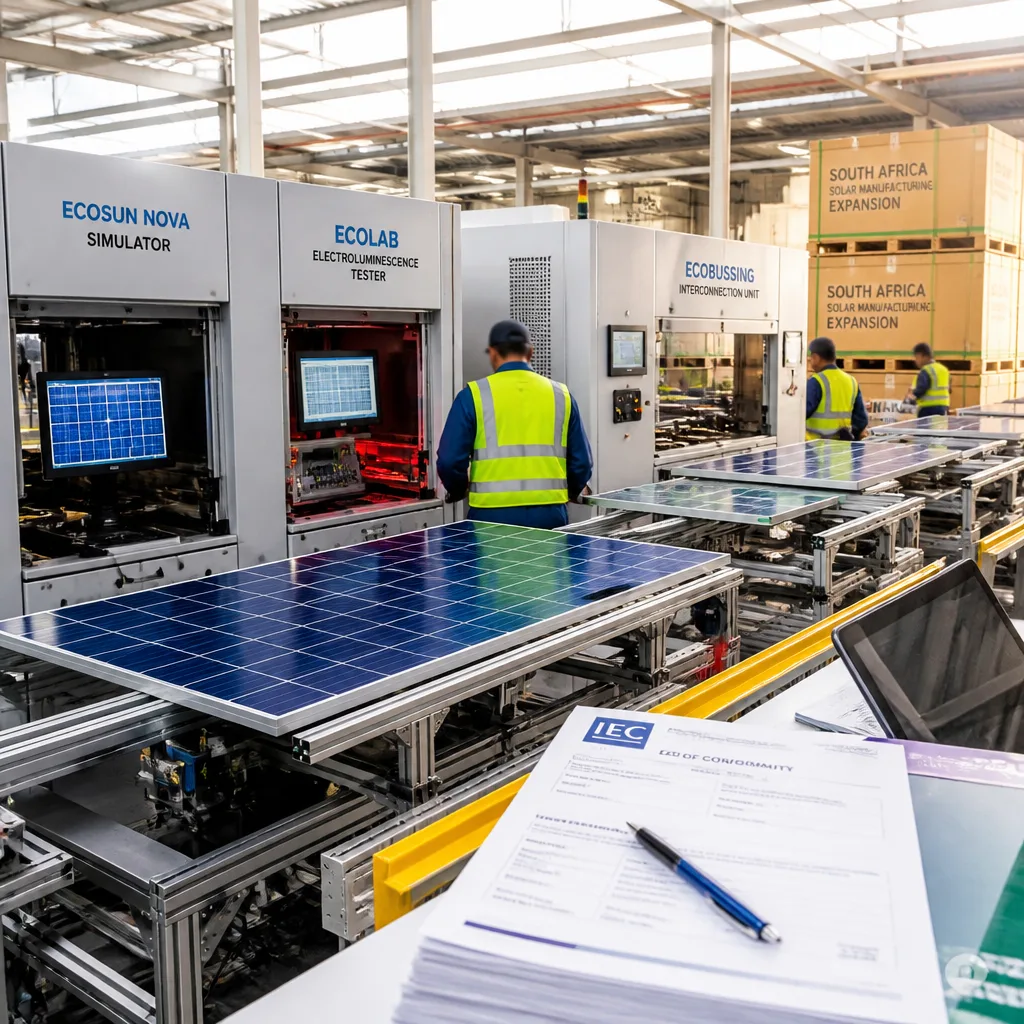
The factory now has new testing apparatus and interconnection technology, including ECOSUN NOVA solar simulators and ECOLAB electroluminescence testers to strengthen quality control. An automatic interconnection machine, ECOBUSSING, was installed to improve module assembly consistency.
| Intervention | Purpose |
|---|---|
| ECOSUN NOVA simulators | Verify electrical performance under standard test conditions |
| ECOLAB electroluminescence testers | Detect microcracks and defects not visible to the naked eye |
| ECOBUSSING interconnection machine | Automate and stabilise cell-to-cell connections in module assembly |
| IEC certification support | Assist factory inspection and certify reference modules |
Why it matters
The factory had been unable to pass its Site Acceptance Test after an initial installation by another supplier. Fragmented equipment without a single party responsible for overall performance produced bottlenecks and low output. Ecoprogetti’s work focused on recovering the existing investment rather than replacing it wholesale, reducing the need for significant new capital while restoring production capability.
With the line recommissioned and now operational, the plant is placed to expand capacity. That outcome supports broader efforts to build local PV manufacturing capability, which is seen as an element of South Africa’s energy transition and industrialisation plans.
Immediate outcomes and next steps
The firm reported that continuous on‑site support during the restart was part of the relaunch, and that the line now meets stable performance targets. Ecoprogetti also assisted with factory inspection and provided a set of certified reference modules to facilitate full IEC compliance.
Details on the factory’s employment numbers, production volumes or timelines for ramping to full capacity were not provided in the material released by the company. The intervention was framed as a rescue of an underperforming installation, with the objective of derisking the original investment and positioning the plant for future growth.
This development is likely to attract attention from industry stakeholders tracking localisation of renewable energy supply chains. The recommissioned plant may also play a role in supporting domestic solar projects and reducing reliance on imported modules — subject to future output, pricing and market demand.
Key points to follow:
- Whether the factory achieves sustained production targets and at what capacity.
- Evidence of job creation or changes to the plant’s workforce as output expands.
- Progress on full IEC certification and any commercial agreements for module offtake.