President Cyril Ramaphosa has urged leaders of the Southern African Development Community (SADC) to confront the drivers of continental migration, calling for political stability, stronger local economies and inclusive institutions to reduce forced movement.
Ramaphosa delivered the remarks while presenting SADC’s public lecture on the organisation’s proposed Vision 2050 at the University of KwaZulu‑Natal on Friday, ahead of the 46th SADC summit in Durban this weekend. The summit’s main meeting is scheduled for Monday.
Migration linked to governance and economic opportunity
South Africa currently holds the SADC chairship for the year. In his address the President framed migration as a regional challenge rooted in conflict, instability and governance failure, rather than solely a national border or law‑enforcement issue.
"We need to work together to address conflict, instability, governance failure, poverty and social Discord. And we need to create equal economic opportunity and build inclusive institutions of governance. We seek a region where people move out of choice, not out of desperation."
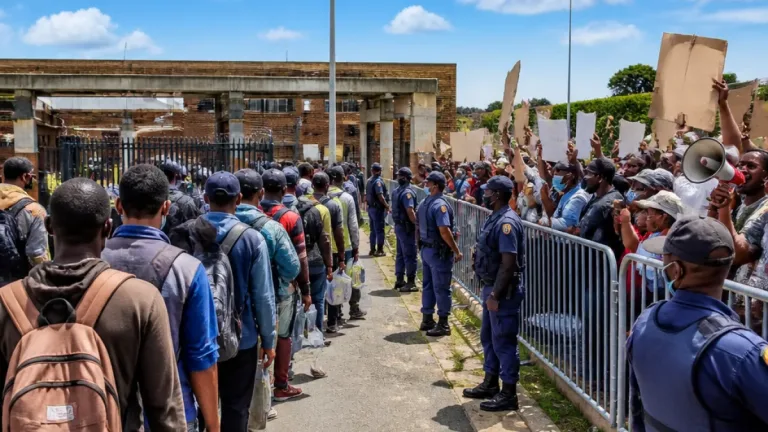
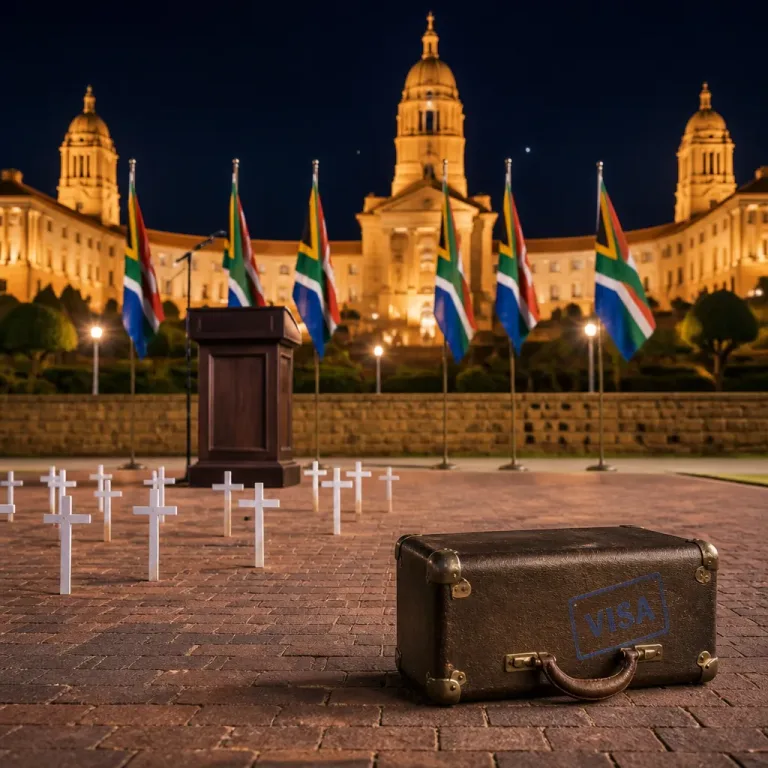
He told counterparts that Pretoria was concerned about reports of mistreatment of migrants inside South Africa. Ramaphosa said South Africans felt "deeply concerned and ashamed" that people from other nations had been treated badly and, in some cases, forced to leave the country under threat of violence. The President noted that some leaders whose citizens had been affected were present at the summit.
Vision 2050: industrialisation and inclusivity
During the lecture Ramaphosa presented Vision 2050, described as a plan to position Southern Africa as a "peaceful and inclusive industrial region." Details of the vision were outlined to offer a regional framework for long‑term development, integration and stability.
Key elements Ramaphosa highlighted included:
- stabilising governance across member states;
- improving local markets to create livelihoods and reduce economic push factors for migration;
- building inclusive institutions to widen economic opportunity.
He called on SADC partners to coordinate responses to conflict and instability that prompt people to flee their homes and seek refuge in neighbouring countries, including South Africa.
Implications for South Africa
As SADC chair, Pretoria faces pressure to lead both the summit agenda and practical responses to cross‑border challenges. Ramaphosa’s speech signals an emphasis on regional solutions that address root causes, rather than an exclusive focus on border control.
His appeal places the spotlight on several policy areas where South Africa and its neighbours will need to cooperate: governance reforms, regional economic integration, and measures to protect migrants and reduce xenophobic violence. The President’s framing also raises expectations that Vision 2050 will offer actionable proposals to stimulate industrial development and inclusive growth across the region.
Delegates and heads of state arriving in Durban this weekend will carry the immediate task of discussing the summit agenda on Monday. It remains to be seen how Vision 2050 will be received, whether it will be adopted in whole or in part, and what concrete steps member states will pledge to address migration and governance shortfalls.
Context and next steps:
| Item | Detail |
|---|---|
| SADC meeting | 46th summit in Durban; main meeting on Monday |
| Venue for lecture | University of KwaZulu‑Natal |
| South Africa's role | Current SADC chair |
| Plan presented | Vision 2050 — regional industrial and inclusion strategy |
More details on the Vision 2050 proposals and any communiqués issued by SADC leaders will become available after the summit meetings. For now, Ramaphosa’s lecture sets a clear priority: tackle the structural causes of migration through regional cooperation, not only national enforcement.