
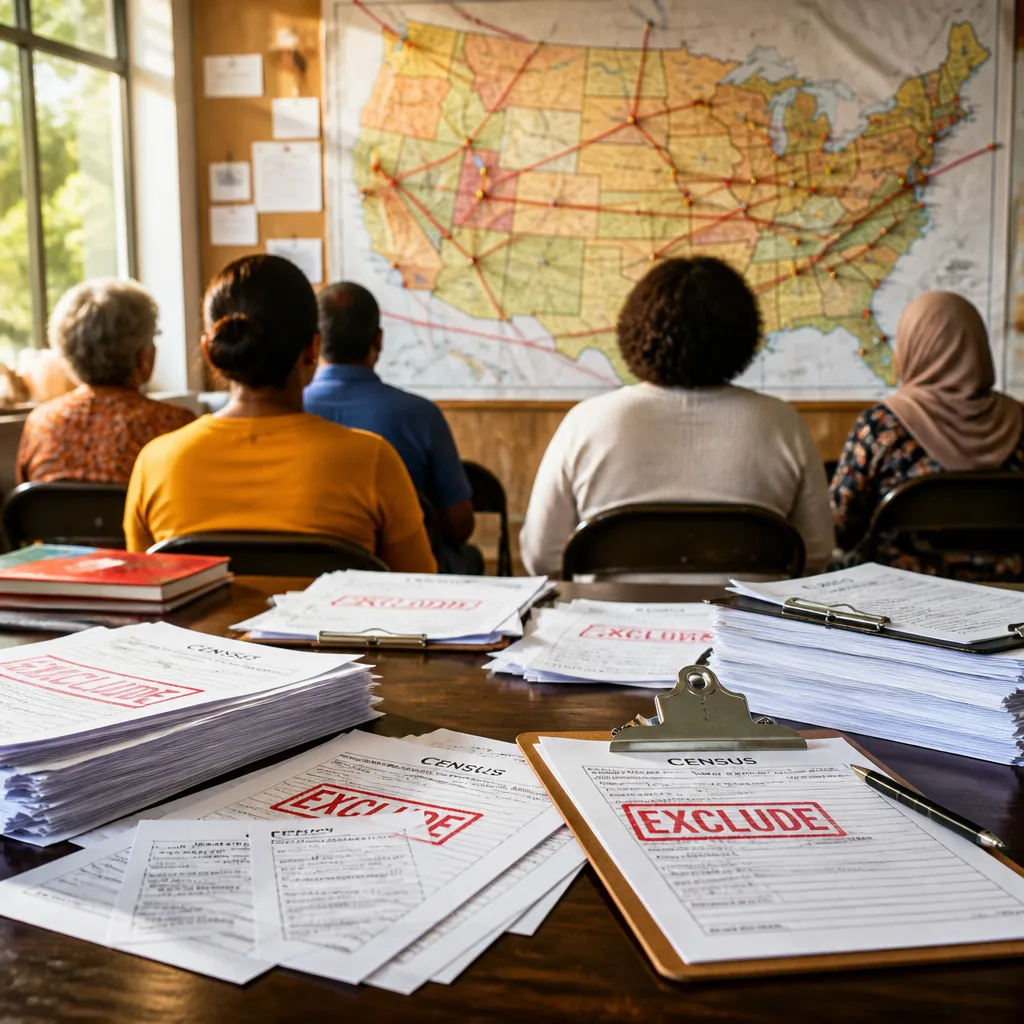
Reports this month that the Trump administration is preparing a plan to order the US Census Bureau to exclude undocumented people from the 2030 decennial census have once again focused attention on how seemingly technical census decisions can alter political representation and public spending.
Why the census matters
The census is not merely a statistical exercise. As noted in recent commentary and in a new book by Cornell communication scholar danah boyd, the decennial count determines the apportionment of congressional seats, drives redistricting and guides the distribution of government funding.
Decisions about who is counted and where they are recorded are therefore highly consequential. Officials routinely face choices about how to count college students, people in carceral settings, and other populations; those operational judgements feed directly into political maps and budgets. The reported push to exclude people without legal status echoes earlier efforts by the Trump administration before 2020 to change counting rules in ways critics said would shift seats away from states with larger immigrant populations.
Boyd’s book, Data Are Made, Not Found, is presented in the reporting as an ethnographic account of the internal work of the Census Bureau in the run‑up to the 2020 count. She interviewed hundreds of civil servants about how budget constraints and the COVID‑19 pandemic complicated the bureau’s usual methods, reducing face‑to‑face interviews and limiting collaboration with community organisations that facilitate participation.
“What public officials decide to measure, and how, affects political representation,” the reporting summarises from the book.
Political effects and practical choices
The practical elements of counting—where someone is recorded, whether a question about citizenship is asked, and how outreach is conducted—have political consequences. Including a citizenship question, for example, can discourage participation among immigrant communities; likewise, counting people at their dormitory or prison rather than at a prior address can change the partisan balance of particular districts.
- Apportionment: Census totals are used to allocate seats in the US House of Representatives.
- Redistricting: State legislatures and commissions redraw district boundaries using census data.
- Funding: Federal programmes distribute money according to population counts.
The story in the reporting is twofold: a present administration effort to alter future counting rules, and a retrospective look at the practical difficulties that plagued the 2020 census. Boyd’s research, conducted around the 2020 cycle, highlights how a global pandemic and reduced budgets impeded fieldwork and local engagement—factors that can depress participation and skew results.
Who benefits, who pays
Changing who is included in the count is inherently redistributive. The reporting frames the proposed exclusion as likely to advantage jurisdictions and political actors that would gain seats or funding if populations in other states are diminished on paper. Conversely, communities with large immigrant populations stand to lose both representation and dollars if they are undercounted.
Decisions over questions and counting procedures are therefore arenas of political contestation, not neutral technicalities. The reporting emphasises that counts are produced through administrative choices—about questionnaires, field operations and outreach—not simply uncovered as natural facts.
Boyd has invited readers to ask questions about the inner workings of the census and its political effects; the reporting says she will respond to many queries as part of a public series. The conversation underlines a broader democratic question: how do democracies decide who is entitled to be seen in the numbers that allocate power and resources?
| Function | Effect of undercount |
|---|---|
| Apportionment of seats | Possible loss of congressional representation for states with undercounted populations |
| Redistricting | Altered district boundaries and partisan balance |
| Federal funding | Reduced allocations for services tied to population |
The debate over the 2030 census proposal is likely to centre on both legal and practical questions: whether the administration has authority to direct such a change, and how such a policy would be implemented without eroding trust and participation in the count. The reporting situates this latest exercise in a longer history of contested census politics and underlines how the production of data is itself a political act with material consequences.












