
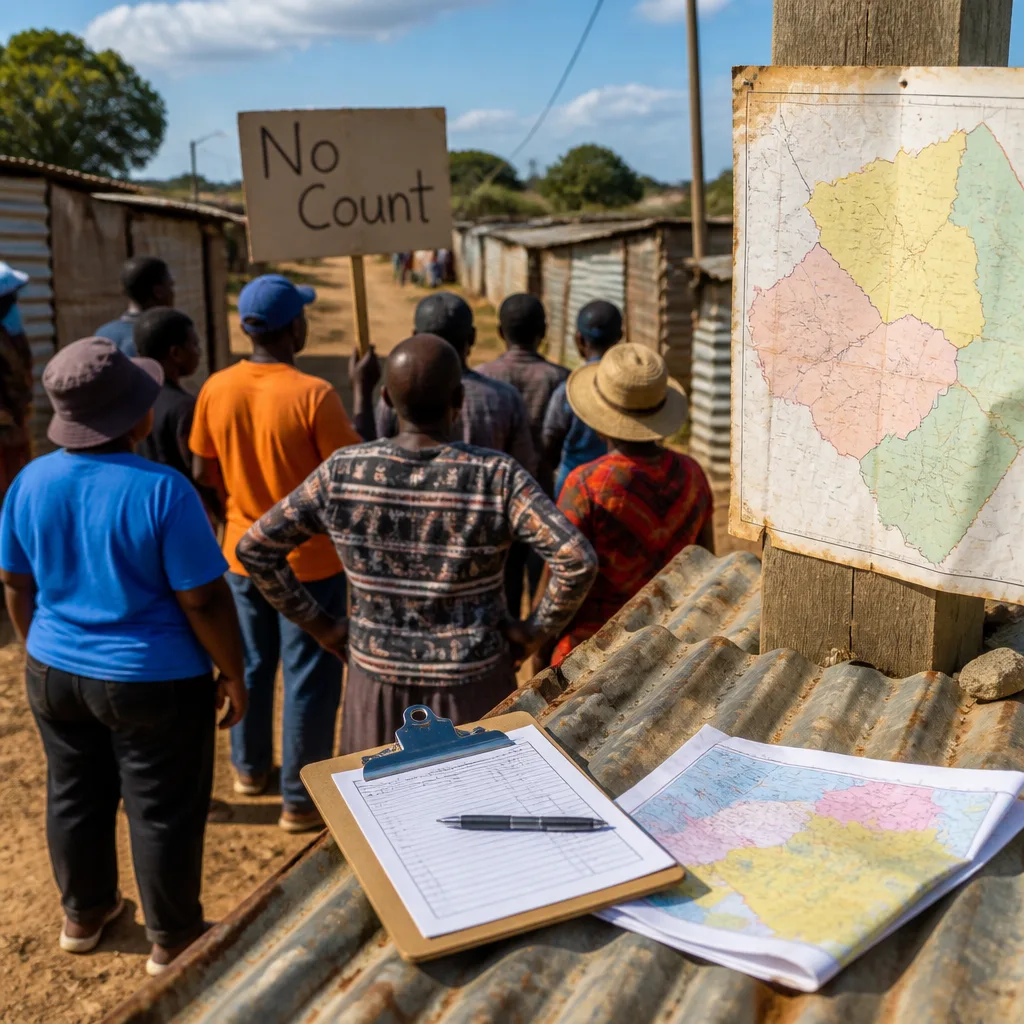
Silvertown’s stand against the 2011 census revealed how census methods can fail communities and distort planning. The informal settlement in KwaZakhele, Gqeberha, refused to be counted during Census 2011, prompting a confrontation that exposed deeper problems at Statistics South Africa (Stats SA) and in national demographic mapping.
How the confrontation unfolded
Community members in Silvertown would not cooperate with enumerators unless their ward councillor was brought back to face residents. The refusal was not a simple act of non‑compliance; it was a demand for accountability and recognition from local government. According to the account, an enumerator who had earlier visited Nelson Mandela in Qunu was later recognised by residents and subsequently recruited by Stats SA for further training; that person now works on contract for the agency.
The episode demonstrated two linked realities. First, communities do not treat counting as a neutral technical exercise. For many, the census is entwined with demands for visibility, services and political answerability. Second, when official processes ignore local power dynamics and histories, they risk collapse or producing data that do not reflect lived conditions.
Methodological consequences and legacy
Analysis of the census machinery dating from 1996 through 2001, as reported, shows a worrying pattern: spatial outputs used for planning became near‑identical reproductions across successive counts. In plain terms, once an area was mapped in a certain way, that mapping tended to be reproduced rather than updated to reflect real change. This created what the author describes as a “data ghost” — official maps and indicators that suggested stability where communities were changing rapidly.
The repetition in spatial patterns affected key quality‑of‑life indicators cited in the retrospective analysis: housing quality, water access, sanitation, education and the multidimensional poverty index. When these indicators are derived from outdated or misaligned boundaries, national and provincial planning, budgeting and service delivery become compromised.
- Visibility: Refusal to be counted signalled a breakdown in trust between residents and authorities.
- Data integrity: Recycled spatial frameworks can institutionalise inaccuracies across census cycles.
- Accountability: Residents demanded that electoral and municipal representatives be made present to answer for shortcomings.
These outcomes are not merely academic. Census-derived statistics are used by government, municipalities and development agencies to allocate funding, plan infrastructure and target social programmes. If the underlying geography or enumeration fails to capture rapid growth, informal housing or shifting needs, interventions will be misdirected.
Community agency and census practice
Silvertown’s response also illustrates how communities can influence national exercises when they claim a stake in the process. The account notes that locals saw their refusal as a way to hold power to account. That led Stats SA to recruit and train a local enumerator — a practical response that also points to the benefits of hiring from within communities to build trust and improve coverage.
There are broader lessons for future counts. Census authorities must treat enumeration as a social and political task as well as a technical one. Mapping exercises should be dynamic, repeatedly verified on the ground, and responsive to the realities of informal settlements. Where communities demand accountability from elected representatives, census teams and municipalities should coordinate to ensure both accurate counting and civic engagement.
While the narrative focuses on one settlement, the implications scale up: a single community’s refusal can highlight systemic weaknesses that, if unaddressed, will affect the quality of national statistics and the fairness of resource distribution.
| Issue | Consequence |
|---|---|
| Static spatial mapping | Repeated errors in planning frameworks |
| Community mistrust | Refusal to participate, lower coverage |
| Local recruitment | Improved access and accountability |
The Silvertown episode remains a cautionary tale for Stats SA, municipalities and national planners. If censuses are to produce reliable information for a changing country, authorities must integrate local insight, update spatial frameworks more frequently, and treat enumeration as part of a broader civic engagement process rather than a one‑off technical exercise.














