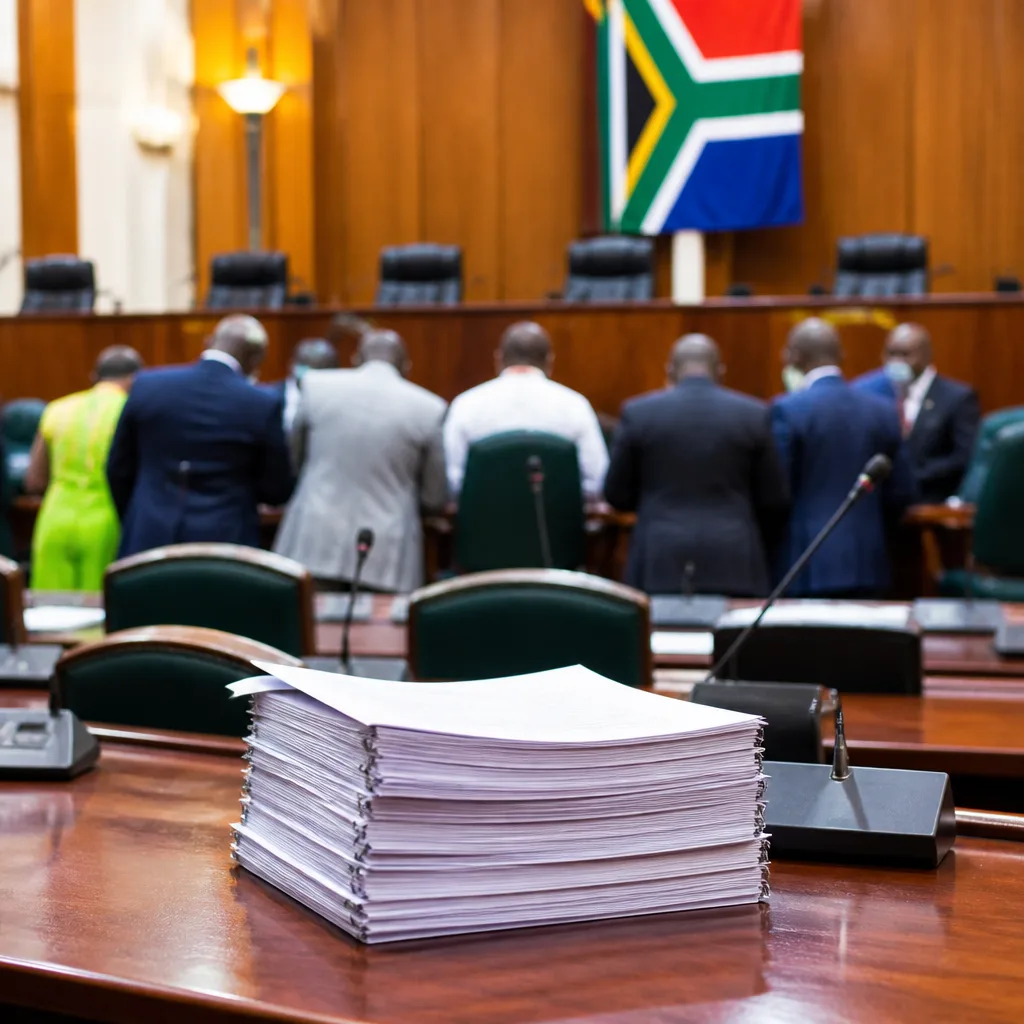
Parliament has been presented with the Local Government: Municipal Structures Amendment Bill — commonly called the Coalitions Bill — in response to the steady rise of coalition administrations across South Africa, and to the political instability and service disruptions such arrangements can bring.
Why the Bill has arrived
The legislation aims to create a statutory framework for how political parties form and manage coalitions in municipalities. Proponents argue that, without clearer rules, councils where no party holds a majority will remain vulnerable to frequent leadership changes and interruptions to municipal operations.
The move follows a long-term trend: the number of hung municipal councils after local elections rose from 29 in 2000 to more than 80 in 2021. Political bargaining at local level has intensified, and the 2024 national and provincial election outcomes showed that coalition government is no longer confined to towns and metros but has become an established feature of South African politics.
| Year | Hung councils |
|---|---|
| 2000 | 29 |
| 2021 | More than 80 |
Lessons from Denmark
Members of the parliamentary portfolio committee responsible for the Bill recently returned from a study tour to Denmark. Committee briefings highlighted Danish practices as a reference point, not a blueprint: the Danish experience emphasises institutions and political norms that support coalition stability rather than relying on enforceable legal sanctions alone.
"Since the agreements are not legally enforceable, they are accepted as being 'as good as a handshake.'"
That balance — rules backed by a culture of compromise — is central to the committee's deliberations. Danish coalitions typically use written agreements that set out shared policy goals and mutual commitments. In Denmark these documents function alongside political norms and public accountability, rather than as contracts enforceable in court.
What the Bill seeks to do
The proposed changes are pitched at reducing governance interruptions linked to coalition fragility. Among the policy aims under discussion are mechanisms to guide the formation of coalitions, systems to manage coalition agreements, and steps to limit repeated votes of no confidence that have unseated mayors and executives repeatedly during single municipal terms.
Supporters say a legislative framework could make coalitions more predictable, improve continuity in municipal service delivery and reduce the administrative burden caused by frequent leadership changes. Skeptics warn that codifying political arrangements risks replacing flexible political bargaining with rigid regulation that may not suit every municipal context.
- Stability: The Bill is intended to reduce frequent leadership changes that disrupt municipal services.
- Transparency: It seeks to make coalition formation and management more open and rule-based.
- Culture: Law alone may not secure cooperation — political goodwill and accountability remain crucial.
The portfolio committee now moves the Bill into the parliamentary processing stage. Its members will need to balance lessons drawn from the Danish model with South Africa's diverse political landscape, where municipalities vary in size, capacity and local party dynamics.
As coalition politics consolidates into an ordinary feature of governance, the central question for legislators is whether statutory rules can foster the trust and restraint that sustain coalitions, or whether the law will only channel conflicts into new legal disputes. Whichever path Parliament adopts, the outcome will determine who benefits from more stable local government—and who ultimately pays when services fail.