
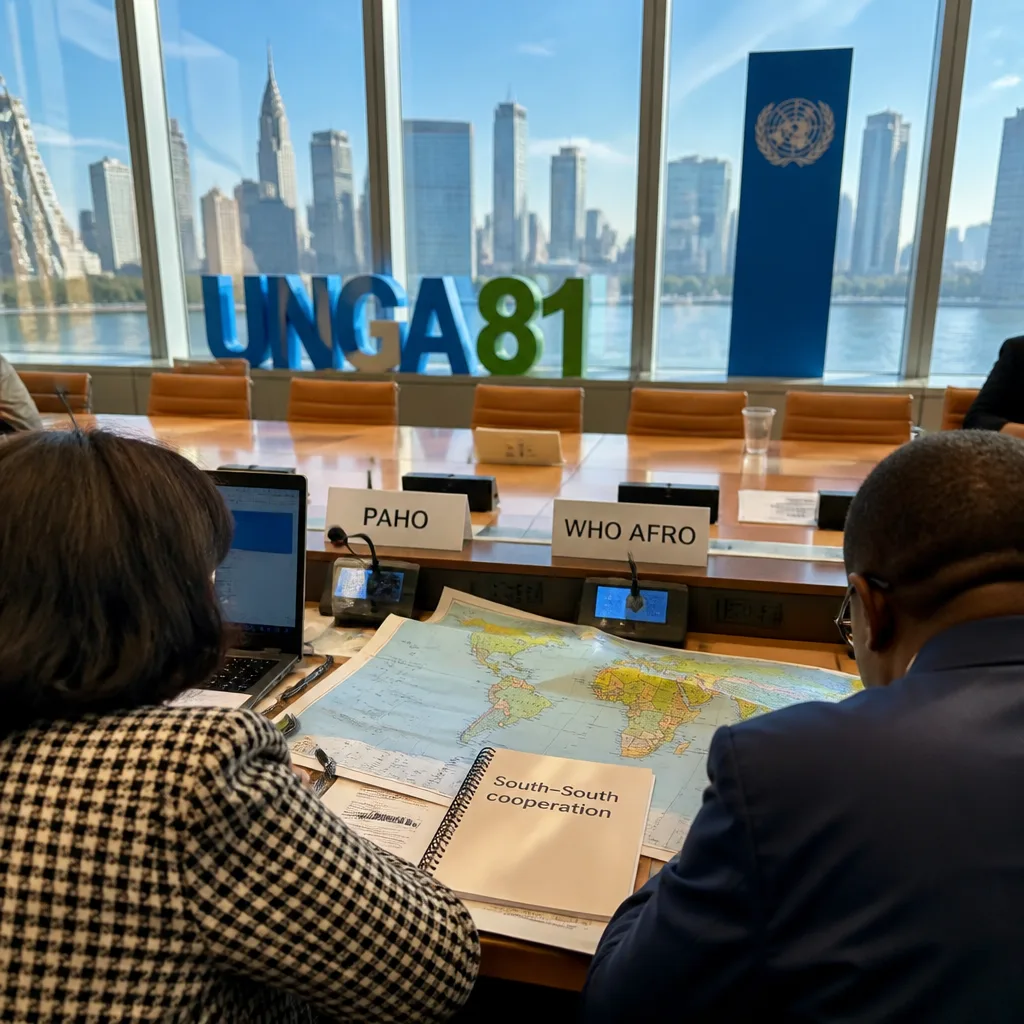
The director of the Pan American Health Organization (PAHO) and the World Health Organization's African Region (WHO AFRO) have pledged to explore a more structured agenda for South–South cooperation after meeting on the sidelines of the United Nations General Assembly (UNGA81) in New York, according to a LinkedIn post by Jarbas Barbosa, PAHO director.
Focus areas identified for joint work
Barbosa outlined several areas where the two regions could deepen collaboration, emphasising that shared priorities present opportunities for mutual learning and support. The areas listed include:
- Primary health care
- Health emergency preparedness and response
- Digital health and transformation
- Climate and health
- Health workforce development and retention
- Local production
- Sustainable health financing
“Africa and the Americas share many public health priorities – and there is significant potential for our regions to learn from, support, and strengthen one another,” Jarbas Barbosa wrote on LinkedIn, reporting on his meeting with Prof. Mohamed Janabi, WHO AFRO’s regional director.
Barbosa said health emergencies already provide a strong basis for collaborative work and that the meeting sought to build on those experiences to enhance exchanges of knowledge, innovations and practical solutions. He also noted the importance of coordination with Africa CDC while recognising the distinct mandates of each institution.
What this could mean for South Africa
For South Africa, deeper ties between PAHO and WHO AFRO may bring practical benefits across multiple fronts. Strengthened primary health care and workforce initiatives could contribute to national efforts to improve clinic access and retention of health professionals. Joint work on emergency preparedness could help refine national responses to disease outbreaks and climate-related health threats.
Local production and sustainable financing were highlighted as priorities; both are relevant to ongoing debates in South Africa about pharmaceutical manufacturing capacity and funding of health services. Digital health cooperation could accelerate adoption of interoperable systems and telehealth models that the country and the broader region have been piloting.
How the partnership might be structured
Barbosa described the aim as exploring “a more structured South–South cooperation agenda” rather than ad hoc exchanges. While details were not provided in the LinkedIn post, a structured approach could include formal agreements, joint technical working groups, capacity‑building programmes, and coordinated research or pilot projects between ministries of health and regional bodies.
| Area | Potential practical focus |
|---|---|
| Primary health care | Clinic models, community health worker programmes |
| Health emergencies | Outbreak response coordination, stockpile management |
| Digital health | Interoperability, telemedicine pilots |
| Local production | Pharmaceutical manufacturing, supply-chain resilience |
Barbosa called for solutions that are locally driven, sustainable and responsive to population needs, signalling a preference for collaboration that respects national contexts rather than one-size-fits-all approaches.
Next steps and caveats
The LinkedIn post reported the meeting and its intent to explore cooperation but did not announce any signed agreements or timelines. Any concrete projects will require further technical discussions and coordination across multiple institutions, including national ministries of health, WHO AFRO, PAHO and Africa CDC.
South African health authorities may choose to engage with or observe these developments closely, particularly where they align with existing national priorities such as improving primary health care, bolstering emergency preparedness and growing local pharmaceutical manufacturing capacity.
As the process unfolds, individuals should continue to follow guidance from their local clinics and health services. For personal health concerns, consult a doctor or public clinic rather than self-diagnosing.











