Only four in 10 health facilities globally met basic sanitation standards last year, according to a joint report by the World Health Organization (WHO) and UNICEF, which warns that inadequate toilets, cleaning and waste management undermine infection prevention and patient dignity.
Global shortfalls in toilets and cleaning
The report, which provides the first global estimates of basic sanitation services in health care settings, found that just 40% of facilities had toilets that adequately met the needs of patients and staff. The definition of basic sanitation used by the agencies includes usable facilities, at least one toilet dedicated for staff, at least one sex‑separated toilet with menstrual hygiene facilities, and at least one toilet accessible to people with limited mobility.
Alarmingly, more than one in 10 health facilities — about 11% worldwide — had no sanitation services at all, leaving roughly 936 million people served by such facilities without access to usable toilets. The report drew on data from 70 countries and highlighted stark regional disparities: only 23% of facilities in sub‑Saharan Africa provided basic sanitation, compared with 55% in central and southern Asia.
Related gaps: water, hygiene, cleaning and waste
Sanitation was one of several essential services examined. The agencies reported the following global estimates for 2025:
- 85% of facilities had basic water services
- 72% had basic hygiene services
- 71% had basic health‑care waste management services
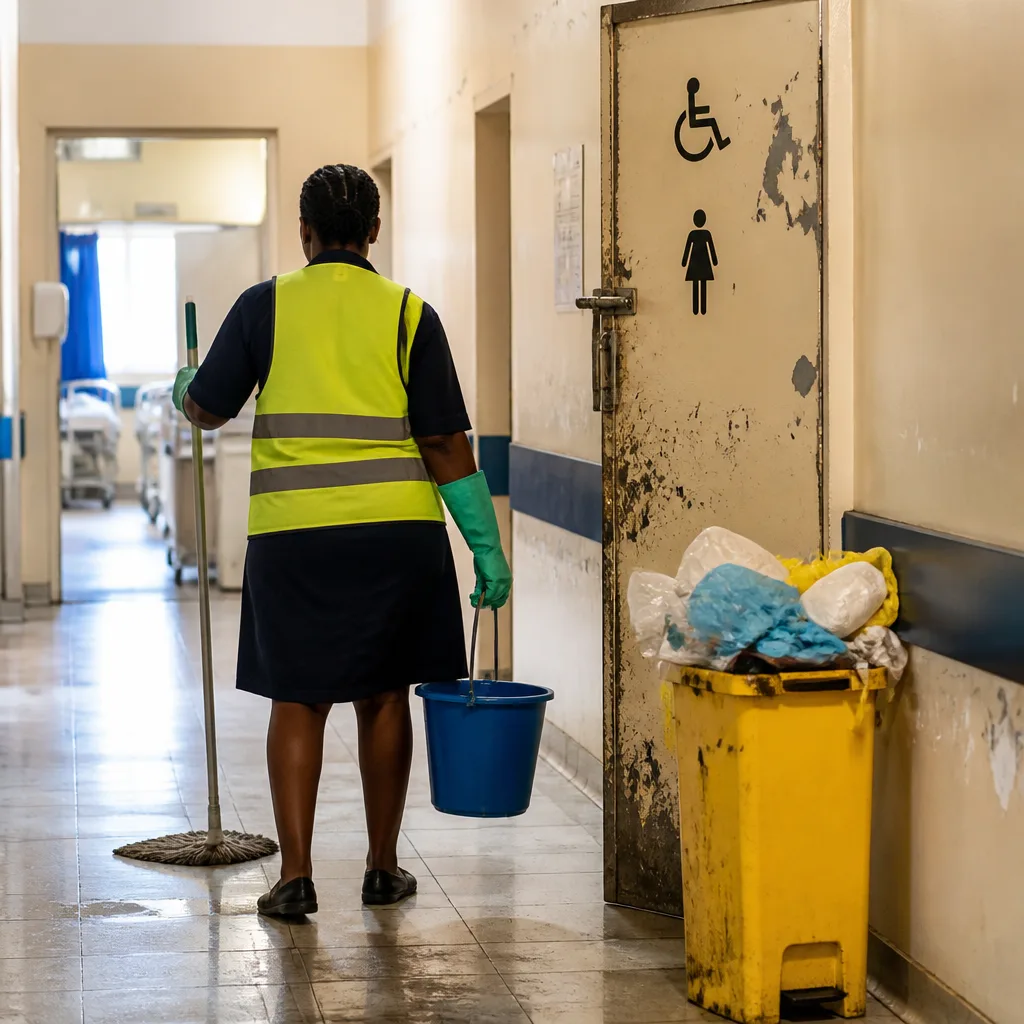
- 59% met basic environmental cleaning standards
The environmental cleaning standard requires both documented cleaning protocols and trained cleaning staff. The report noted that 18% of facilities — serving around 1.5 billion people — met neither requirement for environmental cleaning. In the world’s least‑developed countries, only 24% of facilities met the environmental cleaning standard.
| Service | Global coverage (2025) |
|---|---|
| Basic sanitation | 40% |
| No sanitation service | 11% |
| Basic water | 85% |
| Basic hygiene | 72% |
| Health‑care waste management | 71% |
| Environmental cleaning | 59% |
What this means for infection control and dignity
Access to functional toilets, reliable water, hand hygiene facilities and properly managed waste and cleaning are central to preventing health‑care associated infections and protecting both patients and staff. The report’s findings underline how gaps in these basic services can erode the quality of care, impede safe maternity services, and affect people with limited mobility or menstrual hygiene needs.
While the data are global, the agencies emphasise that poorer countries and marginalised communities bear the heaviest burden. The report’s regional breakdown, including the low proportion of facilities meeting standards in sub‑Saharan Africa and in the world’s least‑developed countries, points to persistent inequities in health‑system infrastructure.
Implications for policy and practice
Health ministries, hospital managers and development partners will need to prioritise investment in basic services as part of infection prevention and control efforts. Key actions implied by the report include:
- Routine assessment and monitoring of sanitation, water, hygiene, cleaning and waste management in facilities;
- Budgeting for infrastructure, trained cleaning staff and supplies;
- Ensuring accessible and sex‑separated toilets, with facilities for menstrual hygiene and people with limited mobility;
- Integrating basic services targets into national health plans and facility accreditation standards.
WHO and UNICEF prepared the estimates to inform global and national efforts to close these gaps. The agencies have previously linked improvements in water, sanitation and hygiene in health settings to reductions in maternal and neonatal mortality and to safer care overall.
For patients and caregivers, the practical message is clear: when accessing care, the presence of clean toilets, handwashing facilities and visible cleaning protocols are not amenities — they are essential elements of safe health care. If you are concerned about services at a local clinic or hospital, raise the issue with facility managers or your provincial health department, and seek care at alternative facilities if safety is compromised. Always consult a health professional rather than self‑diagnosing or delaying care.
Public health responses will require sustained funding and accountability to translate these global estimates into improvements at facility level, particularly in the most underserved countries and communities.