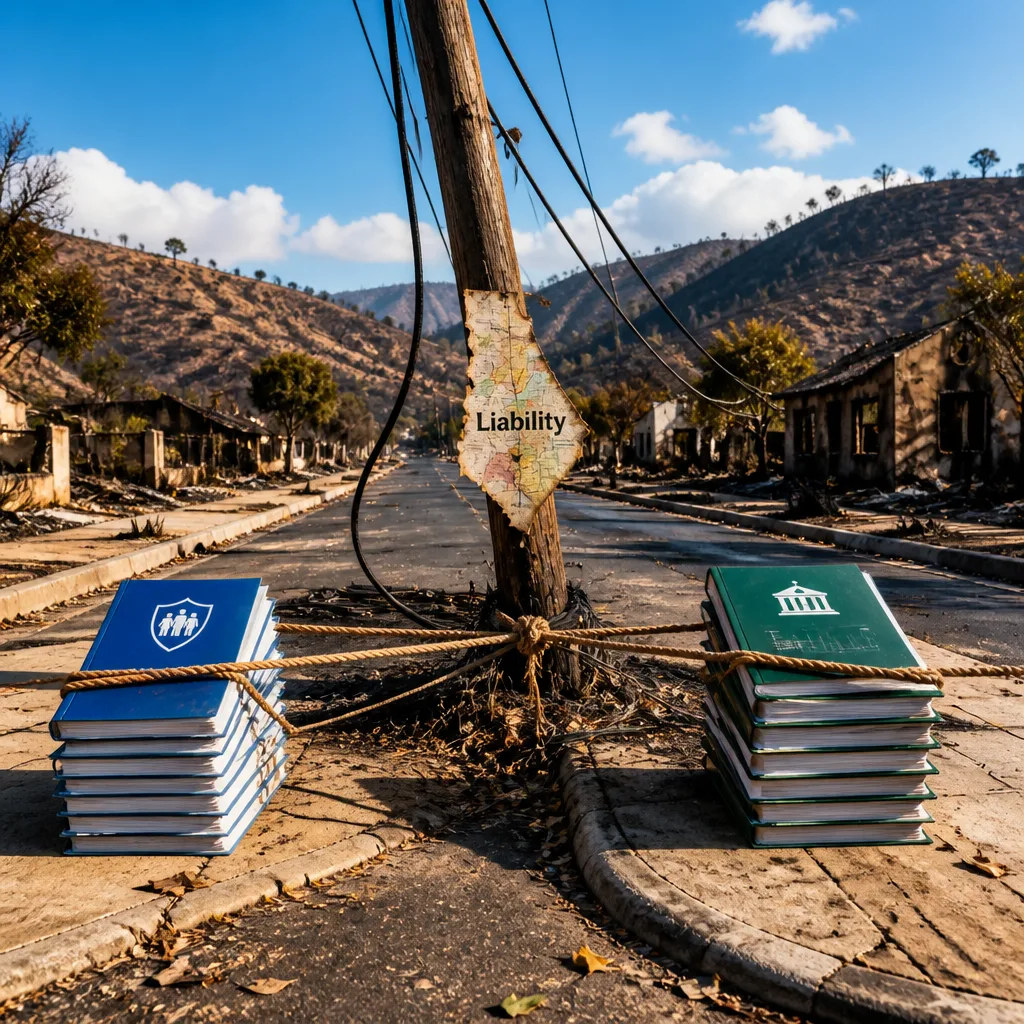
California’s proposal to alter who pays for wildfire losses caused by utility equipment has produced an unexpected political alignment: long‑standing adversaries are now cooperating to try to stop the measure.
Unlikely coalition forms
In the final weeks of the legislative session, the Newsom administration’s plan to shield utilities from some costs of wildfires sparked opposition not only from traditional consumer groups but also from major insurance trade associations, local governments and trial lawyers, according to reporting by Politico.
The advocacy group Consumer Watchdog — led by Jamie Court — and representatives of the property insurance industry have historically been at odds over regulation and rate cases. Yet both sides have joined a joint letter urging lawmakers to reject the proposal, arguing it would simply transfer costs from utilities to insurance companies and homeowners.
“It makes sense why we would see things the same,” the insurance trade official said, and Court called the alignment “ironic.” Rex Frazier, president of the Personal Insurance Federation of California, described the convergence as “novel.”
Why the controversy matters
The crux of the dispute is legal and financial: whether utilities should bear direct liability for damages when fires are started by utility equipment, or whether some of those costs should be allocated elsewhere. Opponents say limiting utility liability would shift financial responsibility to insurers and ultimately to homeowners through higher premiums or reduced coverage.
Supporters of the administration’s approach argue the change is intended to stabilise utility finances and, implicitly, the broader energy system. But the Politico reporting highlights how the proposal has reopened old battles over who pays for catastrophic climate events and the political texture of wildfire policymaking.
Who is in the fight
- Consumer Watchdog (Jamie Court): long‑time consumer advocate opposing the proposal.
- Property insurance trade groups: joined Consumer Watchdog in urging rejection.
- Local governments and trial lawyers: also signed the joint letter opposing the plan.
- Newsom administration: proposed limiting certain utility liabilities related to wildfire costs.
Politico noted decades of antagonism between Court’s group and the insurance industry, including near confrontations over ballot initiatives and a notorious incident in which Court recorded an insurance veteran on a Southwest flight to expose what he saw as an insurance bailout attempt. Yet that history did not prevent the two sides joining forces over this policy.
Practical consequences and political dynamics
The alignment matters for both policy outcomes and politics. If lawmakers accept the administration’s proposal, utilities could see reduced exposure to wildfire liability, potentially lowering pressure on their balance sheets. But opponents warn of secondary effects:
- Insurance companies could face larger payouts, increasing pressure on premiums.
- Homeowners might ultimately pay more through higher insurance costs or reduced policy availability.
- Local governments and taxpayers could face greater fiscal strain if private insurers retreat or costs are shifted to public programmes.
Politically, the coalition against the plan could complicate the bill’s path in the legislature during the session’s closing days, as lawmakers weigh constituent concerns about affordability and coverage against stability for utilities and the power system.
| Stakeholder | Position |
|---|---|
| Newsom administration | Proposes limiting some utility liability for wildfire costs |
| Consumer Watchdog | Opposes; says costs will shift to homeowners |
| Insurance trade groups | Oppose; warn of higher premiums / market strain |
| Local governments / trial lawyers | Oppose; joined joint letter urging rejection |
Where the policy debate moves next will depend on how legislators respond to the coalition’s pressure and whether the proposal can be amended to address concerns about cost‑shifting. For now, the story underlines a recurring theme in climate and disaster policymaking: measures intended to protect one set of actors often redistribute financial risk to others, prompting unlikely alliances and intense horse‑trading in the halls of power.
As the legislative clock runs down, the convergence of consumer advocates and insurers makes clear that the stakes extend beyond regulatory theory — they reach into homeowners’ wallets and the stability of insurance markets in a state increasingly shaped by wildfire risk.