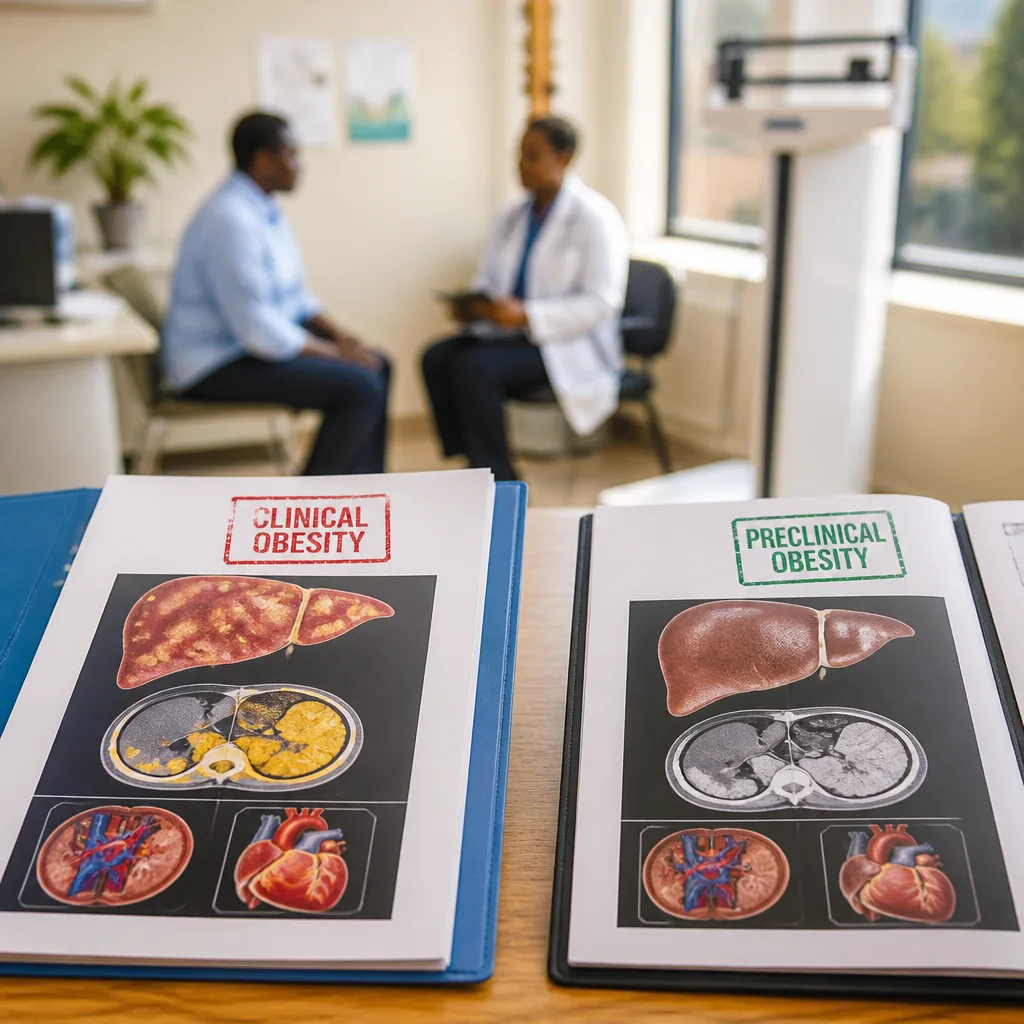
A review of clinical data from more than 2,300 metabolic bariatric surgery candidates shows that new obesity definitions — distinguishing clinical from preclinical obesity — provide clearer information about patients’ health risks than body mass index (BMI) alone. The research, published in JAMA Network Open, was led by Professor Francesco Rubino, chair of metabolic and bariatric surgery at King’s College London.
Study sample and main findings
The investigators retrospectively analysed records for 2,316 surgical candidates from four specialist centres: King’s College Hospital in the United Kingdom and centres in France, Spain and Brazil. Applying the new framework, they classified candidates into two groups: clinical obesity, where excess adiposity has already caused organ damage, and preclinical obesity, where organ function remains preserved despite excess adiposity.
Key distributions and outcomes reported in the study:
- 73.8% of candidates were classified as having clinical obesity.
- 26.2% were classified as having preclinical obesity.
- Despite similar BMI levels across groups, people with clinical obesity had substantially higher surgery-related and cardiovascular risks and a higher overall risk of death.
"This study shows that the distinction between clinical and preclinical obesity is clinically meaningful even among surgical candidates with very high BMI levels, because BMI alone cann"
Although the quoted sentence in the source was truncated, the study’s reporting emphasises that BMI — a simple ratio of weight to height — can mask important heterogeneity in health status among people with similar BMI values.
Why the new definitions matter
BMI has long been used to classify overweight and obesity and to guide eligibility and prioritisation for metabolic bariatric surgery. The findings from this analysis suggest that a patient’s metabolic and organ-health profile — captured by the clinical/preclinical distinction — may be more informative for assessing surgical risk and expected benefit than BMI alone.
For clinicians and services that provide bariatric surgery, the implications are practical: two patients with the same BMI can have very different levels of cardiovascular risk and perioperative vulnerability depending on whether excess adiposity has already caused organ damage.
Data at a glance
| Measure | Value |
|---|---|
| Number of surgical candidates analysed | 2,316 |
| Clinical obesity | 73.8% |
| Preclinical obesity | 26.2% |
Context and consequences for policy and practice
The study supports growing calls in medicine to move beyond single-number measures when assessing complex conditions such as obesity. For health services, especially those with long waiting lists for metabolic surgery, a more nuanced approach could help prioritise patients at highest risk of adverse outcomes or greatest expected benefit.
For patients and primary care clinicians, the message is that excess weight is heterogeneous: not all people with high BMI have the same organ damage or cardiovascular risk. A full clinical assessment — including evaluation of organ function and cardiometabolic status — remains essential when counselling patients about surgical and non-surgical treatment options.
Health professionals and patients should consider the study as evidence that BMI is a limited screening tool rather than a definitive measure of health. Where available, thorough metabolic assessment and the new clinical/preclinical framework may improve shared decision-making about bariatric surgery.
Readers are reminded that this summary reports the study’s findings and does not replace personalised medical advice. People concerned about weight-related health should consult their doctor, clinic or bariatric service to discuss individual risks and treatment options.